
A buyer's guide to used road rollers and compactors listed in Poland: what is available, current prices, what to...
Latest posts
-
 Used Road Rollers & Compactors in Poland: 2026 Prices & Buyer's GuideRead more
 -
 How to Import Used Construction Machinery from Abroad: 2026 Buyer's GuideRead more
A practical guide to importing used heavy equipment from abroad — sources, shipping options, customs, inspection, and...
-
 Caterpillar for Sale: Prices, Specs & Used Market Guide 2026Read more
A buyer's guide to used Caterpillar machines — the CAT 320-series excavators and road equipment, current price...
-
 Used Construction Machinery in the USA: 2026 Prices & Buyer's GuideRead more
A buyer's guide to used road construction and paving machinery from the USA — current price ranges, an inspection...
-
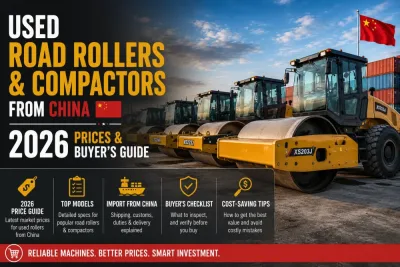 Used Road Rollers & Compactors from China: 2026 Prices & Buyer's GuideRead more
A buyer's guide to recent, low-hour used road rollers and compactors sourced from China — what is available, current...
-
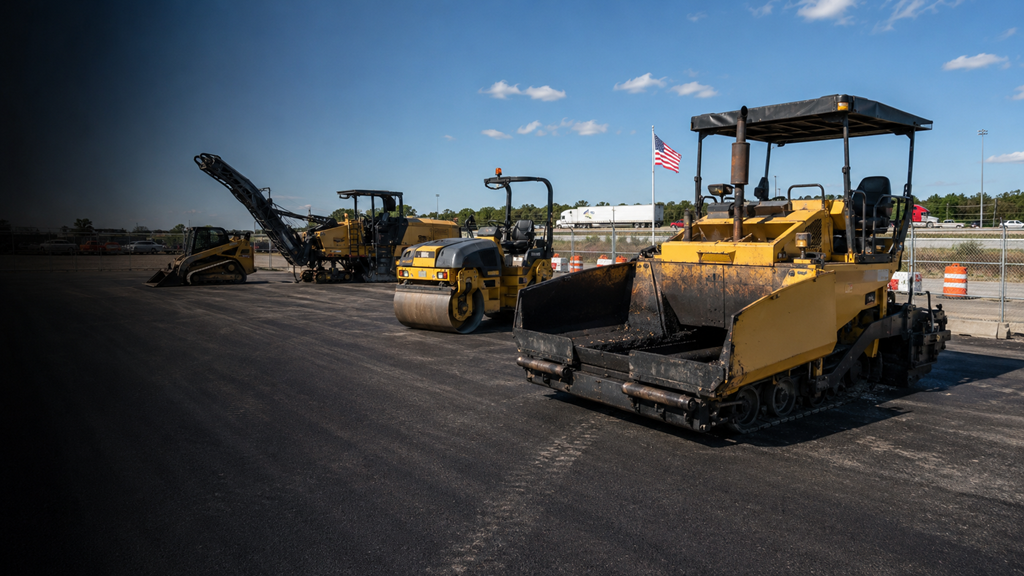 Used Asphalt & Paving Equipment in the USA: 2026 Prices & Buyer's GuideRead more
A practical buyer's guide to used asphalt and paving equipment sourced from the USA — what is available, current...
-
 Manitou MT 1840 Telehandler 2026: Current Prices, Specs, and Buyer’s GuideRead more
The Manitou MT 1840 has established itself as one of the most versatile and trusted telehandlers in the global...
-
 The Complete Guide to Massey Ferguson 240: Price, Specifications, and Global LegacyRead more
Massey Ferguson 240 sits in that sweet spot between light chores and real farm work. It’s part of the MF 200 series,...
-
 Ford Transit Box Truck for Sale: 2026 Buyer’s Guide for Small Business FleetsRead more
The Ford Transit box truck has long been a cornerstone of small business logistics, and in 2026 its position remains...
-
 The Ultimate Guide to Buying Trucks & Excavators: Prices, Deals, and Insights for Contractors in the USA, UK, Canada, and AustraliaRead more
For contractors, fleet managers, farmers, and construction companies, investing in the right trucks and excavators...
Blog categories
- Automotive Parts (21) click
- Heavy Machinery & Equipment Parts (6)
- OEM vs. Aftermarket Parts (1)
- Maintenance & Repair Tips (0)
- Parts Compatibility & Cross-Referencing (0)
- Sustainability & Recycling (1)
- Industry News & Trends (2)
- Buyer & Seller Guides (60)
- Performance Upgrades & Modifications (0)
- Product Reviews & Comparisons (1)
Search in blog
New Holland Combine Harvester and Price List 2026: A Complete Buyer’s Guide
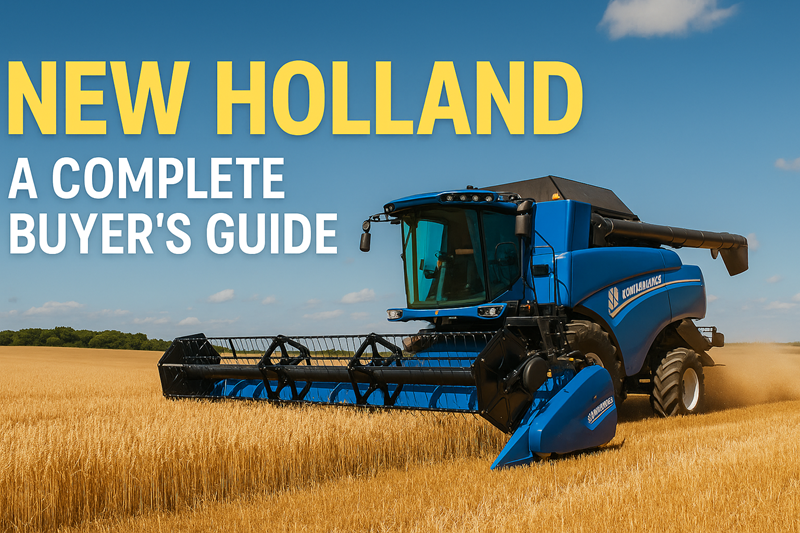
In 2026, the combine harvester market sits at the crossroads of tradition and transformation. For decades, New Holland has been a trusted name among grain producers, offering machines that combine durability, innovation, and adaptability to diverse crop and field conditions. Yet, the factors driving combine purchases today are more complex than ever before. From advanced automation to fluctuating commodity prices and shifting environmental regulations, the choice of a harvester is no longer just about cutting grain efficiently — it’s about making a strategic investment that aligns with operational goals, long-term costs, and evolving technology.
This guide takes a deep dive into the New Holland combine harvester lineup for 2026, exploring features, pricing trends, and ownership considerations for farmers in the U.S., Canada, and the UK. Whether you run a mid-sized wheat farm in Kansas or manage a Canadian grain cooperative, the decisions you make today will influence your farm’s efficiency for years to come.
Overview of New Holland Combine Harvester Models in 2026
The New Holland range in 2026 continues to be anchored by its two main series — the CR Revelation series and the CX series — each designed for specific farming needs. The CR series, recognized for its twin-rotor technology, remains the flagship for high-capacity harvesting, ideal for large-scale farms tackling wheat, corn, soybeans, and specialty crops. Models such as the CR8.90 and CR10.90 represent the pinnacle of throughput and grain quality, integrating automated adjustments that optimize settings on the move.
The CX series, on the other hand, is built on a conventional drum-and-separator design, prized for versatility across varying crops and field conditions. It appeals to smaller farms or mixed-crop operations where adaptability outweighs maximum capacity. In 2026, the CX8.90 stands out for its balance of power, comfort, and lower purchase cost compared to top-end CR machines, making it a strategic choice for many regional operators.
Across both series, New Holland has refined operator cabins for better ergonomics, integrated telematics for remote monitoring, and strengthened drivetrains to handle higher torque loads. These changes reflect a shift toward machines that are as much about data and precision control as they are about raw mechanical performance.
Key Features and Technological Innovations
Technology is at the heart of New Holland’s 2026 appeal. The IntelliSense™ automation system, now standard on premium CR models, adjusts rotor speed, fan settings, sieve openings, and concave clearance based on real-time crop and yield conditions. This reduces grain loss and improves quality without constant operator intervention — a feature particularly valuable during long harvest days when fatigue can lead to inefficiencies.
Telematics, via New Holland’s PLM Connect platform, is no longer an optional add-on but a core component in most configurations. It allows farm managers to track machine performance, location, and maintenance needs from a centralized dashboard. The technology also enables predictive service alerts, reducing downtime during critical harvest windows.
Fuel efficiency remains a key priority. The latest Stage V-compliant engines in European and Canadian markets, and Tier 4 Final engines in the U.S., provide more horsepower per liter of fuel. Some CR models have demonstrated fuel savings of up to 15% compared to older generations, a factor that directly impacts operating costs over the machine’s lifespan.
Operator comfort has also advanced, with cabs featuring noise levels under 75 decibels, panoramic visibility, and intuitive touchscreen interfaces that consolidate all harvesting controls. This not only reduces fatigue but also helps attract and retain skilled operators — a growing challenge in agriculture.
Factors Influencing Combine Harvester Prices
In addition to harvesting capacity, fuel efficiency has become a major pricing factor in 2026. Farms operating in high-fuel-cost regions can justify higher purchase prices for machines that deliver significant operational savings. The degree of automation, grain tank size, unloading speed, and rotor or drum design also directly affect cost.
Currency fluctuations and regional demand patterns influence prices as well. In the U.S., competitive dealer networks help keep prices stable, while in Canada and the UK, smaller markets and import costs create higher price points. Availability plays a role, too — strong commodity prices in 2024 have prompted many farmers to upgrade equipment, tightening supply of both new and used combines in certain regions.
Seasonal buying trends still matter. Purchasing right after harvest, when dealers are motivated to clear inventory, often yields better pricing than buying in the spring when demand spikes. Financing conditions are another driver; with interest rates higher than pre-2020 levels, the total cost of ownership is shaped as much by financing terms as by sticker price.
Price Examples in the U.S., Canada, and UK
Localized data illustrates these dynamics clearly. In Iowa, a new New Holland CR8.90 is listed at around $490,000, including factory-installed IntelliSense automation and a 40-foot draper header. In Ontario, Canada, the same model averages CAD $640,000, reflecting both currency value and higher dealer overhead. In the UK, buyers can expect to pay approximately £395,000 for a CR8.90 with similar specifications, though VAT adds to the final figure for non-exempt buyers.
For the CX8.90, prices in the U.S. typically start at $365,000 for new units with mid-range specifications. In Alberta, the same configuration can reach CAD $475,000, while UK buyers often see prices around £300,000 before VAT. These differences are not merely currency conversions — they reflect freight costs, local demand, and regional dealer support networks.
Used models also follow regional patterns. A well-maintained 2019 CR8.90 with under 1,200 separator hours can be found in the Midwest for $325,000, whereas in Canada the same machine might fetch CAD $435,000 due to lower availability and higher transport costs from U.S. sellers.
Buying New vs. Used: Pros and Cons
The choice between new and used New Holland combines depends on operational priorities and budget flexibility. New models come with warranty coverage, the latest fuel-efficient engines, and integrated automation systems, all of which reduce downtime and improve productivity. For a farm planning to operate a combine intensively over many seasons, the higher upfront investment can pay off through lower repair costs and higher resale value.
Used combines, however, offer significant entry cost savings — often 25–40% less than new equivalents — and can still provide years of reliable service if maintenance history is well-documented. The trade-off lies in the potential for higher maintenance expenses and shorter remaining lifespan before major component overhauls.
For example, a mid-sized wheat farm in Kansas upgrading from a 2016 CR8.80 to a newer used CR8.90 might spend $350,000 instead of $490,000 for a brand-new model, freeing capital for other investments such as grain storage or irrigation upgrades. On the other hand, a Canadian cooperative buying multiple units for shared use might prioritize new machines to ensure consistent performance and warranty coverage across their fleet.
Maintenance, Operating Costs, and Resale Value
Ownership costs extend well beyond the purchase price. Annual maintenance for a New Holland combine can range from $12,000 to $20,000 depending on usage hours, crop types, and operator habits. Preventive maintenance — replacing wear parts like rasp bars, sieves, and belts before failure — is crucial to avoid costly in-season breakdowns.
Fuel remains the largest variable expense. CR series combines with modern engines typically consume between 1.5 and 2 gallons per acre in wheat, while CX series units may use slightly more due to mechanical threshing systems. These figures make fuel efficiency a decisive factor in annual cost calculations, especially for large operations covering thousands of acres.
Resale value is influenced by brand reputation, service history, and regional demand. Well-maintained New Holland combines with under 2,000 separator hours retain value better than many competitors, especially in regions where dealer support is strong. Machines with full service records and minimal cosmetic damage consistently sell faster and at higher prices.
Frequently Asked Questions
How long does a combine harvester typically last?
With proper maintenance, New Holland combines can operate for 3,000–4,000 separator hours before major overhauls, translating to 10–15 years for many farms.
What’s the difference between the CR and CX series?
The CR series uses twin-rotor technology for high-capacity harvesting and grain quality, while the CX series uses a conventional drum design for versatility across crops.
Are financing options better through dealerships or banks?
Dealership financing often includes promotional rates or bundled service packages, while banks may offer more flexible terms for buyers with existing credit relationships.
Is it worth paying for IntelliSense automation?
For large-scale farms or operations with multiple operators, IntelliSense can reduce losses and improve efficiency, often paying for itself in a few seasons.
When is the best time to buy a combine?
Post-harvest periods typically see better dealer incentives compared to pre-planting demand spikes.
How does resale value compare to other brands?
New Holland combines hold their value well, particularly in regions with strong dealer support and parts availability.
Can I import a combine from another country?
Yes, but import duties, transport costs, and compliance with local emissions regulations must be factored in.
Selling equipment like this?
List it on AGGZ and reach buyers reading guides like this and searching for used machinery.
Posted in:
Buyer & Seller Guides
Related posts
-
Used Road Rollers & Compactors in Poland: 2026 Prices & Buyer's Guide
A buyer's guide to used road rollers and compactors listed in Poland: what is available, current prices, what to...Read more
-
How to Import Used Construction Machinery from Abroad: 2026 Buyer's Guide
A practical guide to importing used heavy equipment from abroad — sources, shipping options, customs, inspection, and...Read more
-
Caterpillar for Sale: Prices, Specs & Used Market Guide 2026
A buyer's guide to used Caterpillar machines — the CAT 320-series excavators and road equipment, current price...Read more
-
Used Construction Machinery in the USA: 2026 Prices & Buyer's Guide
A buyer's guide to used road construction and paving machinery from the USA — current price ranges, an inspection...Read more
-
Used Road Rollers & Compactors from China: 2026 Prices & Buyer's Guide
A buyer's guide to recent, low-hour used road rollers and compactors sourced from China — what is available, current...Read more
Leave a comment