
A buyer's guide to used road rollers and compactors listed in Poland: what is available, current prices, what to...
Latest posts
-
 Used Road Rollers & Compactors in Poland: 2026 Prices & Buyer's GuideRead more
 -
 How to Import Used Construction Machinery from Abroad: 2026 Buyer's GuideRead more
A practical guide to importing used heavy equipment from abroad — sources, shipping options, customs, inspection, and...
-
 Caterpillar for Sale: Prices, Specs & Used Market Guide 2026Read more
A buyer's guide to used Caterpillar machines — the CAT 320-series excavators and road equipment, current price...
-
 Used Construction Machinery in the USA: 2026 Prices & Buyer's GuideRead more
A buyer's guide to used road construction and paving machinery from the USA — current price ranges, an inspection...
-
 Used Road Rollers & Compactors from China: 2026 Prices & Buyer's GuideRead more
A buyer's guide to recent, low-hour used road rollers and compactors sourced from China — what is available, current...
-
 Used Asphalt & Paving Equipment in the USA: 2026 Prices & Buyer's GuideRead more
A practical buyer's guide to used asphalt and paving equipment sourced from the USA — what is available, current...
-
 Manitou MT 1840 Telehandler 2026: Current Prices, Specs, and Buyer’s GuideRead more
The Manitou MT 1840 has established itself as one of the most versatile and trusted telehandlers in the global...
-
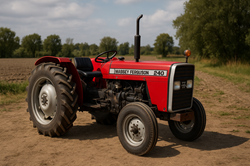 The Complete Guide to Massey Ferguson 240: Price, Specifications, and Global LegacyRead more
Massey Ferguson 240 sits in that sweet spot between light chores and real farm work. It’s part of the MF 200 series,...
-
 Ford Transit Box Truck for Sale: 2026 Buyer’s Guide for Small Business FleetsRead more
The Ford Transit box truck has long been a cornerstone of small business logistics, and in 2026 its position remains...
-
 The Ultimate Guide to Buying Trucks & Excavators: Prices, Deals, and Insights for Contractors in the USA, UK, Canada, and AustraliaRead more
For contractors, fleet managers, farmers, and construction companies, investing in the right trucks and excavators...
Blog categories
- Automotive Parts (21) click
- Heavy Machinery & Equipment Parts (6)
- OEM vs. Aftermarket Parts (1)
- Maintenance & Repair Tips (0)
- Parts Compatibility & Cross-Referencing (0)
- Sustainability & Recycling (1)
- Industry News & Trends (2)
- Buyer & Seller Guides (60)
- Performance Upgrades & Modifications (0)
- Product Reviews & Comparisons (1)
Search in blog
The Complete Guide to Massey Ferguson 240: Price, Specifications, and Global Legacy
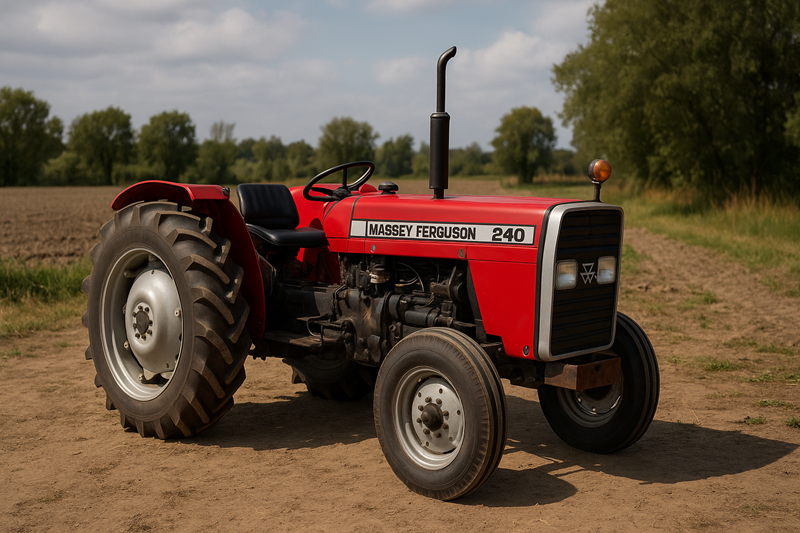
Massey Ferguson 240 sits in that sweet spot between light chores and real farm work. It’s part of the MF 200 series, built to cover the 40–50 horsepower bracket. For small and mid-size farms this tractor was the workhorse that never asked for much, just fuel and basic care. Built through the 1980s, 1990s, and into the early 2000s, it’s still alive today in second-hand markets, traded, refurbished, exported across continents. The name sticks because it delivered what farmers asked for: a reliable machine with just enough muscle, simple enough to fix with hand tools.
History and Legacy
The MF 240 followed the legendary MF 135, which had already set the standard for dependable utility tractors. By the late 1970s Massey Ferguson needed a successor, and the 240 carried the torch. Early units rolled out of Coventry in the UK, later production shifted to Turkey and other regions closer to demand. Unlike big modern tractors loaded with electronics, the 240 thrived because it stayed farmer-friendly. Low maintenance, affordable, and adaptable. It carved out a reputation across Africa, South Asia, and the Middle East as a tractor that just worked. Many are still out there today, plowing, hauling, running implements decades after they left the factory.
Brand Identity and Design Philosophy
The 240 wasn’t about sophistication. Its identity rested on simplicity, ruggedness, and price. Engineers built it to be stripped down, no-frills, easy to repair in the field. No farmer wanted a machine that needed a laptop to diagnose problems. Values embedded in the design were clear: ruggedness for rough fields, affordability for farmers with limited budgets, adaptability so it could work in climates and soils far beyond Europe. This tractor represented Massey Ferguson’s serious attempt to expand its footprint into small and medium-sized farms worldwide.
Technical Specifications
The typical MF 240 carried a Perkins AD3.152 three-cylinder diesel engine, although later variants used updates of the same reliable design. Horsepower sat in the 46–50 HP range, just enough for plowing, tilling, or pulling a trailer of sugarcane without breaking down. Transmission options were simple: 8 forward/2 reverse or 6 forward/2 reverse gearboxes. The tractor weighed about 1,850 kilograms (around 4,000 pounds). Rear lift capacity hovered around 1,450 kilograms (3,200 pounds), enough for most implements on small farms. Fuel use was modest, around 3 to 4 liters an hour under light to medium loads, making it economical to run in countries where fuel cost often made or broke farm budgets.
Pricing: New and Refurbished
In the 1990s a new MF 240 would sell for somewhere between $10,000 and $15,000. That affordability cemented its reach. Today, the refurbished market keeps it alive. Export hubs in Turkey, Pakistan, and the UK overhaul old units, repaint, fit new parts, and send them to farms across Africa and Asia. Current refurbished models usually list between $9,000 and $12,000, depending on condition and where they’re shipped. For a farmer, that’s still a strong price-to-value ratio for a machine with decades of proven service history.
Applications and Usage
The MF 240 was built for versatility. In farming it takes on tillage, plowing, seeding, and light transport. Its hitch strength allows it to pull two- or three-bottom plows in many soil types. Farmers in Punjab, Pakistan often hitch them to trailers loaded with sugarcane, using them as dual farm and haulage machines. Across Africa it’s common to see MF 240s running maize farms, towing seeders or pulling water tankers. Beyond farming, municipalities and small contractors use them for light construction, road maintenance, or towing equipment. Even in Europe some collectors or smallholders buy overhauled MF 240s for mixed farm work—plowing a few acres, running a baler, or simply for nostalgia.
Market Position
The 240 holds iconic status in the 40–50 HP segment. Its market was always small-to-medium farm operators who needed affordable horsepower. It has remained a favorite in Africa, South Asia, and the Middle East, where ruggedness and simplicity mattered more than electronics or comfort. In this segment it faced rivals from Fiat/New Holland, Belarus tractors, and Mahindra. Many of those competitors had strengths, but the Massey Ferguson badge carried decades of trust. Even today, ask around in rural Africa or South Asia, and MF 240 is often the shorthand for a dependable tractor, even if it’s twenty years old.
Selling equipment like this?
List it on AGGZ and reach buyers reading guides like this and searching for used machinery.
Posted in:
Buyer & Seller Guides
Related posts
-
Used Road Rollers & Compactors in Poland: 2026 Prices & Buyer's Guide
A buyer's guide to used road rollers and compactors listed in Poland: what is available, current prices, what to...Read more
-
How to Import Used Construction Machinery from Abroad: 2026 Buyer's Guide
A practical guide to importing used heavy equipment from abroad — sources, shipping options, customs, inspection, and...Read more
-
Caterpillar for Sale: Prices, Specs & Used Market Guide 2026
A buyer's guide to used Caterpillar machines — the CAT 320-series excavators and road equipment, current price...Read more
-
Used Construction Machinery in the USA: 2026 Prices & Buyer's Guide
A buyer's guide to used road construction and paving machinery from the USA — current price ranges, an inspection...Read more
-
Used Road Rollers & Compactors from China: 2026 Prices & Buyer's Guide
A buyer's guide to recent, low-hour used road rollers and compactors sourced from China — what is available, current...Read more
Leave a comment