
A buyer's guide to used road rollers and compactors listed in Poland: what is available, current prices, what to...
Latest posts
-
 Used Road Rollers & Compactors in Poland: 2026 Prices & Buyer's GuideRead more
 -
 How to Import Used Construction Machinery from Abroad: 2026 Buyer's GuideRead more
A practical guide to importing used heavy equipment from abroad — sources, shipping options, customs, inspection, and...
-
 Caterpillar for Sale: Prices, Specs & Used Market Guide 2026Read more
A buyer's guide to used Caterpillar machines — the CAT 320-series excavators and road equipment, current price...
-
 Used Construction Machinery in the USA: 2026 Prices & Buyer's GuideRead more
A buyer's guide to used road construction and paving machinery from the USA — current price ranges, an inspection...
-
 Used Road Rollers & Compactors from China: 2026 Prices & Buyer's GuideRead more
A buyer's guide to recent, low-hour used road rollers and compactors sourced from China — what is available, current...
-
 Used Asphalt & Paving Equipment in the USA: 2026 Prices & Buyer's GuideRead more
A practical buyer's guide to used asphalt and paving equipment sourced from the USA — what is available, current...
-
 Manitou MT 1840 Telehandler 2026: Current Prices, Specs, and Buyer’s GuideRead more
The Manitou MT 1840 has established itself as one of the most versatile and trusted telehandlers in the global...
-
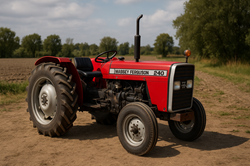 The Complete Guide to Massey Ferguson 240: Price, Specifications, and Global LegacyRead more
Massey Ferguson 240 sits in that sweet spot between light chores and real farm work. It’s part of the MF 200 series,...
-
 Ford Transit Box Truck for Sale: 2026 Buyer’s Guide for Small Business FleetsRead more
The Ford Transit box truck has long been a cornerstone of small business logistics, and in 2026 its position remains...
-
 The Ultimate Guide to Buying Trucks & Excavators: Prices, Deals, and Insights for Contractors in the USA, UK, Canada, and AustraliaRead more
For contractors, fleet managers, farmers, and construction companies, investing in the right trucks and excavators...
Blog categories
- Automotive Parts (21) click
- Heavy Machinery & Equipment Parts (6)
- OEM vs. Aftermarket Parts (1)
- Maintenance & Repair Tips (0)
- Parts Compatibility & Cross-Referencing (0)
- Sustainability & Recycling (1)
- Industry News & Trends (2)
- Buyer & Seller Guides (60)
- Performance Upgrades & Modifications (0)
- Product Reviews & Comparisons (1)
Search in blog
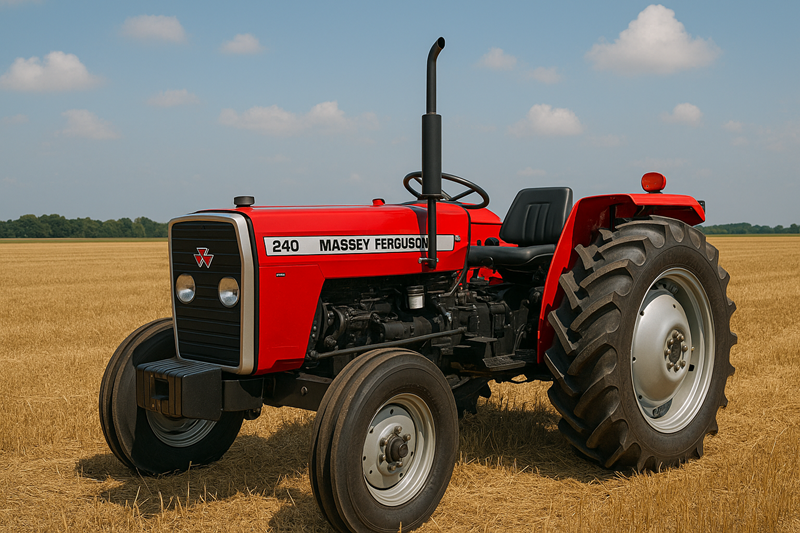
Massey Ferguson 240 Price 2026 & Used Market Insights: A Complete Buyer’s Guide
Massey Ferguson 240 Price 2026: New & Used
The Massey Ferguson 240 remains one of the most recognizable tractors in the small-to-mid horsepower category, and in 2026 it continues to hold a unique position in the market. Despite newer models offering advanced electronic features and higher horsepower outputs, the MF 240 has retained its loyal following due to its simplicity, rugged design, and low operating costs. Across the United States, a brand-new MF 240 in 2026 is generally priced between $24,500 and $27,500 USD, depending on dealer location, shipping fees, and optional equipment. In Canada, the same tractor sells for around CAD $33,000 to $36,000, while in the United Kingdom, buyers can expect to pay between £19,000 and £21,500 for a new unit.
The second-hand market offers a much broader range of pricing depending on year, condition, and hours of operation. A well-maintained 2015 MF 240 with under 2,000 hours might list for $16,000 USD, while older models from the early 2000s in working condition may sell for as little as $9,000–$11,000 USD. These lower prices often attract budget-conscious farmers who prefer investing in proven reliability over modern electronic enhancements.
Performance and Reliability in Real-World Use
The MF 240 is powered by a three-cylinder Perkins diesel engine producing around 50 horsepower, a figure that perfectly suits small to medium-scale farming operations. This balance of power allows the tractor to handle plowing, tilling, seeding, mowing, and light hauling without straining the engine, which is one of the reasons it has become a workhorse on mixed farms worldwide. Fuel consumption typically averages 2.5–3 gallons per hour under moderate load, making it highly efficient compared to similar tractors in its class.
Hydraulic performance is another strong point, with the MF 240 offering dependable lift capacities suitable for small front loaders and three-point hitch implements. Transmission options are simple yet effective, typically a 8F/2R or 12F/4R gearbox, ensuring durability with minimal maintenance needs. In 2026, some dealers offer slightly updated variants featuring improved seat ergonomics and minor emission control upgrades, but the core mechanical design remains unchanged — a fact that appeals to buyers seeking long-term serviceability over short-lived digital features.
Comparing the MF 240 to Competitors
When placed against comparable models such as the John Deere 5050E, New Holland TT4.50, or Kubota L4701, the MF 240 holds its own by offering competitive horsepower at a lower purchase price. The John Deere alternative provides more modern operator comforts but often at a 15–20% higher cost in North America. The New Holland model delivers slightly better fuel economy but comes with a more complex maintenance schedule. Kubota’s offering stands out for its compactness and smooth handling, yet replacement parts for Kubota tractors can be more expensive in rural markets compared to the widely available MF spares.
What truly sets the MF 240 apart is its straightforward engineering, which means even older tractors can be repaired easily by local mechanics without the need for specialized diagnostic tools. This factor alone can tip the scales for buyers in remote farming areas who cannot afford extended downtime during critical planting or harvesting seasons.
How to Spot a Good Deal in the Used Market
Finding a worthwhile used MF 240 in 2026 requires a careful approach. While low engine hours are often seen as the main indicator of value, the tractor’s maintenance history is equally important. A well-documented service record showing timely oil changes, hydraulic filter replacements, and clutch adjustments can sometimes outweigh a slightly higher hour count. Buyers should inspect for signs of hydraulic leaks, unusual engine smoke, and wear in the front axle pivot, as these are common issues in tractors that have seen heavy loader work.
Geography also plays a role in pricing. In the U.S. Midwest, where tractors are common and well-maintained, used prices can be significantly lower than in coastal regions where agricultural machinery is scarcer. Similarly, UK buyers might find better deals in Scotland and Northern Ireland compared to southern England, where demand from smallholders keeps prices higher. Canadian buyers in Ontario or Manitoba often benefit from stronger dealer networks for MF parts, which can enhance resale value later on.
Real-World Buyer Examples
In Wisconsin, a dairy farmer running a small herd opted for a 2020 MF 240 with 1,500 hours on the clock at a price of $18,200 USD. The tractor is now used daily for feed mixing, manure hauling, and light pasture maintenance. The farmer reports minimal maintenance costs in the first year of ownership, reinforcing the MF 240’s reputation for low operating expenses.
On the other side of the globe, a contractor in rural Queensland, Australia, purchased a slightly older 2012 MF 240 for AUD $21,000 to handle mixed farm work, including moving irrigation equipment and grading access roads. The tractor’s mechanical simplicity proved invaluable in an area where dealership service centers are several hours away.
Resale Value and Longevity
One of the strongest selling points for the MF 240 is its ability to retain value over time. Even models from the late 1990s, if in good condition, still command respectable prices. In North America, depreciation rates for MF 240s are significantly lower than for many higher-tech tractors of similar horsepower, largely due to their proven reliability and low repair costs. A five-year-old MF 240 might retain 65–70% of its original value, while a similar age competitor with more electronics could drop closer to 50% in the same time frame.
Buying New vs. Used
Choosing between a new and a used MF 240 comes down to budget, intended use, and tolerance for downtime. New tractors offer peace of mind with warranties and zero wear, but they come at a higher upfront cost. Used tractors, especially those in the 3–7-year-old range with under 2,500 hours, can provide excellent value if bought from a reputable source. In both cases, buyers should factor in local dealer support, as having easy access to parts and service can make a significant difference in overall ownership satisfaction.
FAQs
How much does a new MF 240 cost in the USA in 2026?
Between $24,500 and $27,500 USD, depending on dealer and options.
What is the average price for a used MF 240 in the UK?
Typically £11,000–£15,000 for models in good condition from the last decade.
Is the MF 240 fuel-efficient compared to similar tractors?
Yes, with average consumption of 2.5–3 gallons per hour under moderate load.
Are parts easy to find for older MF 240 models?
Yes, due to a large global supply chain and compatibility with other MF components.
How many hours can an MF 240 last?
With proper maintenance, 8,000–10,000 hours before major engine work is common.
Does the MF 240 have power steering?
Most newer models and many retrofitted older units do, but some early models are manual steer.
What’s the best year range to buy used?
2010–2020 models balance modern reliability with affordable pricing.
Can the MF 240 handle a front loader?
Yes, though heavy loader work can accelerate front axle wear.
Is the MF 240 suitable for haymaking?
Yes, it can handle small to mid-sized balers and mowers effectively.
Selling equipment like this?
List it on AGGZ and reach buyers reading guides like this and searching for used machinery.
Posted in:
Buyer & Seller Guides
Related posts
-
Used Road Rollers & Compactors in Poland: 2026 Prices & Buyer's Guide
A buyer's guide to used road rollers and compactors listed in Poland: what is available, current prices, what to...Read more
-
How to Import Used Construction Machinery from Abroad: 2026 Buyer's Guide
A practical guide to importing used heavy equipment from abroad — sources, shipping options, customs, inspection, and...Read more
-
Caterpillar for Sale: Prices, Specs & Used Market Guide 2026
A buyer's guide to used Caterpillar machines — the CAT 320-series excavators and road equipment, current price...Read more
-
Used Construction Machinery in the USA: 2026 Prices & Buyer's Guide
A buyer's guide to used road construction and paving machinery from the USA — current price ranges, an inspection...Read more
-
Used Road Rollers & Compactors from China: 2026 Prices & Buyer's Guide
A buyer's guide to recent, low-hour used road rollers and compactors sourced from China — what is available, current...Read more
Leave a comment