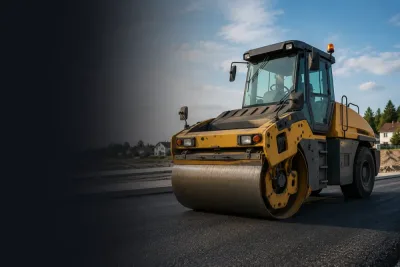
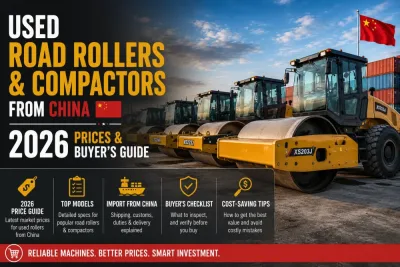
A buyer's guide to recent, low-hour used road rollers and compactors sourced from China — what is available, current...
Latest posts
-
Used Road Rollers & Compactors from China: 2025 Prices & Buyer's GuideRead more -
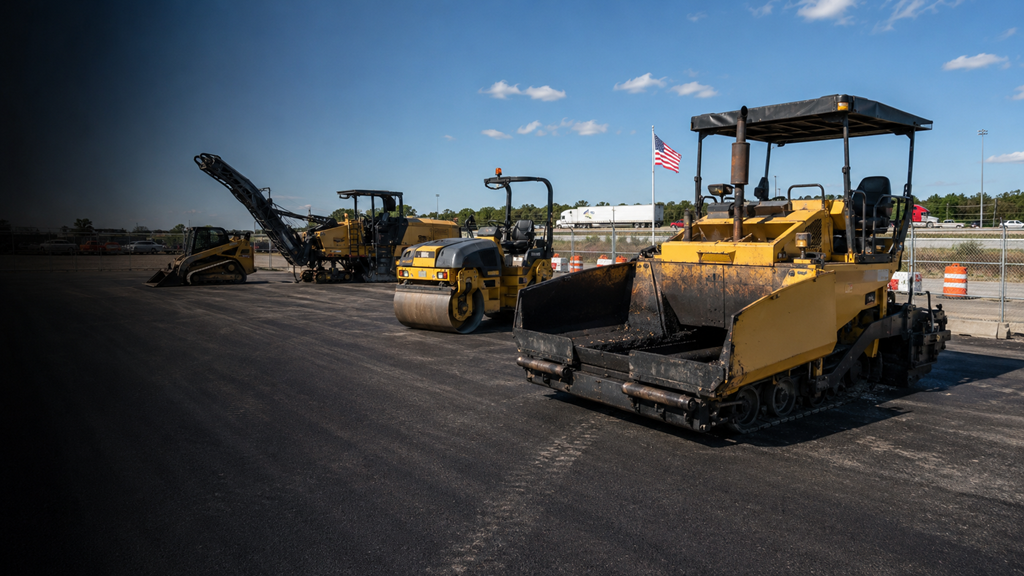
Used Asphalt & Paving Equipment in the USA: 2025 Prices & Buyer's Guide07/11/2026Read moreA practical buyer's guide to used asphalt and paving equipment sourced from the USA — what is available, current...
-
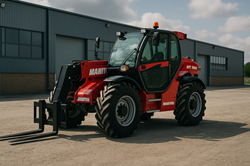
Manitou MT 1840 Telehandler 2025: Current Prices, Specs, and Buyer’s Guide09/05/2025Read moreThe Manitou MT 1840 has established itself as one of the most versatile and trusted telehandlers in the global...
-
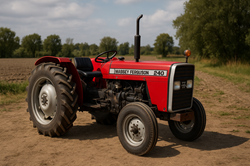
The Complete Guide to Massey Ferguson 240: Price, Specifications, and Global Legacy09/05/2025Read moreMassey Ferguson 240 sits in that sweet spot between light chores and real farm work. It’s part of the MF 200 series,...
-
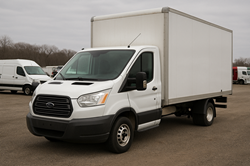
Ford Transit Box Truck for Sale: 2025 Buyer’s Guide for Small Business Fleets08/26/2025Read moreThe Ford Transit box truck has long been a cornerstone of small business logistics, and in 2025 its position remains...
-
The Ultimate Guide to Buying Trucks & Excavators: Prices, Deals, and Insights for Contractors in the USA, UK, Canada, and Australia08/14/2025Read moreFor contractors, fleet managers, farmers, and construction companies, investing in the right trucks and excavators...
-
Fendt 1050 Vario Price 2025 & Full Specs: The Ultimate Buyer’s Guide08/12/2025Read moreIn the world of high-horsepower agricultural machinery, few names carry as much weight as the Fendt 1050 Vario. Known...
-
Massey Ferguson 240 Price 2025 & Used Market Insights: A Complete Buyer’s Guide08/11/2025Read moreThe Massey Ferguson 240 remains one of the most recognizable tractors in the small-to-mid horsepower category, and in...
-
New Holland Tractor Prices 2025: Updated Costs, Specs, and Buying Guide for Farmers and Contractors08/11/2025Read moreIn 2025, the New Holland tractor lineup continues to be one of the most diverse and competitive offerings in the...
-
Zoomlion Tractors 2025: Pricing, Performance, and Buying Guide for Farmers and Contractors08/10/2025Read moreThe agricultural and construction machinery market in 2025 continues to evolve, and Zoomlion has steadily positioned...
Blog categories
- Automotive Parts (21) click
- Heavy Machinery & Equipment Parts (6)
- OEM vs. Aftermarket Parts (1)
- Maintenance & Repair Tips (0)
- Parts Compatibility & Cross-Referencing (0)
- Sustainability & Recycling (1)
- Industry News & Trends (2)
- Buyer & Seller Guides (56)
- Performance Upgrades & Modifications (0)
- Product Reviews & Comparisons (1)
Search in blog
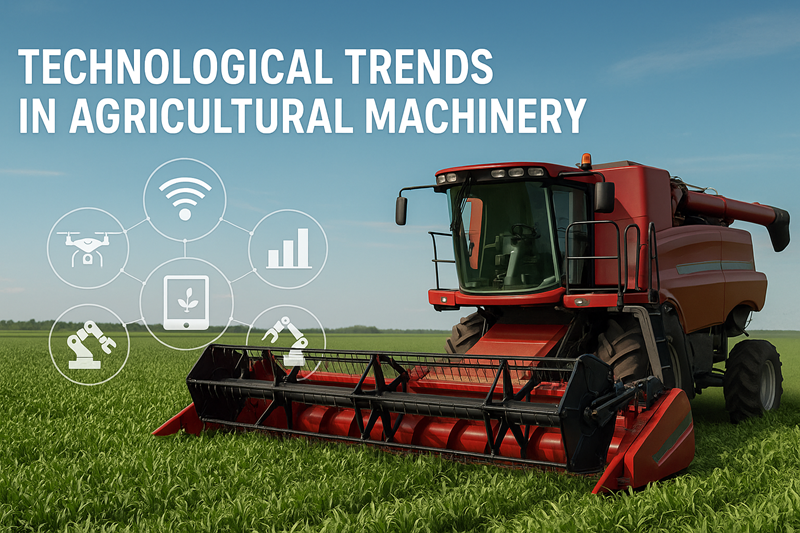
Latest Technological Trends in Agricultural Machinery: 2025 and Beyond
In the early morning light, while the soil is still silent, a screen flickers. Sensors awaken. GPS connections align. The tractor starts without a human hand and silently opens the first row across the field. In 2025, agriculture is no longer just about furrow lines—it’s also about data trails.
Agricultural machinery is evolving. Automation, electric motor systems, IoT-based remote sensing, AI-supported analytics, and satellite-controlled GPS systems are pushing the limits of traditional production. In a world where input costs are rising, climate uncertainties are increasing, and access to labor is becoming erratic, the continuity of production is now entrusted not just to human labor, but to machines equipped with integrated intelligence. In agriculturally rich countries like Turkey, this transformation is reshaping not only the future of large farms but also that of medium and small-scale operations.
The new leader in the field is no longer behind the wheel. Autonomous tractors determine their own route via GPS data and automatically adjust tilling depth based on soil analysis. Manufacturers like John Deere, New Holland, and Fendt are making fully driverless modes standard in their 2025 models. These tractors eliminate not just physical strain but mental stress as well. No more mis-seeding, no skipped rows. Especially during nighttime operations and time-sensitive planting seasons, this technology doesn’t just boost yields—it boosts profits.
At harvest time, the landscape changes again. The noise of traditional harvesters is being replaced by the quiet efficiency of electric and hybrid motor systems. The CLAAS Lexion Electric consumes 30% less fuel with its hybrid drivetrain, while the Case IH Axial-Flow eDrive completes a full day of harvesting on a single charge. With regenerative braking systems, electricity is generated during downhill operations, and smart yield analysis systems instantly provide moisture, yield, and grain loss statistics to the operator. Harvest used to be about asking, “Is it done yet?” Now it’s about asking, “What does the data say?”
Pest control is no longer just about spraying chemicals; it now operates on remote sensing, targeted application, and achieving maximum effect with minimum chemicals. Agricultural drones equipped with multispectral cameras monitor plant health, AI software detects disease zones, and chemicals are applied only where necessary. Machines like the DJI Agras T50 can reduce pesticide use by up to 70% per hectare. This is not only a win for the environment—it’s a revolution for the farmer’s bottom line.
Yield is not only written during planting and harvesting—it also forms in the deeper layers of the soil. GPS-supported fertilization systems apply variable dosages based on the structure of the land. Areas that need high potassium are no longer treated the same as those needing nitrogen. Systems like Trimble and Topcon, working in tandem with tractors, guide fertilization with millimeter-level precision. A uniform green field on the surface masks a carefully balanced economy underneath.
Soil tillage machines are no longer just iron gears. Sensor-equipped plows measure soil moisture and resistance to adjust tilling depth. Compacted areas are tilled deeper, while looser soil gets a lighter pass. This saves fuel and preserves soil structure. In short, a plow no longer just cuts through soil—it listens to it.
Then there are agricultural robots—the quiet revolutionaries of 2025. These cloud-connected, multi-functional, modular machines mow weeds, analyze productivity, and scan for diseases. Especially in vegetable farming, robots that adjust their structure according to row spacing and can perform different tasks in different fields are being deployed. The farmer is no longer just a machine owner—but a partner to an algorithm. Data accumulates, decisions speed up, error rates drop. Every day brings less trial and more precision.
More than 70% of agriculture in Turkey is carried out by small and medium-sized farmers. These technologies must benefit not only large corporations but also the vineyards and orchards of Anatolia. The good news: smart machines are no longer offered at exorbitant prices. Entry-level autonomous systems, modular GPS kits, and electric mini-tractors are now more accessible through suitable incentives and leasing options. Some cooperatives and unions are even acquiring these technologies for shared use, fostering digitization through solidarity.
Investment decisions are now more complex than ever. It’s not just about price—service infrastructure, spare part availability, government incentives, and the second-hand market also matter. Do new-generation machines require software updates? How quickly can service respond to a malfunction? The answers to these questions are as important as yield itself. Because no matter how advanced the technology, if it’s not supported in the field, it’s a risk.
In the end, buying an agricultural machine isn’t just spending money on metal—it’s taking a stance against the climate, the market, and the soil. In the future, productivity will not only be measured by more output, but by achieving more with fewer inputs. These machines will become shields against the climate crisis, steps toward sustainability, and tools to attract younger generations to agriculture.
The farmer is no longer alone. Now they are accompanied by machines that feel the soil, read the data, and chart the course.
Frequently Asked Questions (FAQ): New Technologies in Agricultural Machinery
How common are autonomous tractors in Turkey?
As of 2025, they’ve become widespread among large farms in the Aegean and Central Anatolia. However, GPS-supported semi-autonomous systems are now accessible to mid-sized farms as well.
Is the range of electric harvesters sufficient?
Yes. Models with 7–9 hours of working capacity are generally enough for a full day’s harvest. With fast-charging stations, they can operate uninterrupted throughout the season.
What is the function of GPS in agricultural machines?
GPS improves tractor pathing, row accuracy, and uniform application of fertilizer and pesticides. It also saves fuel and increases soil efficiency.
Can second-hand smart agricultural machines be purchased?
Yes, as long as software updates and part compatibility are verified. However, models from brands with strong service support are recommended.
Does the government provide incentives for these technologies?
Yes. The Ministry of Agriculture and Forestry and KOSGEB offer grants and low-interest loans for digital agriculture technologies.
What benefits do data collection systems offer to farmers?
They optimize the entire process from seeding to harvest. Critical data like field yield and pesticide effectiveness help strengthen decision-making.
Which brands are leading in 2025?
Brands like John Deere, Fendt, Case IH, New Holland, and CLAAS are leaders in autonomy, electric motors, and integrated sensor technologies.
How do maintenance costs compare with traditional machines?
Electric machines have fewer moving parts, so maintenance is generally cheaper. However, software-supported machines do require technical assistance.
Do these machines require special training to use?
Yes. Especially for autonomous and GPS-enabled machines, short-term operator training or certification from the manufacturer may be needed.
How is technology selected based on field conditions?
Sensor and motor selection depends on soil type, slope, climate, and crop type. For rocky terrain, mechanical durability should be prioritized.
Which crops are smart spraying machines suitable for?
They’re especially beneficial for crops like vineyards, olive groves, corn, and wheat—those that are disease-prone and spread across large areas.
Can these machines be controlled remotely?
Yes. Many models can be monitored and controlled via smartphone or tablet.
How do these machines help with climate change adaptation?
They optimize water and chemical usage, reduce carbon emissions, and automatically adjust to weather conditions to stabilize production.
Are agricultural robots effective on small farms?
Yes. Modular and compact models can operate efficiently on farms ranging from 0.5 to 2 hectares and are especially useful for precision tasks.
What is the impact of sensor-based fertilization devices on productivity?
Because they apply doses based on field zones, they can increase yield by 10–20% while also reducing fertilizer waste and environmental impact.
Selling equipment like this?
List it on AGGZ and reach buyers reading guides like this and searching for used machinery.
Related posts
-
Used Road Rollers & Compactors from China: 2025 Prices & Buyer's Guide
Posted in: Buyer & Seller Guides07/11/2026A buyer's guide to recent, low-hour used road rollers and compactors sourced from China — what is available, current...Read more -
Used Asphalt & Paving Equipment in the USA: 2025 Prices & Buyer's Guide
Posted in: Buyer & Seller Guides07/11/2026A practical buyer's guide to used asphalt and paving equipment sourced from the USA — what is available, current...Read more -
Peterbilt 379 for Sale: A Buyer’s Guide to Finding the Best Deals in 2024
Posted in: Buyer & Seller Guides11/01/2024For business owners and equipment buyers, securing a Peterbilt 379 for sale is more than just finding a truck it’s...Read more -
Pre-ELD Trucks: Insights, Advantages, and Essential Buying Tips in the Modern Trucking Industry
Posted in: Buyer & Seller Guides11/17/2024The Electronic Logging Device (ELD) mandate, implemented by the Federal Motor Carrier Safety Administration (FMCSA),...Read more -
Choosing the Best Car Transport Trailers for Sale
Posted in: Buyer & Seller Guides11/17/2024Selecting the right car transport trailer is crucial for ensuring the safe and efficient movement of vehicles,...Read more
Leave a comment