
A buyer's guide to used road rollers and compactors listed in Poland: what is available, current prices, what to...
Latest posts
-
 Used Road Rollers & Compactors in Poland: 2026 Prices & Buyer's GuideRead more
 -
 How to Import Used Construction Machinery from Abroad: 2026 Buyer's GuideRead more
A practical guide to importing used heavy equipment from abroad — sources, shipping options, customs, inspection, and...
-
 Caterpillar for Sale: Prices, Specs & Used Market Guide 2026Read more
A buyer's guide to used Caterpillar machines — the CAT 320-series excavators and road equipment, current price...
-
 Used Construction Machinery in the USA: 2026 Prices & Buyer's GuideRead more
A buyer's guide to used road construction and paving machinery from the USA — current price ranges, an inspection...
-
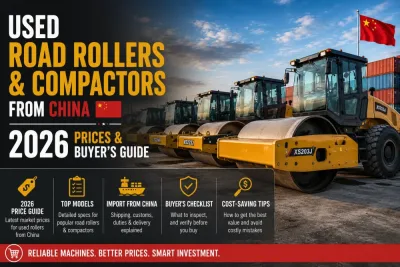 Used Road Rollers & Compactors from China: 2026 Prices & Buyer's GuideRead more
A buyer's guide to recent, low-hour used road rollers and compactors sourced from China — what is available, current...
-
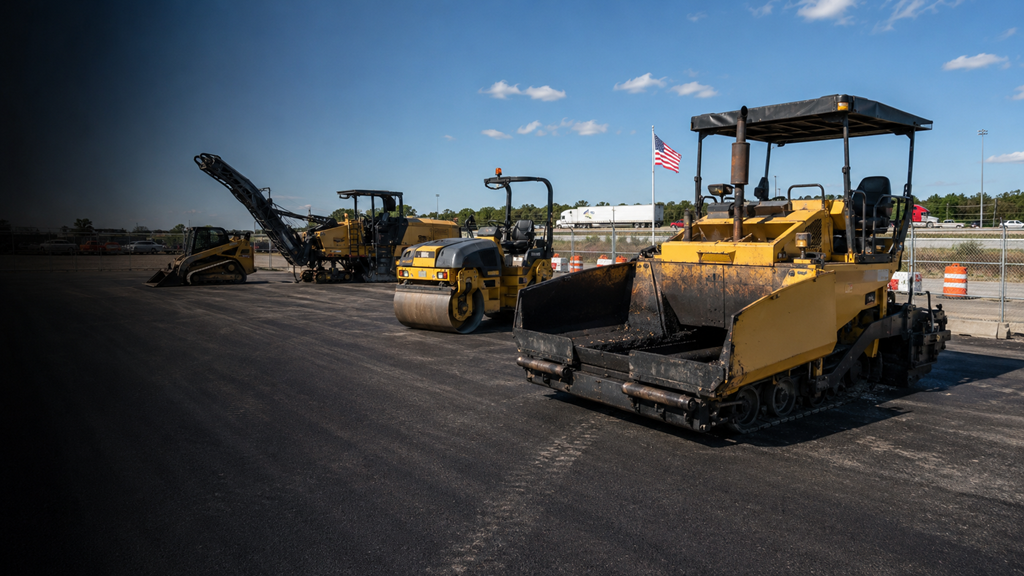 Used Asphalt & Paving Equipment in the USA: 2026 Prices & Buyer's GuideRead more
A practical buyer's guide to used asphalt and paving equipment sourced from the USA — what is available, current...
-
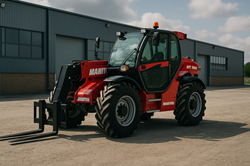 Manitou MT 1840 Telehandler 2026: Current Prices, Specs, and Buyer’s GuideRead more
The Manitou MT 1840 has established itself as one of the most versatile and trusted telehandlers in the global...
-
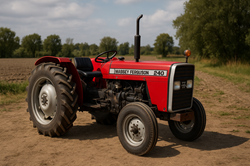 The Complete Guide to Massey Ferguson 240: Price, Specifications, and Global LegacyRead more
Massey Ferguson 240 sits in that sweet spot between light chores and real farm work. It’s part of the MF 200 series,...
-
 Ford Transit Box Truck for Sale: 2026 Buyer’s Guide for Small Business FleetsRead more
The Ford Transit box truck has long been a cornerstone of small business logistics, and in 2026 its position remains...
-
 The Ultimate Guide to Buying Trucks & Excavators: Prices, Deals, and Insights for Contractors in the USA, UK, Canada, and AustraliaRead more
For contractors, fleet managers, farmers, and construction companies, investing in the right trucks and excavators...
Blog categories
- Automotive Parts (21) click
- Heavy Machinery & Equipment Parts (6)
- OEM vs. Aftermarket Parts (1)
- Maintenance & Repair Tips (0)
- Parts Compatibility & Cross-Referencing (0)
- Sustainability & Recycling (1)
- Industry News & Trends (2)
- Buyer & Seller Guides (60)
- Performance Upgrades & Modifications (0)
- Product Reviews & Comparisons (1)
Search in blog
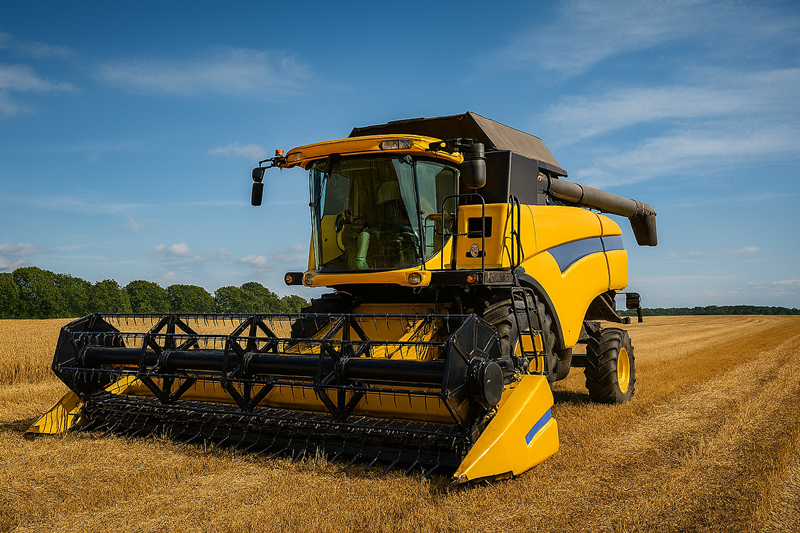
Combine Harvester Prices in 2026: A Buyer’s Guide for North American Farmers
A practical, data-driven look at 2026 combine pricing, brand comparisons, financing strategies, and smart features shaping ROI for U.S. and Canadian farms—plus UK export context and on-the-ground examples.
Combine harvesters are still the single most consequential line item on many grain farms’ capital plans, and 2026 has not made these decisions simpler. Machines are smarter, powertrains are cleaner, labor remains tight, and the spread between a bare-bones mid-range unit and a fully instrumented flagship has never been wider. If you are a midsize grain farmer in Nebraska trying to balance throughput with cash flow, a Canadian co‑op coordinating multi‑farm harvest windows across the Prairies, or a UK buyer shopping North American used inventory to backfill post‑harvest shortages, understanding what truly drives today’s prices is how you avoid overpaying and under‑speccing at the same time.
What’s Driving Combine Harvester Prices in 2026?
Pricing in 2026 reflects three forces pulling in the same direction: input inflation, regulatory complexity, and digital capability. Material and component costs have stabilized compared to the volatility of 2022–2023, yet they remain structurally higher for steel, hydraulics, and semiconductors. At the same time, emissions compliance continues to ratchet upward; while Tier 4 Final governs the U.S. landscape, many North American machines incorporate engine and aftertreatment tech engineered for global Stage V alignment, and that engineering work lands in the sticker price. The third driver is the one farmers actually want—automation. Auto‑steer, headland automation, adaptive threshing, live yield mapping, and remote diagnostics all raise base MSRP, but they also compress operator learning curves, reduce overlap, and shave fuel burn. The result is a market where even mid‑range models ship with guidance-ready harnesses, high-resolution grain‑quality sensors, and telematics subscriptions as default rather than add‑ons.
The demand side amplifies these trends. Tight labor markets pressure growers to lean on autonomy and assistance, pushing spec sheets up-market. New acreage consolidation patterns in the Midwest and Western Canada mean a smaller number of machines must cover more fields in fewer weather windows, so capacity and uptime take priority. As a result, the price floor on “capable enough” has climbed, while premium configurations achieve outsized resale values because the next buyer wants the same time‑saving technology you do today.
Compare Combine Brands: John Deere, Case IH, CLAAS
Brand choice in North America remains a blend of dealer density, operator familiarity, and technology ecosystem. John Deere’s depth of dealer coverage and the maturity of the Operations Center make it the default in many U.S. counties. Case IH’s Axial‑Flow architecture keeps winning over mixed‑crop operators who value rotor simplicity and grain quality across corn, soybeans, and wheat. CLAAS, anchored by the LEXION line, has steadily expanded support in Canada and the Northern states, appealing to buyers who want high-capacity threshing, hybrid separation, and a strong precision‑ag toolchain. In 2026, each brand’s pricing aligns with the sophistication of its guidance, automation, and aftertreatment systems, but what closes deals is local service competence during the ten days a year when downtime is existential.
Concrete pricing snapshots help sharpen the comparison. A mid‑range John Deere S780 configured with premium cab, high‑capacity grain tank, StarFire guidance, and integrated loss monitoring typically lists between $470,000 and $520,000 in the Upper Midwest when delivered with a corn head and a soybean draper negotiated separately. A Case IH Axial‑Flow 7150 in Texas starts around $385,000 for a harvest‑ready unit with guidance‑ready wiring, with fully optioned builds running into the low $400,000s depending on heads, residue management, and extended wear packages. A CLAAS LEXION 8700 in Saskatchewan with TELEMATICS, CEMOS automatic settings, and RTK‑ready guidance can surpass $500,000 easily when matched with high‑capacity headers, yet the per‑acre productivity and fuel efficiency metrics often justify the premium on larger operations.
Used vs New Combine Harvester Costs
Used values tightened during the supply chain crunch and remain surprisingly firm in 2026 for late‑model machines with clean hours and complete service logs. Buyers who want the latest fuel maps and automation without the upfront shock have targeted 2020–2023 vintages, where depreciation has trimmed sticker price while most of the modern convenience remains intact. A well‑kept 2019 John Deere S670 with sub‑1,500 separator hours still trades in the $180,000–$220,000 range in Iowa depending on head packages and maintenance history, while a 2021 Case IH 7250 with under 1,200 hours frequently lists between $285,000 and $345,000 in the Central Plains. Those numbers float by season; post‑harvest listings soften a touch as trade‑ins hit dealer lots, then tighten again as pre‑season buyers lock inventory.
New pricing reflects feature creep and emissions compliance. A 2026 John Deere S760 ordered in March for a July delivery in Illinois can land around $495,000 with a mid‑spec automation suite and grain‑quality kit, while a high‑spec X9 1100 in Iowa configured with ProDrive, extended grain tank, premium cab, and full automation typically clears $800,000, nudging $825,000 with aggressive head options. The calculus is not just cash outlay; warranty terms, telematics coverage, and dealer uptime guarantees can swing total cost of ownership by tens of dollars per acre over a five‑year horizon, which is why some growers accept the higher capex to lock predictable opex and superior resale.
Leasing, Financing & Support Options
Financing structures in 2026 reflect higher benchmark rates than the pre‑pandemic era, but creative terms are keeping combines moving to farms that need them. Leasing remains attractive for operations with predictable harvest windows or evolving crop mixes, allowing spec flexibility without long‑tail depreciation. A midsize grain farmer in Nebraska running 2,800 acres of corn and beans might target a 36‑month lease on a Case IH 7250 with a balloon payment and a usage cap aligned to historical separator hours, folding an extended warranty and predictive maintenance plan into the monthly charge to cap downtime risk. Meanwhile, a Canadian co‑op managing seasonal harvests across Alberta and Saskatchewan may opt for a pooled fleet arrangement with CLAAS or Deere that includes multi‑unit discounts, telematics dashboards for dispatching, and a spare machine clause that triggers a dealer loaner if uptime targets are missed during peak weeks.
Support is the half of the invoice you do not see but absolutely pay for. Dealers in the Dakotas and the Prairie Provinces are selling service more than steel: guaranteed response times, on‑truck parts inventories tailored to your models, remote diagnostics that pre‑position technicians before a failure strands you, and after‑hours hotlines answered by humans who know your serial numbers. Those elements are now bundled into finance offers as an operational safety net. The farms that treat these services as optional often discover later that a cheaper machine plus slow service is the most expensive combination on earth during a weather‑compressed harvest.
Real Examples: Pricing in Iowa, Ontario, and the UK
Regional snapshots clarify how freight, taxes, and dealer behavior nudge pricing. In Iowa, a high‑spec John Deere S780 with premium automation typically settles just under $490,000 before heads after a farm’s loyalty discounts and trade‑in credits, while the same configuration in eastern Nebraska might be a few thousand higher or lower depending on dealer competition. In Ontario, currency, freight, and dealer pre‑delivery inspections put a fully loaded Case IH Axial‑Flow 7150 around CA$520,000, with packages that include extended warranty and AFS Connect telematics subscriptions pushing the final invoice higher. Across the Atlantic, UK contractors chasing late‑season capacity sometimes source used CLAAS LEXION 760/7500 machines from continental Europe; by the time those units clear inspections and cross‑border admin, the all‑in equivalent often falls in the £260,000–£300,000 band, which can be compelling compared to new domestic quotes.
Local realities shape the decision more than any brochure. A Nebraska wheat and corn operator farming mixed soils across three counties might discover that a used Case IH 6130 at $165,000 plus a dealer’s parts truck stationed within thirty miles outproduces a newer machine paired with a service department two hours away. In contrast, a Western Ontario co‑op dispatching five machines across member farms benefits from standardizing on CLAAS to leverage single‑brand parts pooling and telematics uniformity, reducing dispatch friction and downtime by nearly a fifth during the busiest ten days of the season.
Market Trends: Automation, Auto‑Steer, GPS, and Electric Combines
Automation is the headline and the footnote; everything else is implementation detail. Auto‑steer is table stakes, but the 2026 class of combines knits auto‑steer with headland automation, terrain‑aware threshing, residue management presets, and on‑the‑go grain‑quality tuning. Live yield maps and moisture sensors feed back into planting and nitrogen strategies, allowing next spring’s planter prescriptions to reflect the realities of last fall’s variability. Farms that struggled to recruit seasoned operators are running less‑experienced crews confidently because machines now coach good habits and block bad ones with automated safeguards.
Telematics ties the whole operation together. Deere’s Operations Center, Case IH AFS Connect, and CLAAS TELEMATICS are no longer siloed dashboards; they feed work orders, service tickets, and location data into farm ERPs and dispatch boards. Managers in Ontario and Iowa are watching live separator hours, fuel curves, and warning codes from their phones and calling audibles on head swaps or field order to chase weather windows. The question used to be whether technology paid; the new question is how fast your team can operationalize it into decisions before the clouds roll in.
Electric combines sit at the edge of commercial reality in North America, with prototypes and pilots proving concepts rather than covering 2,000 acres a season. Where they do make sense today—municipal demonstration plots, research farms, or specialty operations with noise or emissions constraints—the promise is consistent torque, fewer fluids, and lower routine maintenance. For most row‑crop farms, hybridization and smarter hydraulics are the near‑term bridge. Diesel remains the workhorse because energy density and refueling speed still rule the calendar in October.
Support Services, Resale Value, and Parts Availability
Once the paint dries on the invoice, the two numbers that matter are hours per day during the window and dollars per acre at the end of the season. Support services hit both numbers. Preventive maintenance plans that swap wear parts before failure, machine health alerts that catch bearing temps early, and technicians who carry the right sieves and chains on the first visit keep your combines inside fields rather than outside shops. Parts inflation is real—common wear items have crept eight to twelve percent in two years—so fleets are locking in preseason kits and leaning on dealer stocking agreements to smooth costs.
Resale remains remarkably robust for spec‑rich machines with complete records. A five‑year‑old Case IH 8250 with popular headers, clean software lineage, and sub‑1,500 separator hours can still command sixty‑plus percent of its original value in strong markets because the next buyer wants your features and your discipline. Auction platforms give liquidity, but dealer trade‑ins tied to new orders often deliver better net outcomes because they compress transaction friction and reduce the risk that harvest sneaks up before your replacement arrives.
Frequently Asked Questions: Combine Pricing & Ownership in 2026
What’s the cost range for new vs used combines in the U.S.?
New mid‑range machines in 2026 typically start around $360,000–$450,000 and climb well past $800,000 for high‑spec flagships with advanced automation and large grain handling. Late‑model used units from 2018–2022 generally trade between $150,000 and $350,000 depending on hours, condition, headers, and service history. Local dealer competition and timing around harvest shift these bands more than national averages do.
Are auto‑steering and GPS features worth the price?
For farms working more than a few hundred acres, guidance and auto‑steer usually pay back within a couple of seasons through reduced overlap, cleaner headlands, lower operator fatigue, and improved grain‑quality control. The equipment does not just steer; it standardizes good technique across a workforce that changes year to year.
Can I lease a combine in Canada or the UK?
Yes. Canadian lenders and manufacturer finance arms commonly offer seasonal or balloon‑structure leases, and UK dealers use lease‑purchase agreements that align with cash flow. Co‑ops often negotiate fleet terms that bundle maintenance, telematics, and uptime clauses, which stabilizes budget lines during peak weeks.
How long does it take to order and receive a new combine?
Lead times depend on model and options. Four to eight months is a realistic planning window for North America, with longer timelines for flagship models ordered with bespoke headers or uncommon residue packages. Early orders secure better delivery windows and sometimes better pricing.
Do electric combines exist in practical form today?
Pilot units and niche deployments exist, largely outside mainstream North American row‑crop operations. For most farms, the near‑term wins are hybridized systems, smarter hydraulics, and automation stacked onto efficient diesel platforms. Watch the space, but buy for the next five seasons, not the next press release.
What affects resale value the most?
Separator hours, complete service documentation, clean software lineage, popular headers, and spec levels that match regional preferences move the needle. Machines with guidance‑ready harnesses, active automation licenses, and grain‑quality sensors sell faster and closer to ask.
Is it risky to buy at auction?
Auction purchases can be smart if you do the homework. Third‑party inspections, ECU health reports, oil analysis, and a clear plan for heads and transport remove most surprises. When auctions compress timelines, buyers sometimes skip diligence; that’s where regret lives.
What’s the ROI of advanced automation features?
On mixed‑crop farms across the Midwest and Prairies, operators report recovering automation premiums within two to four seasons through lower fuel consumption, faster field times, and fewer operator‑induced quality losses. The less tangible benefit—operator confidence—often saves a harvest when crews rotate.
Can I export a used combine from the U.S. or Canada to the UK?
Yes, but budget for inspections, emissions compliance documentation, shipping, and post‑arrival modifications. The economics can make sense for well‑specced late‑model units where UK availability is thin, but administrative lead time must be part of the plan.
Which brand has the best support network?
John Deere’s U.S. dealer density gives it an advantage in many counties, while Case IH and CLAAS have made visible investments in parts depots and training across Canada and the Northern tier. The right answer is the dealer who reaches your field fastest in October with the right parts on the truck.
How should a midsize Nebraska farm think about spec and finance?
A 2,500–3,000‑acre Nebraska operation often benefits from a mid‑high spec rotor machine with automation and guided harvesting, financed through a three‑year lease that includes predictive maintenance. The goal is not the lowest monthly—it’s the most acres cleared per weather window with the fewest service surprises.
What about a Canadian co‑op managing seasonal harvests?
Standardizing on a single brand for five or more machines simplifies parts pooling and operator training. Co‑ops should negotiate uptime clauses, remote diagnostics access, and temporary loaner provisions to keep member farms running when one unit goes down at the worst possible moment.
Are headers usually bundled into the price?
Not always. Dealers often price heads separately to preserve flexibility across crops and acreages. Bundles can work if you are certain about crop mix for the finance term, but many buyers keep head purchasing modular to match seasonal realities.
How do U.S. and Canadian prices really compare after currency?
Sticker comparisons mislead without freight, PDI, taxes, and incentives. After all‑in adjustments, Canada often runs five to ten percent higher for the same spec, though provincial programs and co‑op terms can erase the gap. The best deal is the one with the fastest service response, not the smallest nominal invoice.
Selling equipment like this?
List it on AGGZ and reach buyers reading guides like this and searching for used machinery.
Posted in:
Buyer & Seller Guides
Related posts
-
Used Road Rollers & Compactors in Poland: 2026 Prices & Buyer's Guide
A buyer's guide to used road rollers and compactors listed in Poland: what is available, current prices, what to...Read more
-
How to Import Used Construction Machinery from Abroad: 2026 Buyer's Guide
A practical guide to importing used heavy equipment from abroad — sources, shipping options, customs, inspection, and...Read more
-
Caterpillar for Sale: Prices, Specs & Used Market Guide 2026
A buyer's guide to used Caterpillar machines — the CAT 320-series excavators and road equipment, current price...Read more
-
Used Construction Machinery in the USA: 2026 Prices & Buyer's Guide
A buyer's guide to used road construction and paving machinery from the USA — current price ranges, an inspection...Read more
-
Used Road Rollers & Compactors from China: 2026 Prices & Buyer's Guide
A buyer's guide to recent, low-hour used road rollers and compactors sourced from China — what is available, current...Read more
Leave a comment