
A buyer's guide to used road rollers and compactors listed in Poland: what is available, current prices, what to...
Latest posts
-
 Used Road Rollers & Compactors in Poland: 2026 Prices & Buyer's GuideRead more
 -
 How to Import Used Construction Machinery from Abroad: 2026 Buyer's GuideRead more
A practical guide to importing used heavy equipment from abroad — sources, shipping options, customs, inspection, and...
-
 Caterpillar for Sale: Prices, Specs & Used Market Guide 2026Read more
A buyer's guide to used Caterpillar machines — the CAT 320-series excavators and road equipment, current price...
-
 Used Construction Machinery in the USA: 2026 Prices & Buyer's GuideRead more
A buyer's guide to used road construction and paving machinery from the USA — current price ranges, an inspection...
-
 Used Road Rollers & Compactors from China: 2026 Prices & Buyer's GuideRead more
A buyer's guide to recent, low-hour used road rollers and compactors sourced from China — what is available, current...
-
 Used Asphalt & Paving Equipment in the USA: 2026 Prices & Buyer's GuideRead more
A practical buyer's guide to used asphalt and paving equipment sourced from the USA — what is available, current...
-
 Manitou MT 1840 Telehandler 2026: Current Prices, Specs, and Buyer’s GuideRead more
The Manitou MT 1840 has established itself as one of the most versatile and trusted telehandlers in the global...
-
 The Complete Guide to Massey Ferguson 240: Price, Specifications, and Global LegacyRead more
Massey Ferguson 240 sits in that sweet spot between light chores and real farm work. It’s part of the MF 200 series,...
-
 Ford Transit Box Truck for Sale: 2026 Buyer’s Guide for Small Business FleetsRead more
The Ford Transit box truck has long been a cornerstone of small business logistics, and in 2026 its position remains...
-
 The Ultimate Guide to Buying Trucks & Excavators: Prices, Deals, and Insights for Contractors in the USA, UK, Canada, and AustraliaRead more
For contractors, fleet managers, farmers, and construction companies, investing in the right trucks and excavators...
Blog categories
- Automotive Parts (21) click
- Heavy Machinery & Equipment Parts (6)
- OEM vs. Aftermarket Parts (1)
- Maintenance & Repair Tips (0)
- Parts Compatibility & Cross-Referencing (0)
- Sustainability & Recycling (1)
- Industry News & Trends (2)
- Buyer & Seller Guides (60)
- Performance Upgrades & Modifications (0)
- Product Reviews & Comparisons (1)
Search in blog
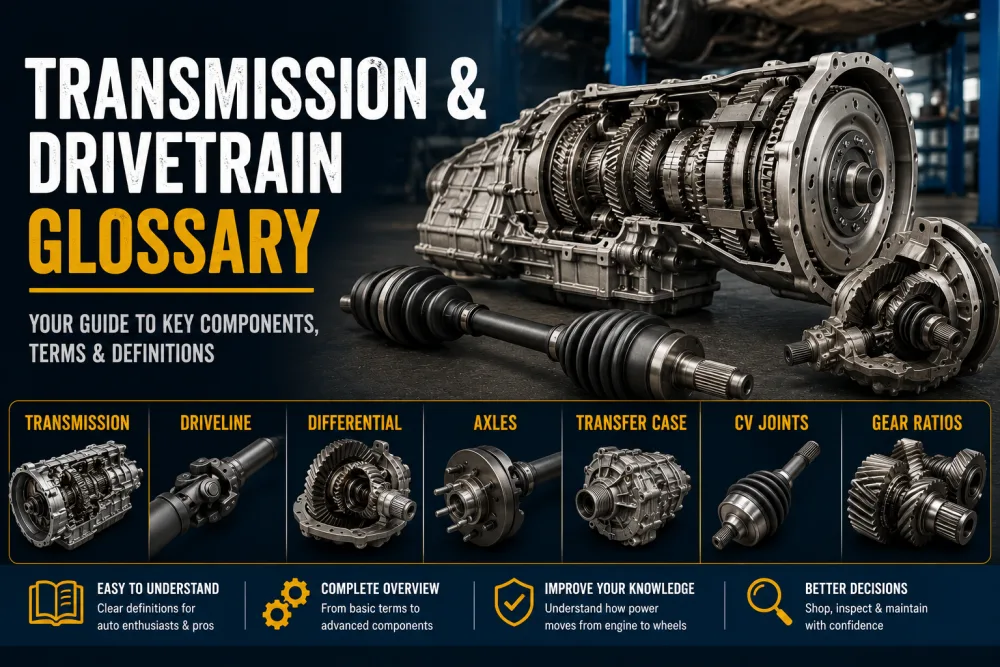
Transmission & Drivetrain Glossary
Here is an essential guide to key components in the transmission and drivetrain systems, providing a clear understanding of each part’s role in your vehicle’s performance.
1. Axle Shaft
The axle shaft transfers power from the differential to the wheels, supporting the vehicle's weight while allowing wheel rotation. Essential in both front- and rear-wheel-drive systems, axle shafts are crucial for smooth and stable driving.
2. Clutch Disc
The clutch disc is a friction plate between the flywheel and the pressure plate in manual transmissions. It engages and disengages power between the engine and transmission, allowing smooth gear changes.
3. Clutch Plate
Also known as the clutch pressure plate, it presses the clutch disc against the flywheel to transmit power. It’s an integral part of the clutch assembly, ensuring power transfer when the clutch is engaged.
4. Clutch Release Bearing
The clutch release bearing allows the clutch disc to disengage from the flywheel when the clutch pedal is pressed, facilitating smooth gear shifts without stalling the engine.
5. Clutch Slave Cylinder
The clutch slave cylinder operates the clutch release mechanism, transferring hydraulic pressure from the clutch master cylinder to disengage the clutch.
6. Countershaft
The countershaft is part of the transmission that helps transfer power from the input shaft to the output shaft. It holds various gears that mesh with the main shaft gears to manage speed and torque.
7. CV Axle (Constant Velocity Axle)
The CV axle connects the transmission to the wheels, allowing consistent power transfer even when the wheels turn. It’s essential for front-wheel and all-wheel drive vehicles.
8. CV Joint (Constant Velocity Joint)
The CV joint is located at both ends of the CV axle, allowing the axle to bend and flex while transmitting torque, essential for smooth power delivery through turns and suspension movement.
9. Differential
The differential allows wheels on the same axle to rotate at different speeds, crucial for turning without tire slip. Limited-slip differentials enhance traction by limiting speed differences between wheels.
10. Driveshaft
The driveshaft transfers power from the transmission to the differential in rear-wheel-drive vehicles. It’s a rotating shaft that enables the rear wheels to turn.
11. Flywheel Ring Gear
The flywheel ring gear is a toothed ring attached to the flywheel, engaging with the starter motor to crank the engine during startup.
12. Gear Selector
The gear selector allows the driver to choose gears, enabling changes between drive, neutral, reverse, and other gear settings in both manual and automatic transmissions.
13. Gearbox
The gearbox houses the gears that adjust the torque and speed sent from the engine to the wheels, essential for controlled acceleration and deceleration.
14. Limited-Slip Differential
A limited-slip differential limits the difference in wheel speed across the axle, providing better traction by reducing wheel spin in low-grip situations.
15. Manual Transmission
In manual transmissions, the driver selects gears by manually engaging the clutch and shifting with a gear lever, offering more control over the vehicle’s speed and power.
16. Shift Lever
The shift lever, or gear stick, allows the driver to change gears in manual transmissions and select driving modes in automatic transmissions.
17. Shift Linkage
Shift linkage connects the shift lever to the transmission, allowing for smooth gear changes by coordinating the movement of internal components.
18. Torque Converter
In automatic transmissions, the torque converter transfers power from the engine to the transmission, replacing the clutch and enabling smooth acceleration.
19. Transfer Case
In four-wheel-drive and all-wheel-drive vehicles, the transfer case splits power between the front and rear axles, allowing for effective torque distribution across all wheels.
20. Transmission Cooler
The transmission cooler reduces transmission fluid temperature, essential for preventing overheating in heavy-duty or high-performance applications.
21. Transmission Fluid
Transmission fluid lubricates and cools the transmission components, essential for smooth operation and longevity.
22. Transmission Mount
The transmission mount secures the transmission to the vehicle frame, absorbing vibrations and reducing engine movement.
23. Transmission Pan
The transmission pan holds the transmission fluid in automatic transmissions, providing a reservoir for cooling and lubrication.
24. U-Joint (Universal Joint)
The U-joint allows flexibility in the driveshaft, accommodating changes in angle between the transmission and differential, essential for rear-wheel-drive vehicles.
25. Gear Shift Cable
The gear shift cable connects the shift lever to the transmission in automatic transmissions, allowing smooth gear selection.
26. Synchromesh
Synchromesh gears allow smoother shifts by synchronizing the speeds of the transmission’s moving parts, reducing grinding and wear.
27. Torsion Bar
The torsion bar provides suspension support, twisting to absorb impacts and maintain stability, common in heavy-duty vehicles.
28. Transfer Case Chain
The transfer case chain drives the front and rear driveshafts, ensuring consistent power distribution to all wheels.
29. Drive Sprocket
The drive sprocket connects to the chain or belt in the transfer case, contributing to effective torque transfer to the wheels.
30. Input Shaft
The input shaft transfers power from the engine to the transmission, driving the gears that control speed and torque.
31. Reverse Gear
The reverse gear enables the vehicle to move backward, engaging with the gearbox to reverse the drivetrain’s rotation.
32. Output Shaft
The output shaft transmits power from the transmission to the driveshaft or axles, ultimately driving the wheels.
33. Countershaft Bearing
This bearing supports the countershaft, ensuring smooth rotation within the transmission.
34. Crown Wheel
The crown wheel is part of the differential, meshing with the pinion gear to transfer power to the axles.
35. Dog Gear
Dog gears engage without friction rings, allowing quick, direct gear changes often used in performance or racing transmissions.
36. Double-Clutch Transmission
Double-clutch transmissions alternate between two clutches to shift gears quickly and efficiently, commonly used in performance vehicles.
37. Gear Reduction
Gear reduction lowers speed while increasing torque, essential in applications requiring high torque output, like towing or off-roading.
38. Half Shaft
Half shafts connect the differential to each drive wheel, allowing independent suspension and efficient power transfer in front- and rear-wheel-drive vehicles.
39. Heli Coil Insert
Heli coil inserts are threaded wire inserts that repair or reinforce damaged threads in the engine or transmission housing.
40. Input Bearing
The input bearing supports the input shaft in the transmission, allowing smooth rotation and power transfer.
41. Layshaft
The layshaft, or countershaft, holds gears that mesh with the main shaft gears, transmitting power within the gearbox.
42. Pinion Gear
The pinion gear meshes with the crown wheel in the differential, transferring power to the axles.
43. PTO (Power Take-Off)
The PTO allows power transfer from the engine to auxiliary components, commonly used in trucks for powering equipment like hydraulic pumps.
44. Ring and Pinion
The ring and pinion gears in the differential transfer power to the axles, ensuring correct wheel rotation and torque distribution.
45. Selector Fork
The selector fork moves gears within the transmission to engage different gears, enabling gear shifts.
46. Selector Shaft
The selector shaft moves the selector forks, helping drivers choose the correct gear.
47. Shifter Boot
The shifter boot covers the shift lever base, sealing the transmission tunnel to prevent debris from entering the interior.
48. Shift Knob
The shift knob is the top of the shift lever, providing a comfortable grip for the driver when changing gears.
49. Shift Solenoid
The shift solenoid controls the flow of transmission fluid, enabling automatic gear changes.
50. Slave Cylinder
The slave cylinder works with the clutch master cylinder to disengage the clutch in manual transmissions.
51. Thrust Bearing
The thrust bearing absorbs axial forces within the transmission, reducing wear on rotating components.
52. Torque Converter Seal
The torque converter seal prevents fluid leaks between the transmission and torque converter, essential for efficient power transfer.
53. Torque Converter Solenoid
This solenoid controls the lockup function in the torque converter, enhancing fuel efficiency by reducing slip at high speeds.
54. Transfer Gear
The transfer gear in the transfer case transmits power to the front and rear axles in four-wheel-drive vehicles.
55. Gear Train
The gear train includes all gears in the transmission, responsible for controlling speed and torque ratios.
56. Helical Gear
Helical gears have angled teeth, allowing smoother engagement and quieter operation, commonly used in modern transmissions.
57. Hypoid Gear
Hypoid gears are used in differentials for increased torque handling, characterized by offset positioning for better gear meshing.
58. Idler Gear
The idler gear changes the direction of rotation between gears without altering gear ratios, common in manual transmissions.
59. Intermediate Shaft
The intermediate shaft in the transmission holds gears that connect the input and output shafts, enabling gear selection.
60. Locking Hub
Locking hubs connect or disconnect the front wheels from the drivetrain in four-wheel-drive systems, enhancing fuel efficiency.
61. Overdrive Gear
The overdrive gear reduces engine RPM at high speeds, improving fuel efficiency by allowing a higher gear ratio.
62. Overdrive Solenoid
The overdrive solenoid engages the overdrive gear, enhancing fuel economy during highway driving.
63. Pinion Bearing
The pinion bearing supports the pinion gear in the differential, ensuring smooth operation.
64. Planetary Gear
Planetary gears are used in automatic transmissions to provide multiple gear ratios within a compact space, enhancing efficiency.
65. Pressure Plate
The pressure plate presses the clutch disc against the flywheel in manual transmissions, engaging the clutch and transmitting power.
66. Reverse Idler Gear
The reverse idler gear enables reverse motion in the gearbox, allowing the vehicle to back up.
67. Ring Gear
The ring gear meshes with the pinion gear in the differential, directing power to the axles.
68. Shaft Seal
Shaft seals prevent fluid leaks from transmission shafts, maintaining internal pressure and preventing contamination.
69. Shift Interlock
The shift interlock prevents shifting into certain gears without specific actions, like pressing the brake pedal.
70. Slip Yoke
The slip yoke allows for changes in driveshaft length as the suspension moves, ensuring smooth power transfer.
71. Splined Shaft
The splined shaft has ridges or grooves, allowing it to connect with other components without slipping.
72. Synchro Hub
The synchro hub facilitates smooth gear changes by synchronizing the rotation speeds of gears, essential in manual transmissions.
73. Throttle Valve Cable
The throttle valve cable connects the throttle to the transmission, controlling shift points in older automatic transmissions.
74. Thrust Washer
The thrust washer absorbs axial loads in the transmission, preventing wear on moving parts.
75. Universal Joint
The universal joint allows flexible movement in the driveshaft, accommodating changes in alignment.
76. Viscous Coupling
The viscous coupling transfers power between front and rear wheels, using fluid resistance to manage torque in all-wheel-drive vehicles.
77. Worm Gear
Worm gears have a helical shape, providing high torque in compact spaces, common in steering systems.
78. Transmission Solenoid
Transmission solenoids control fluid flow to change gears in automatic transmissions.
79. Output Yoke
The output yoke connects the driveshaft to the transmission, enabling power transfer to the wheels.
80. Pilot Bearing
The pilot bearing supports the transmission input shaft, reducing friction during clutch engagement.
81. Clutch Pedal
The clutch pedal in manual vehicles controls clutch engagement, allowing the driver to shift gears.
82. Pressure Plate Cover
The pressure plate cover secures the clutch assembly, housing components like the clutch disc and pressure plate.
83. Flywheel Resurfacing
Flywheel resurfacing smooths the flywheel surface, improving clutch engagement and reducing wear.
84. Spigot Bearing
The spigot bearing supports the transmission input shaft, aligning it with the engine crankshaft.
85. Torque Converter Pump
The torque converter pump moves transmission fluid, facilitating smooth power transfer in automatic transmissions.
86. Coupler Sleeve
The coupler sleeve connects transmission components, allowing torque transfer within the drivetrain.
87. Constant Velocity Joint
Constant velocity joints maintain consistent power delivery through varying angles, essential in front-wheel-drive vehicles.
88. Gear Lever
The gear lever or shift lever allows the driver to change gears, essential in both manual and automatic transmissions.
89. Gear Pump
The gear pump circulates transmission fluid, lubricating and cooling transmission components.
90. Gearbox Oil
Gearbox oil lubricates gears and bearings within the gearbox, reducing friction and preventing wear.
91. Oil Level Plug
The oil level plug allows you to check or add oil to the gearbox, ensuring proper lubrication.
92. Propeller Shaft
The propeller shaft transfers power from the transmission to the differential, a key component in rear-wheel and four-wheel-drive vehicles.
93. Universal Joint Yoke
The universal joint yoke holds the U-joint, connecting the driveshaft to the transmission or differential.
94. Central Differential
The central differential distributes power to both front and rear axles in all-wheel-drive systems.
95. Differential Case
The differential case houses the gears in the differential, protecting them and ensuring proper power distribution.
96. Differential Lock
The differential lock locks the wheels on the same axle, improving traction on slippery surfaces.
97. Dog Clutch
The dog clutch directly engages gears without a friction mechanism, allowing rapid gear changes.
98. Synchro Ring
The synchro ring synchronizes the speed of gears, reducing grinding during gear shifts in manual transmissions.
99. Drivetrain Vibration
Drivetrain vibration is caused by misalignment or wear in drivetrain components, affecting ride comfort and vehicle stability.
100. Bell Housing
The bell housing encloses the clutch and flywheel, connecting the transmission to the engine and providing structural support.
Related equipment for sale on AGGZ
Frequently asked questions
How much does used Spare Parts cost on AGGZ?
Prices depend on the year, operating hours and condition of each machine. Compare the current listings above to see real prices from sellers, then contact the seller directly.
What should I check when buying used Spare Parts?
Check the year of manufacture, operating hours or mileage, service and maintenance history, and overall condition. Arrange an inspection or request detailed photos before any payment.
Can I buy and export used Spare Parts from Turkey and abroad?
Yes. Many sellers on AGGZ ship internationally. Confirm shipping options, export documentation and payment terms directly with the seller before you buy.
Selling similar equipment?
List your machinery on AGGZ and reach buyers searching for Spare Parts, trucks, spare parts and industrial equipment.
Posted in:
Automotive Parts
Related posts
-
 Unleash the Power: A Complete Guide to Essential Engine Parts
A comprehensive, expert-level guide that explains how car engines work by breaking down all essential components—from...Read more
Unleash the Power: A Complete Guide to Essential Engine Parts
A comprehensive, expert-level guide that explains how car engines work by breaking down all essential components—from...Read more -
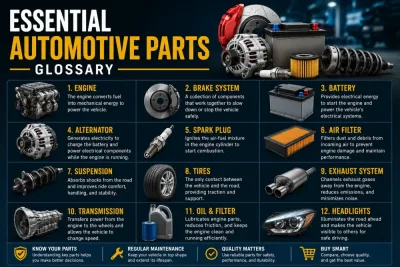 Essential Automotive Parts Glossary
For anyone diving into the world of automotive parts, understanding each component’s function is crucial. Here’s a...Read more
Essential Automotive Parts Glossary
For anyone diving into the world of automotive parts, understanding each component’s function is crucial. Here’s a...Read more -
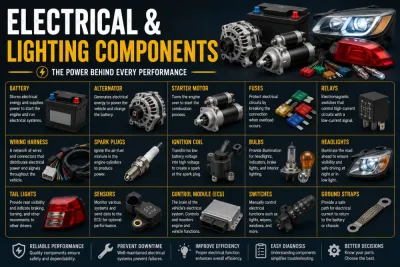 Electrical & Lighting Components
In automotive systems, electrical and lighting components are essential for visibility, safety, and functionality....Read more
Electrical & Lighting Components
In automotive systems, electrical and lighting components are essential for visibility, safety, and functionality....Read more -
 Suspension & Steering Glossary
The Suspension & Steering system ensures a smooth, stable ride by absorbing shocks and allowing control over the...Read more
Suspension & Steering Glossary
The Suspension & Steering system ensures a smooth, stable ride by absorbing shocks and allowing control over the...Read more -
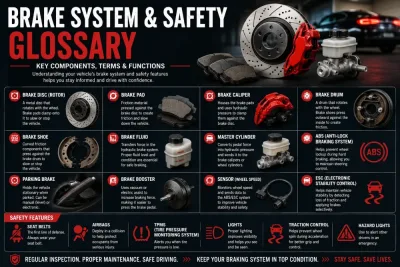 Brake System & Safety Glossary
This glossary provides a detailed explanation of essential brake system components and safety parts, highlighting...Read more
Brake System & Safety Glossary
This glossary provides a detailed explanation of essential brake system components and safety parts, highlighting...Read more
Leave a comment