
A buyer's guide to used road rollers and compactors listed in Poland: what is available, current prices, what to...
Latest posts
-
 Used Road Rollers & Compactors in Poland: 2026 Prices & Buyer's GuideRead more
 -
 How to Import Used Construction Machinery from Abroad: 2026 Buyer's GuideRead more
A practical guide to importing used heavy equipment from abroad — sources, shipping options, customs, inspection, and...
-
 Caterpillar for Sale: Prices, Specs & Used Market Guide 2026Read more
A buyer's guide to used Caterpillar machines — the CAT 320-series excavators and road equipment, current price...
-
 Used Construction Machinery in the USA: 2026 Prices & Buyer's GuideRead more
A buyer's guide to used road construction and paving machinery from the USA — current price ranges, an inspection...
-
 Used Road Rollers & Compactors from China: 2026 Prices & Buyer's GuideRead more
A buyer's guide to recent, low-hour used road rollers and compactors sourced from China — what is available, current...
-
 Used Asphalt & Paving Equipment in the USA: 2026 Prices & Buyer's GuideRead more
A practical buyer's guide to used asphalt and paving equipment sourced from the USA — what is available, current...
-
 Manitou MT 1840 Telehandler 2026: Current Prices, Specs, and Buyer’s GuideRead more
The Manitou MT 1840 has established itself as one of the most versatile and trusted telehandlers in the global...
-
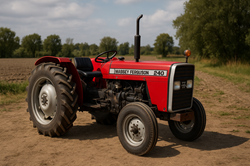 The Complete Guide to Massey Ferguson 240: Price, Specifications, and Global LegacyRead more
Massey Ferguson 240 sits in that sweet spot between light chores and real farm work. It’s part of the MF 200 series,...
-
 Ford Transit Box Truck for Sale: 2026 Buyer’s Guide for Small Business FleetsRead more
The Ford Transit box truck has long been a cornerstone of small business logistics, and in 2026 its position remains...
-
 The Ultimate Guide to Buying Trucks & Excavators: Prices, Deals, and Insights for Contractors in the USA, UK, Canada, and AustraliaRead more
For contractors, fleet managers, farmers, and construction companies, investing in the right trucks and excavators...
Blog categories
- Automotive Parts (21) click
- Heavy Machinery & Equipment Parts (6)
- OEM vs. Aftermarket Parts (1)
- Maintenance & Repair Tips (0)
- Parts Compatibility & Cross-Referencing (0)
- Sustainability & Recycling (1)
- Industry News & Trends (2)
- Buyer & Seller Guides (60)
- Performance Upgrades & Modifications (0)
- Product Reviews & Comparisons (1)
Search in blog
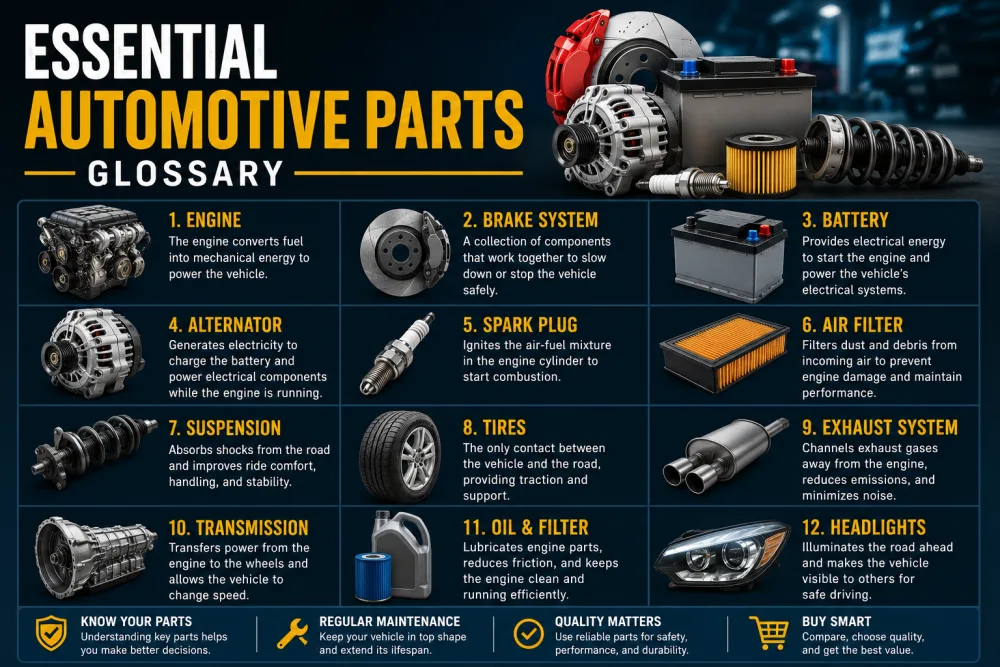
Essential Automotive Parts Glossary
For anyone diving into the world of automotive parts, understanding each component’s function is crucial. Here’s a comprehensive guide defining key automotive terms to help you navigate parts and systems effectively.

1. Alternator
The alternator generates electrical power to recharge the car’s battery and run electrical systems. Essential for keeping lights, radio, and battery charged, the alternator converts mechanical energy into electricity.
2. Aftercooler
An aftercooler cools compressed air after it leaves the turbocharger, increasing air density for better engine combustion efficiency. It’s often used in turbocharged diesel engines.
3. Air Filter
This filter removes dust, dirt, and contaminants from the air before it enters the engine, helping maintain engine performance and efficiency.
4. Air Intake
The air intake system brings air into the engine, crucial for combustion. Cold air intakes, a popular upgrade, increase engine power by allowing cooler, denser air.
5. Balance Shaft
The balance shaft reduces engine vibrations, especially in inline engines, providing smoother operation by counterbalancing the crankshaft's movements.
6. Camshaft
This shaft controls the opening and closing of the engine’s intake and exhaust valves, syncing with the crankshaft to optimize fuel and exhaust flow.
7. Carburetor
Carburetors mix air and fuel before it enters the engine for combustion, common in older engines before fuel injection became standard.
8. Catalytic Converter
A catalytic converter reduces harmful emissions by converting exhaust gases like carbon monoxide and hydrocarbons into less harmful substances before they exit the exhaust.
9. Crankshaft
The crankshaft converts the linear motion of the pistons into rotational motion, powering the drivetrain and ultimately moving the vehicle.
10. Cylinder Block
The main engine housing, containing the cylinders, crankshaft, and pistons. It provides structure and alignment for the moving engine parts.
11. Diesel Particulate Filter (DPF)
The DPF captures soot and ash from diesel exhaust, reducing particulate emissions and contributing to cleaner diesel combustion.
12. EGR Valve (Exhaust Gas Recirculation)
The EGR valve recirculates a portion of exhaust gases back into the engine cylinders, lowering combustion temperatures and reducing nitrogen oxide emissions.
13. Engine Mount
These mounts secure the engine to the chassis, isolating vibrations and minimizing noise for a smoother ride.
14. Engine Timing Belt
A timing belt synchronizes the rotation of the crankshaft and camshaft, ensuring engine valves open and close precisely during each cycle.
15. Exhaust Manifold
The exhaust manifold collects exhaust gases from the engine’s cylinders and directs them through the exhaust pipe to reduce noise and emissions.
16. Fan Clutch
The fan clutch controls the cooling fan speed in relation to engine temperature, optimizing cooling efficiency and reducing energy waste.
17. Fuel Injector
Fuel injectors spray fuel into the combustion chamber, allowing precise fuel-air mixtures for optimal combustion.
18. Fuel Pump
The fuel pump delivers fuel from the tank to the engine under the right pressure for proper combustion.
19. Fuel Rail
The fuel rail distributes fuel to the fuel injectors, ensuring even and consistent flow to each cylinder.
20. Gasket
Gaskets create seals between engine components, preventing leaks of fluids like oil, fuel, and coolant.
21. Glow Plug
Glow plugs preheat the air in diesel engines for better cold-start performance.
22. Harmonic Balancer
This component dampens engine vibrations caused by the crankshaft, extending engine life and improving smoothness.
23. Heat Exchanger
A heat exchanger transfers heat between fluids, often used to cool engine or transmission oil.
24. High-Pressure Pump
A high-pressure pump is critical in diesel engines, ensuring fuel reaches injectors at the necessary pressure.
25. Idle Control Valve
This valve regulates engine idle speed, adjusting air intake to maintain smooth operation when the throttle is closed.
26. Ignition Coil
Ignition coils convert the battery’s low voltage into high voltage, necessary to ignite the fuel-air mixture in spark-ignited engines.
27. Injector Pump
The injector pump delivers fuel at high pressure in diesel engines, directly injecting fuel into the combustion chamber.
28. Intake Manifold
The intake manifold distributes the air-fuel mixture to each cylinder evenly, ensuring consistent combustion.
29. Knock Sensor
This sensor detects engine knocking or pinging, adjusting timing to prevent potential engine damage.
30. Lubrication System
The lubrication system ensures engine components remain well-lubricated, reducing friction and wear.
31. Main Bearing
Main bearings support the crankshaft, allowing it to rotate smoothly within the engine block.
32. Oil Cooler
An oil cooler lowers oil temperature, helping prevent overheating, especially in high-performance engines.
33. Oil Filter
This filter removes contaminants from engine oil, maintaining proper lubrication and prolonging engine life.
34. Oil Pan
The oil pan holds engine oil at the bottom of the engine, from where it’s circulated throughout the engine.
35. Oil Pump
The oil pump circulates oil under pressure, keeping engine parts well-lubricated and cool.
36. Overhead Camshaft (OHC)
The overhead camshaft is located above the cylinder head, directly driving the valves, offering higher engine efficiency.
37. Overhead Valve (OHV)
OHV engines have the camshaft located within the cylinder block, using push rods to control valve operation.
38. PCV Valve (Positive Crankcase Ventilation)
The PCV valve vents unburned gases from the crankcase back to the intake manifold, reducing emissions.
39. Piston
The piston compresses the air-fuel mixture, generating power as combustion forces it downward.
40. Radiator
The radiator cools the engine by circulating coolant, dissipating heat and maintaining optimal engine temperature.
41. Rocker Arm
The rocker arm transmits camshaft motion to the valves, enabling intake and exhaust cycles.
42. Spark Plug
Spark plugs ignite the fuel-air mixture in gasoline engines, starting the combustion process.
43. Supercharger
A supercharger forces more air into the engine, enhancing power output by increasing the oxygen available for combustion.
44. Thermostat
The thermostat regulates coolant flow to maintain engine temperature, opening and closing as needed.
45. Throttle Body
The throttle body controls air intake into the engine, essential for maintaining power and speed.
46. Timing Chain
The timing chain links the crankshaft and camshaft, keeping the engine's intake and exhaust cycles in sync.
47. Timing Gear
The timing gear connects the crankshaft and camshaft in OHV engines, ensuring proper valve timing.
48. Turbocharger
A turbocharger increases engine power by compressing the air before it enters the engine, allowing more fuel to combust.
49. Valve Cover
The valve cover protects engine components at the top of the engine, often covering the camshaft and valves.
50. Water Pump
The water pump circulates coolant through the engine and radiator, essential for preventing overheating.
51. Belt Tensioner
The belt tensioner keeps drive belts tight, ensuring they power auxiliary systems like the alternator and water pump.
52. Blower Motor
The blower motor moves air through the vehicle’s HVAC system, ensuring heating or cooling as needed.
53. Charge Air Cooler
A charge air cooler reduces air temperature post-turbocharging, increasing density and enhancing performance.
54. Cold Air Intake
A cold air intake brings cooler, denser air into the engine, improving combustion efficiency and power output.
55. Coolant Temperature Sensor
The coolant temperature sensor monitors engine temperature, sending data to the engine control unit (ECU).
56. Crankcase
The crankcase houses the crankshaft and other internal components, providing lubrication and protection.
57. Cylinder Head
The cylinder head closes the top of the cylinder block, holding components like the valves, spark plugs, and injectors.
58. Dipstick
A dipstick measures oil levels in the engine, essential for maintaining proper lubrication.
59. Drive Belt
The drive belt transfers power from the engine to auxiliary systems, like the alternator and air conditioning.
60. EGR Cooler
The EGR cooler cools exhaust gases before they re-enter the engine, reducing emissions.
61. Exhaust Pipe
The exhaust pipe directs exhaust gases away from the engine, essential for safe operation.
62. Flywheel
The flywheel stores rotational energy, smoothing engine power delivery to the transmission.
63. Fuel Filter
The fuel filter removes contaminants from fuel, protecting the fuel injectors and engine.
64. Fuel Line
The fuel line delivers fuel from the tank to the engine, crucial for consistent performance.
65. Fuel Pressure Regulator
The fuel pressure regulator maintains optimal fuel pressure for efficient combustion.
66. Fuel Tank
The fuel tank stores fuel for the vehicle, typically located at the rear.
67. Gudgeon Pin
The gudgeon pin connects the piston to the connecting rod, enabling smooth motion.
68. Head Gasket
The head gasket seals the cylinder head to the engine block, preventing leaks.
69. Hydraulic Lifter
Hydraulic lifters adjust valve clearance, reducing noise and wear.
70. Ignition Module
The ignition module controls the timing and distribution of electric current to the spark plugs, ensuring they fire at the right moment to ignite the fuel-air mixture. This component is essential for efficient combustion and smooth engine operation.
71. Intercooler
An intercooler cools compressed air from a turbocharger or supercharger before it enters the engine, improving combustion efficiency and performance. It’s commonly used in high-performance and turbocharged engines to maximize power output.
72. Lifters
Lifters are components within the engine’s valve train that transfer motion from the camshaft to the push rods or directly to the rocker arms, allowing the valves to open and close. Hydraulic lifters adjust automatically, reducing valve noise and maintenance needs.
73. Oil Level Sensor
The oil level sensor monitors the engine’s oil level, alerting the driver if oil is low. Maintaining proper oil levels is crucial for engine lubrication and preventing overheating or damage.
74. Oil Pressure Sensor
The oil pressure sensor measures the pressure of the oil circulating through the engine, sending data to the dashboard. Consistent oil pressure is vital for lubrication, and a drop in pressure can indicate leaks or other mechanical issues.
75. Overhaul Kit
An overhaul kit includes parts and components needed for a complete engine rebuild, such as pistons, gaskets, seals, and bearings. It’s essential for restoring older engines to optimal performance.
76. Piston Pin
The piston pin, also known as a wrist pin, connects the piston to the connecting rod. It allows the piston to pivot as it moves up and down within the cylinder during the combustion process.
77. Powertrain Control Module (PCM)
The PCM is an essential control unit that manages both the engine and transmission functions in modern vehicles, optimizing performance and fuel efficiency by controlling timing, fuel mixture, and other parameters.
78. Push Rod
Push rods are components in overhead valve (OHV) engines that transfer motion from the camshaft to the rocker arms, which then open and close the engine valves. They play a critical role in maintaining engine timing.
79. Reductant Injector
The reductant injector sprays a reducing agent, typically diesel exhaust fluid (DEF), into the exhaust system to help break down nitrogen oxides (NOx) into less harmful gases, essential for emissions control in diesel engines.
80. Reductant Tank
The reductant tank holds the diesel exhaust fluid (DEF) used in selective catalytic reduction (SCR) systems for diesel engines, helping reduce harmful nitrogen oxide emissions.
81. Seal
Seals are used throughout the engine to prevent fluids, such as oil and coolant, from leaking out of critical areas. Seals are essential in ensuring optimal performance and preventing contamination or damage.
82. Secondary Air Injection Pump
The secondary air injection pump injects fresh air into the exhaust stream to help burn off excess fuel, reducing emissions. It is particularly important for cold starts when emissions are typically higher.
83. Short Block
A short block is a partial engine assembly that includes the engine block, crankshaft, pistons, and connecting rods but excludes components like the cylinder head and oil pan. It’s a common choice for engine rebuilding projects.
84. Spark Plug Wire
Spark plug wires carry the high-voltage current from the ignition coil to the spark plugs, enabling them to ignite the fuel-air mixture. High-quality wires are essential for consistent ignition performance.
85. Starter Motor
The starter motor cranks the engine, allowing it to start. It converts electrical energy from the battery into mechanical energy to initiate engine operation.
86. Swirl Flap
Swirl flaps are small valves in the intake manifold that create a swirling effect in the air entering the combustion chamber. This improves fuel mixing, increasing combustion efficiency and reducing emissions.
87. Timing Belt Kit
A timing belt kit includes the timing belt, tensioners, and related components necessary for synchronizing the crankshaft and camshaft, ensuring valves open and close at the right times. Regular replacement is crucial for preventing engine damage.
88. Timing Cover
The timing cover encases the timing belt or timing chain, protecting it from dirt and debris. It plays a vital role in maintaining the timing mechanism’s cleanliness and efficiency.
89. Timing Guide Rail
The timing guide rail helps keep the timing chain aligned, ensuring smooth operation and reducing wear on the chain and sprockets. It’s crucial for maintaining accurate engine timing.
90. V-Belt
The V-belt drives auxiliary components like the alternator, water pump, and power steering pump. It is named for its V-shaped cross-section, which allows for better grip and efficient power transfer.
91. Valve Guide
The valve guide is a cylindrical insert that provides a stable path for the valve stem, ensuring proper alignment and movement as the valve opens and closes.
92. Valve Spring
The valve spring holds the valve closed and provides the force needed to return it to its position after it opens. It ensures proper valve function and timing.
93. Valve Stem Seal
Valve stem seals prevent oil from leaking into the combustion chamber through the valve stem, controlling oil consumption and reducing exhaust smoke.
94. Viscous Fan
A viscous fan uses a viscous (fluid) coupling to adjust the fan’s speed in response to engine temperature. It increases cooling efficiency by spinning faster when needed and slowing down when cooling demands decrease.
95. Wastegate
A wastegate is a valve in turbocharged engines that controls exhaust flow to the turbocharger, regulating boost pressure and preventing potential engine damage from over-boosting.
96. Water Outlet
The water outlet directs coolant from the engine to the radiator, allowing it to dissipate heat before recirculating. It is essential for effective engine cooling.
97. Water Pump Pulley
The water pump pulley drives the water pump, facilitating coolant circulation throughout the engine to maintain a stable temperature.
98. Wheel Speed Sensor
Wheel speed sensors monitor the speed of each wheel, sending data to the vehicle’s anti-lock braking system (ABS) and traction control to improve stability and safety.
99. Windage Tray
A windage tray reduces oil splashing inside the engine by separating the crankshaft from the oil pan, which helps improve lubrication and reduce drag.
100. Wrist Pin
Also known as a piston pin, the wrist pin connects the piston to the connecting rod, allowing it to pivot as it moves within the cylinder during combustion.
Related equipment for sale on AGGZ
Frequently asked questions
How much does used Spare Parts cost on AGGZ?
Prices depend on the year, operating hours and condition of each machine. Compare the current listings above to see real prices from sellers, then contact the seller directly.
What should I check when buying used Spare Parts?
Check the year of manufacture, operating hours or mileage, service and maintenance history, and overall condition. Arrange an inspection or request detailed photos before any payment.
Can I buy and export used Spare Parts from Turkey and abroad?
Yes. Many sellers on AGGZ ship internationally. Confirm shipping options, export documentation and payment terms directly with the seller before you buy.
Selling similar equipment?
List your machinery on AGGZ and reach buyers searching for Spare Parts, trucks, spare parts and industrial equipment.
Posted in:
Automotive Parts
Related posts
-
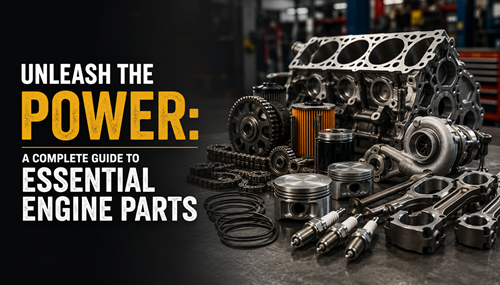 Unleash the Power: A Complete Guide to Essential Engine Parts
A comprehensive, expert-level guide that explains how car engines work by breaking down all essential components—from...Read more
Unleash the Power: A Complete Guide to Essential Engine Parts
A comprehensive, expert-level guide that explains how car engines work by breaking down all essential components—from...Read more -
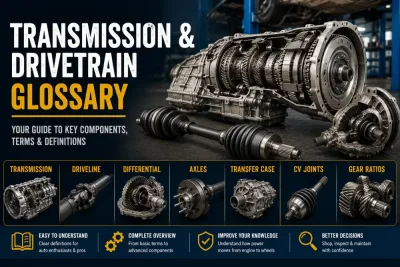 Transmission & Drivetrain Glossary
Here is an essential guide to key components in the transmission and drivetrain systems, providing a clear...Read more
Transmission & Drivetrain Glossary
Here is an essential guide to key components in the transmission and drivetrain systems, providing a clear...Read more -
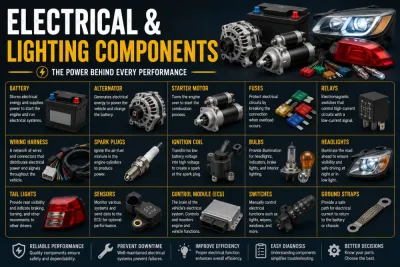 Electrical & Lighting Components
In automotive systems, electrical and lighting components are essential for visibility, safety, and functionality....Read more
Electrical & Lighting Components
In automotive systems, electrical and lighting components are essential for visibility, safety, and functionality....Read more -
 Suspension & Steering Glossary
The Suspension & Steering system ensures a smooth, stable ride by absorbing shocks and allowing control over the...Read more
Suspension & Steering Glossary
The Suspension & Steering system ensures a smooth, stable ride by absorbing shocks and allowing control over the...Read more -
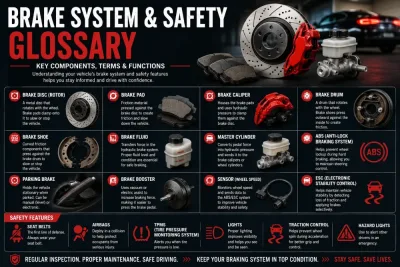 Brake System & Safety Glossary
This glossary provides a detailed explanation of essential brake system components and safety parts, highlighting...Read more
Brake System & Safety Glossary
This glossary provides a detailed explanation of essential brake system components and safety parts, highlighting...Read more
Leave a comment