
A buyer's guide to used road rollers and compactors listed in Poland: what is available, current prices, what to...
Latest posts
-
 Used Road Rollers & Compactors in Poland: 2026 Prices & Buyer's GuideRead more
 -
 How to Import Used Construction Machinery from Abroad: 2026 Buyer's GuideRead more
A practical guide to importing used heavy equipment from abroad — sources, shipping options, customs, inspection, and...
-
 Caterpillar for Sale: Prices, Specs & Used Market Guide 2026Read more
A buyer's guide to used Caterpillar machines — the CAT 320-series excavators and road equipment, current price...
-
 Used Construction Machinery in the USA: 2026 Prices & Buyer's GuideRead more
A buyer's guide to used road construction and paving machinery from the USA — current price ranges, an inspection...
-
 Used Road Rollers & Compactors from China: 2026 Prices & Buyer's GuideRead more
A buyer's guide to recent, low-hour used road rollers and compactors sourced from China — what is available, current...
-
 Used Asphalt & Paving Equipment in the USA: 2026 Prices & Buyer's GuideRead more
A practical buyer's guide to used asphalt and paving equipment sourced from the USA — what is available, current...
-
 Manitou MT 1840 Telehandler 2026: Current Prices, Specs, and Buyer’s GuideRead more
The Manitou MT 1840 has established itself as one of the most versatile and trusted telehandlers in the global...
-
 The Complete Guide to Massey Ferguson 240: Price, Specifications, and Global LegacyRead more
Massey Ferguson 240 sits in that sweet spot between light chores and real farm work. It’s part of the MF 200 series,...
-
 Ford Transit Box Truck for Sale: 2026 Buyer’s Guide for Small Business FleetsRead more
The Ford Transit box truck has long been a cornerstone of small business logistics, and in 2026 its position remains...
-
 The Ultimate Guide to Buying Trucks & Excavators: Prices, Deals, and Insights for Contractors in the USA, UK, Canada, and AustraliaRead more
For contractors, fleet managers, farmers, and construction companies, investing in the right trucks and excavators...
Blog categories
- Automotive Parts (21) click
- Heavy Machinery & Equipment Parts (6)
- OEM vs. Aftermarket Parts (1)
- Maintenance & Repair Tips (0)
- Parts Compatibility & Cross-Referencing (0)
- Sustainability & Recycling (1)
- Industry News & Trends (2)
- Buyer & Seller Guides (60)
- Performance Upgrades & Modifications (0)
- Product Reviews & Comparisons (1)
Search in blog
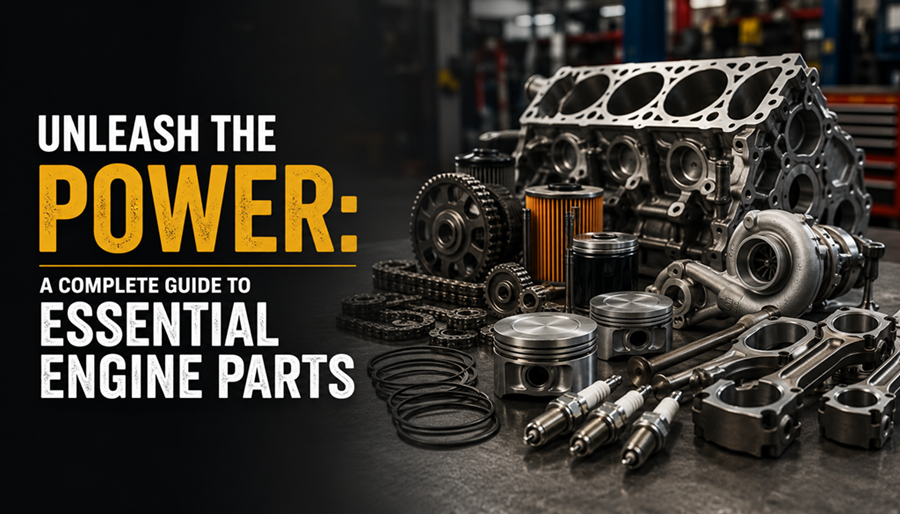
Unleash the Power: A Complete Guide to Essential Engine Parts
Understanding the inner workings of an engine is no longer reserved for seasoned mechanics or engineers—today’s automotive world demands that enthusiasts, professionals, and even everyday drivers grasp the fundamentals of essential engine components. With modern engines becoming more compact, powerful, and electronically controlled, having a working knowledge of what makes an engine tick is key to maximizing performance, diagnosing issues accurately, and ensuring longevity. Whether you're working with a turbocharged four-cylinder or a naturally aspirated V8, understanding how the heart of your vehicle functions provides a critical edge in maintenance, tuning, and troubleshooting. This guide delivers insights grounded in real-world experience, technical expertise, and the latest advancements in automotive engineering.
The Internal Combustion Engine System: The Heart of the Machine
At its core, an internal combustion engine (ICE) operates on a controlled series of explosions. Air and fuel are drawn into the combustion chamber, mixed precisely, compressed by the piston, and ignited—typically by a spark plug in gasoline engines or by compression in diesel variants. This controlled detonation generates expanding gases that force the piston downward, converting chemical energy into mechanical work. The resulting motion is transferred through the crankshaft and ultimately to the drivetrain. Exhaust gases are then expelled, completing the cycle. Each component of this system—from sensors to mechanical parts—must operate in precise harmony. This is especially true in high-efficiency or turbocharged engines, where any deviation can compromise power, fuel economy, or emissions.
Cylinder Block: Foundation and Flow
The cylinder block is the structural backbone of any engine. Cast from iron or aluminum alloys, it houses the cylinders where combustion occurs, while also integrating vital oil and coolant channels. The block must withstand enormous pressures and thermal stresses, maintaining dimensional stability under a wide range of conditions. Its internal pathways circulate engine oil and coolant, keeping internal temperatures within optimal limits. On modern engines, sleeveless aluminum blocks with advanced surface treatments reduce weight without sacrificing durability—critical for performance and efficiency.
Pistons and Crankshaft: Converting Combustion into Motion
Pistons are forged or cast metal components that move up and down inside the cylinders. As combustion forces the piston downward, the connecting rod transfers this force to the crankshaft, which translates linear motion into rotational energy. Pistons must endure high pressures and temperatures, often exceeding 600°F in performance engines. Modern designs may include oil-cooling jets and low-friction coatings to reduce wear. The crankshaft, machined from hardened steel, must be perfectly balanced to avoid vibrations that can lead to bearing wear or even catastrophic failure at high RPMs.
Valves and Camshaft: Timing is Everything
Valves regulate the flow of air-fuel mixture into the combustion chamber and exhaust gases out. Controlled by the camshaft, valve timing is crucial to optimizing power and efficiency. In modern engines, Variable Valve Timing (VVT) systems adjust the opening and closing of valves dynamically based on engine speed and load. This technology enables improved torque at low RPMs and better horsepower at higher RPMs, all while enhancing fuel economy and reducing emissions. Precision machining and electronic control are key to ensuring these systems operate flawlessly under varying driving conditions.
Timing Chain/Belt Systems: Synchronization and Risk
The timing chain or belt ensures that the crankshaft and camshaft remain in precise synchronization. A mistimed engine can lead to valve-piston interference, causing severe internal damage. Timing belts are typically made from reinforced rubber, requiring scheduled replacement, while timing chains are more durable but still subject to stretch and wear. Failures often result in noisy operation or complete engine shutdown. Advancements like hydraulic tensioners and variable timing gears have helped extend service intervals, but regular inspection remains critical.
Fuel Injection Systems: Precision and Efficiency
Gone are the days of carburetors—today’s engines rely on electronically controlled fuel injection systems. Port fuel injection sprays fuel into the intake ports, while direct injection delivers fuel straight into the combustion chamber. Direct injection offers better atomization and combustion control but is more prone to carbon buildup on intake valves. These systems are tightly controlled by the Engine Control Unit (ECU), optimizing fuel delivery for performance and emissions. Faulty injectors can lead to misfires, poor fuel economy, and increased exhaust emissions.
Turbochargers and Intercoolers: Power Meets Heat
Turbochargers force more air into the engine, increasing power without adding displacement. Driven by exhaust gases, a turbo compresses incoming air, which is then cooled by an intercooler to increase its density. Cooler air means more oxygen, allowing for more efficient combustion. However, turbo systems introduce complexities—boost lag, heat management, and oil supply issues are common concerns. A failing turbo may cause whistling sounds, oil consumption, or reduced power. Intercoolers must remain free of leaks and obstructions to ensure effective thermal management.
Lubrication and Cooling Systems: Engine Lifelines
Engine oil not only lubricates moving parts but also cools, cleans, and protects. The oil pump circulates oil under pressure, while oil filters remove contaminants. Radiators, thermostats, and water pumps form the core of the cooling system, dissipating heat generated by combustion. Overheating can warp heads and seize pistons, while oil starvation can destroy bearings. Regular oil changes, coolant flushes, and use of high-quality lubricants are essential for engine longevity, particularly in high-performance applications.
Electronic Controls: The Brain Behind the Brawn
Modern engines are as much about electronics as they are about mechanics. The ECU governs fuel injection, ignition timing, VVT, and emissions controls. Sensors—such as knock sensors, mass airflow (MAF) sensors, oxygen (O2) sensors, and throttle position sensors—feed real-time data into the ECU. These inputs allow the system to adapt to environmental conditions, load demands, and driver behavior. Diagnostic trouble codes (DTCs) from onboard diagnostics (OBD-II) interfaces help pinpoint issues quickly, reducing downtime and repair costs. Quality diagnostic tools like those from Bosch, Snap-On, or platforms like AGGZ are invaluable in professional settings.
Evolving Powertrains: Gasoline, Diesel, Hybrid, and Electric
While the internal combustion engine remains prevalent, its dominance is being challenged by hybrid and electric powertrains. Gasoline engines are typically lighter and higher-revving, while diesels offer superior torque and efficiency, especially for towing and long-distance driving. Hybrids combine electric motors with ICE systems, requiring integration of regenerative braking, battery management, and dual-power coordination. EVs, on the other hand, eliminate traditional engine parts entirely—relying on battery packs, inverters, and electric motors. The role of “engine components” in EVs shifts to software and thermal management systems, highlighting the need for cross-disciplinary knowledge in modern automotive engineering.
Maintenance Insights: Warning Signs and Wear
Engine components wear over time due to heat, friction, and chemical degradation. Signs like knocking noises, loss of power, misfires, oil leaks, and overheating should never be ignored. Regular maintenance—spark plug replacements, timing belt changes, valve clearance checks—can prevent minor issues from escalating. Diagnostic scans, compression tests, and fluid analysis provide deeper insights. Using trusted brands for OEM or high-quality aftermarket parts (like Mahle, NGK, or Gates) ensures reliability. Understanding symptoms early allows for timely interventions, preserving both performance and safety.
Performance Tuning: Unlocking Potential
For enthusiasts and professionals alike, performance tuning offers a pathway to extract more power and responsiveness from an engine. Upgrades like forged pistons, performance camshafts, high-flow injectors, and cold air intakes can significantly enhance capability. ECU remapping or “chipping” adjusts fuel maps, ignition curves, and boost control to align with modifications. However, tuning must be done with precision—imbalanced upgrades can compromise reliability. Tools like dynos, wideband O2 sensors, and ECU tuning platforms (such as Cobb or Hondata) are critical for safe and effective optimization.
Conclusion: Knowledge is Horsepower
Understanding essential engine components isn’t just academic—it’s practical, powerful, and cost-saving. Whether diagnosing a misfire, upgrading for performance, or simply maintaining a daily driver, knowing how car engines work empowers you to make informed decisions. With the right mix of mechanical insight and diagnostic savvy, you can improve efficiency, extend engine life, and prevent catastrophic failures. As vehicles continue to evolve—blending combustion, electronics, and electrification—this foundational knowledge will remain a crucial asset for enthusiasts, students, and professionals alike.
For sourcing parts or complete engines, platforms like AGGZ offer vetted listings and compatibility tools, while OEM vs aftermarket comparisons can guide smarter purchasing. Remember, your engine is only as strong as your understanding of it. Stay informed, stay curious, and always unleash the power responsibly.
Related equipment for sale on AGGZ


Frequently asked questions
How much does used Spare Parts cost on AGGZ?
Prices depend on the year, operating hours and condition of each machine. Compare the current listings above to see real prices from sellers, then contact the seller directly.
What should I check when buying used Spare Parts?
Check the year of manufacture, operating hours or mileage, service and maintenance history, and overall condition. Arrange an inspection or request detailed photos before any payment.
Can I buy and export used Spare Parts from Turkey and abroad?
Yes. Many sellers on AGGZ ship internationally. Confirm shipping options, export documentation and payment terms directly with the seller before you buy.
Selling similar equipment?
List your machinery on AGGZ and reach buyers searching for Spare Parts, trucks, spare parts and industrial equipment.
Related posts
-
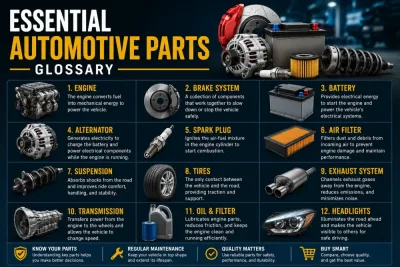 Essential Automotive Parts Glossary
For anyone diving into the world of automotive parts, understanding each component’s function is crucial. Here’s a...Read more
Essential Automotive Parts Glossary
For anyone diving into the world of automotive parts, understanding each component’s function is crucial. Here’s a...Read more -
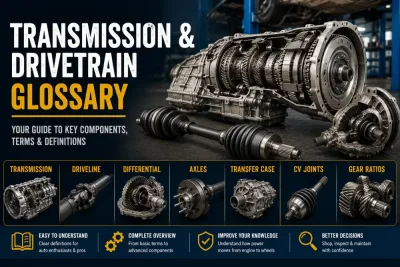 Transmission & Drivetrain Glossary
Here is an essential guide to key components in the transmission and drivetrain systems, providing a clear...Read more
Transmission & Drivetrain Glossary
Here is an essential guide to key components in the transmission and drivetrain systems, providing a clear...Read more -
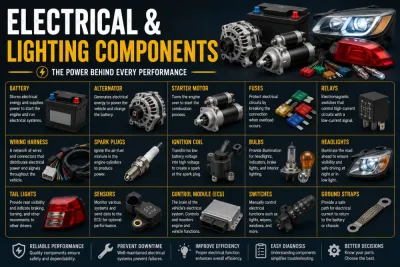 Electrical & Lighting Components
In automotive systems, electrical and lighting components are essential for visibility, safety, and functionality....Read more
Electrical & Lighting Components
In automotive systems, electrical and lighting components are essential for visibility, safety, and functionality....Read more -
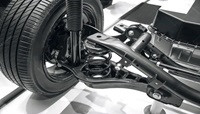 Suspension & Steering Glossary
The Suspension & Steering system ensures a smooth, stable ride by absorbing shocks and allowing control over the...Read more
Suspension & Steering Glossary
The Suspension & Steering system ensures a smooth, stable ride by absorbing shocks and allowing control over the...Read more -
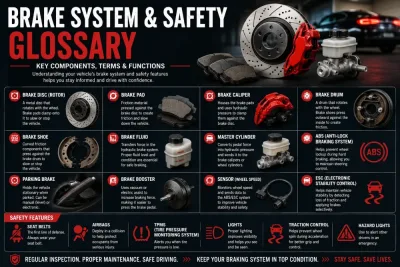 Brake System & Safety Glossary
This glossary provides a detailed explanation of essential brake system components and safety parts, highlighting...Read more
Brake System & Safety Glossary
This glossary provides a detailed explanation of essential brake system components and safety parts, highlighting...Read more
Leave a comment