
A buyer's guide to used road rollers and compactors listed in Poland: what is available, current prices, what to...
Latest posts
-
 Used Road Rollers & Compactors in Poland: 2026 Prices & Buyer's GuideRead more
 -
 How to Import Used Construction Machinery from Abroad: 2026 Buyer's GuideRead more
A practical guide to importing used heavy equipment from abroad — sources, shipping options, customs, inspection, and...
-
 Caterpillar for Sale: Prices, Specs & Used Market Guide 2026Read more
A buyer's guide to used Caterpillar machines — the CAT 320-series excavators and road equipment, current price...
-
 Used Construction Machinery in the USA: 2026 Prices & Buyer's GuideRead more
A buyer's guide to used road construction and paving machinery from the USA — current price ranges, an inspection...
-
 Used Road Rollers & Compactors from China: 2026 Prices & Buyer's GuideRead more
A buyer's guide to recent, low-hour used road rollers and compactors sourced from China — what is available, current...
-
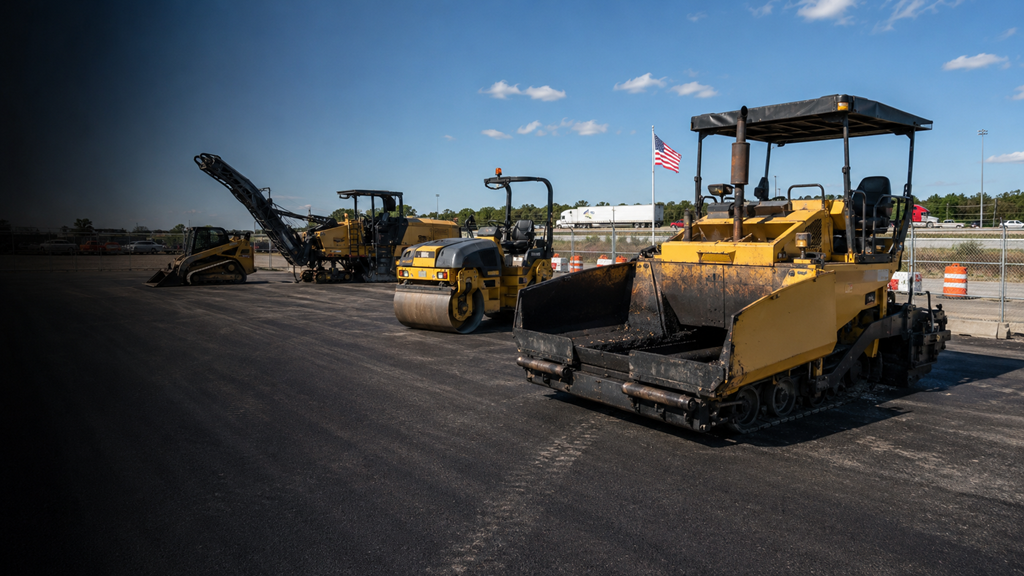 Used Asphalt & Paving Equipment in the USA: 2026 Prices & Buyer's GuideRead more
A practical buyer's guide to used asphalt and paving equipment sourced from the USA — what is available, current...
-
 Manitou MT 1840 Telehandler 2026: Current Prices, Specs, and Buyer’s GuideRead more
The Manitou MT 1840 has established itself as one of the most versatile and trusted telehandlers in the global...
-
 The Complete Guide to Massey Ferguson 240: Price, Specifications, and Global LegacyRead more
Massey Ferguson 240 sits in that sweet spot between light chores and real farm work. It’s part of the MF 200 series,...
-
 Ford Transit Box Truck for Sale: 2026 Buyer’s Guide for Small Business FleetsRead more
The Ford Transit box truck has long been a cornerstone of small business logistics, and in 2026 its position remains...
-
 The Ultimate Guide to Buying Trucks & Excavators: Prices, Deals, and Insights for Contractors in the USA, UK, Canada, and AustraliaRead more
For contractors, fleet managers, farmers, and construction companies, investing in the right trucks and excavators...
Blog categories
- Automotive Parts (21) click
- Heavy Machinery & Equipment Parts (6)
- OEM vs. Aftermarket Parts (1)
- Maintenance & Repair Tips (0)
- Parts Compatibility & Cross-Referencing (0)
- Sustainability & Recycling (1)
- Industry News & Trends (2)
- Buyer & Seller Guides (60)
- Performance Upgrades & Modifications (0)
- Product Reviews & Comparisons (1)
Search in blog
U.S. Commercial Truck Classification: A Comprehensive, Expert-Curated Guide
Understanding the Commercial Truck Classification System
Commercial trucks are a foundational element of the U.S. economy, enabling the transportation of goods across countless sectors including logistics, construction, agriculture, retail, and more. With such a diverse range of uses, it’s important to distinguish these vehicles based on their size, weight, and function. This is achieved through the U.S. commercial truck classification system, which categorizes trucks according to their Gross Vehicle Weight Rating (GVWR). The GVWR represents the maximum allowable weight a vehicle can safely carry, including its chassis, engine, passengers, fuel, and cargo. This weight limit is not arbitrary—it’s set by the manufacturer and is critical for safety, regulatory compliance, and operational planning.
Understanding a truck's classification provides guidance for numerous logistical and regulatory decisions. For example, it determines what type of driver’s license is required, whether the truck must stop at weigh stations, and if a Department of Transportation (DOT) number must be displayed. It also affects whether drivers are subject to Hours of Service (HOS) rules, and informs insurance premiums, as heavier vehicles typically carry higher risks and costs. Fleet managers use these classifications to determine which trucks are best suited for certain tasks, helping them optimize usage, reduce costs, and maintain compliance with federal and state guidelines.
Categories of Commercial Trucks: Light, Medium, and Heavy Duty
The U.S. system divides commercial trucks into eight distinct classes, grouped into three main categories: light-duty, medium-duty, and heavy-duty vehicles. These categories are primarily determined by the GVWR and are designed to offer a standard reference for all commercial vehicle operators and regulatory bodies. Light-duty trucks typically fall within Classes 1 through 3, medium-duty includes Classes 4 through 6, and heavy-duty comprises Classes 7 and 8. These categories help streamline laws and policies around emissions, safety, driver training, insurance, and infrastructure use.
While these groupings offer clarity, it's important to note that not all sources agree on the exact division. Some definitions place Class 3 vehicles within the light-duty category, while others consider them medium-duty. Regardless, the classification system as a whole offers a consistent framework for understanding vehicle capabilities and limitations.
Light-Duty Trucks (Classes 1 to 3)
Class 1 trucks are the smallest in the commercial category, with a GVWR of up to 6,000 pounds. These vehicles are often indistinguishable from personal-use trucks, though many are used commercially for tasks such as local deliveries, light hauling, or contractor work. Popular examples in this class include the Ford Ranger, Toyota Tacoma, Honda Ridgeline, and Chevrolet Colorado. Due to their smaller size and lighter weight, these trucks are subject to fewer regulatory requirements, though they must still meet general safety and emissions standards.
The Class 1 category includes vehicles with a GVWR of 0–6,000 pounds (0–2,722 kg). Typical models in this class include Ford Ranger, Chevrolet Colorado, Toyota Tacoma, Honda Ridgeline, GMC Canyon. Typically used for personal transportation, light-duty commercial tasks, or local deliveries in urban settings. Common among contractors and small service providers. Does not require a Commercial Driver’s License (CDL). Subject to basic safety and emissions regulations.
Class 2 trucks have a GVWR ranging from 6,001 to 10,000 pounds and are often divided into two subcategories. Class 2A includes vehicles up to 8,500 pounds, such as the Ford F-150 and Chevrolet Silverado 1500, while Class 2B includes slightly heavier models like the Ford F-250 and RAM 2500. These trucks are commonly used in industries like construction and landscaping due to their increased towing capacity and cargo volume. While they offer more capability than Class 1 vehicles, they also face more rigorous safety and emissions standards, especially in states with stricter environmental regulations.
The Class 2 category includes vehicles with a GVWR of 6,001–10,000 pounds (2,722–4,536 kg). Typical models in this class include Ford F-150/F-250, RAM 1500/2500, Chevrolet Silverado 1500/2500, Nissan Titan. Widely used in construction, landscaping, and light commercial work due to higher towing capacity and cargo volume. CDL typically not required unless used in combination or exceeding certain limits. Enhanced safety regulations may apply.
Class 3 trucks represent a significant step up in capacity and regulation. With a GVWR between 10,001 and 14,000 pounds, vehicles in this class include the Ford F-350, Chevrolet Silverado 3500, and larger vans like the Isuzu NPR. These trucks are well-suited for small business operations and light commercial use such as equipment transport, delivery, and fleet services. Operators of Class 3 vehicles may require a Commercial Driver’s License (CDL), depending on state laws and the specific use case, especially when towing heavy loads.
The Class 3 category includes vehicles with a GVWR of 10,001–14,000 pounds (4,536–6,350 kg). Typical models in this class include Ford F-350, RAM 3500, Chevrolet Silverado 3500, Isuzu NPR. Used for heavier local deliveries and medium-scale commercial transport. Common in fleets and for hauling equipment. May require a CDL depending on use case and towing configuration. Subject to more stringent DOT oversight.
Medium-Duty Trucks (Classes 4 to 6)
Class 4 vehicles range from 14,001 to 16,000 pounds GVWR and include trucks such as the Ford F-450 chassis cab, RAM 4500, and Isuzu NPR-HD. These trucks are often found in urban and suburban settings, where they are used for moderate freight delivery, construction material transport, and utility services. They offer more power and payload capacity than Class 3 vehicles while remaining manageable for regional routes. Regulatory standards become more stringent at this level, with additional attention paid to cargo security, axle weight distribution, and fuel efficiency.
The Class 4 category includes vehicles with a GVWR of 14,001–16,000 pounds (6,351–7,257 kg). Typical models in this class include Ford F-450 chassis cab, RAM 4500, Isuzu NPR-HD, Chevrolet 4500HD. Ideal for delivery services, utility fleets, and municipal applications requiring moderate payloads. Might require CDL in certain jurisdictions. Regulated for cargo security and emissions compliance.
Class 5 trucks span a GVWR of 16,001 to 19,500 pounds and include models like the Chevrolet Silverado 5500HD, Ford F-550, and larger International CV models. These trucks serve a wide array of roles including regional distribution, public works, and specialty services like cherry-picking and utility repairs. Due to their size and the nature of their work, Class 5 trucks require operators to have a CDL and often demand specialized training. Compliance with both federal and state regulations is critical at this level, as violations can lead to significant operational and financial penalties.
The Class 5 category includes vehicles with a GVWR of 16,001–19,500 pounds (7,258–8,845 kg). Typical models in this class include Ford F-550, Chevrolet 5500HD, International CV Series, Isuzu NRR. Used by regional service providers, public works departments, and for medium-sized equipment towing. CDL generally required. Full compliance with DOT weight and safety regulations is necessary.
Class 6 vehicles, with a GVWR ranging from 19,501 to 26,000 pounds, represent the upper boundary of the medium-duty category. These include the Ford F-650, Freightliner Business Class M2 106, and larger box trucks and beverage trucks. Their size and capacity make them ideal for regional freight transport, school bus operations, and rack truck logistics. Although vehicles in this class can technically be operated without a CDL, crossing the 26,000-pound threshold or towing a trailer over 10,000 pounds requires one. These trucks are subject to the same rigorous safety and emissions regulations as heavier classes, especially when operating across state lines.
Class 6 trucks fall into the medium-duty category and are defined by a Gross Vehicle Weight Rating (GVWR) between 19,501 and 26,000 pounds (8,846–11,793 kg). These vehicles are commonly used for regional freight transport, utility work, and commercial delivery. Notable models in this class include the Chevrolet Silverado 6500HD, International CV, Ford F-650, Freightliner Business Class M2 106, and International MV. Due to their size and function, they often operate on fixed delivery routes or service loops and may require a Commercial Driver’s License (CDL) if the total weight or towing configuration exceeds legal thresholds.
Heavy-Duty Trucks (Classes 7 and 8)
Class 7 trucks begin at 26,001 pounds and go up to 33,000 pounds GVWR. Vehicles in this class are typically outfitted for industrial use and include city transit buses, large dump trucks, garbage trucks, and regional delivery vehicles like moving vans. Popular models include the Ford F-750, Freightliner M2 106, and Hino 338. These vehicles usually have three or more axles and require operators to hold a CDL. Compliance with safety standards, weight limits, and environmental regulations is strictly enforced due to the potential for road wear, emissions impact, and accident severity.
The Class 7 category includes vehicles with a GVWR of 26,001–33,000 pounds (11,793–14,969 kg). Typical models in this class include Ford F-750, Freightliner M2 106, Hino 338, Mack MD. Used for urban freight delivery, garbage collection, and vocational fleet services such as dump or tow trucks. Requires a CDL. Must meet stringent safety and inspection standards.
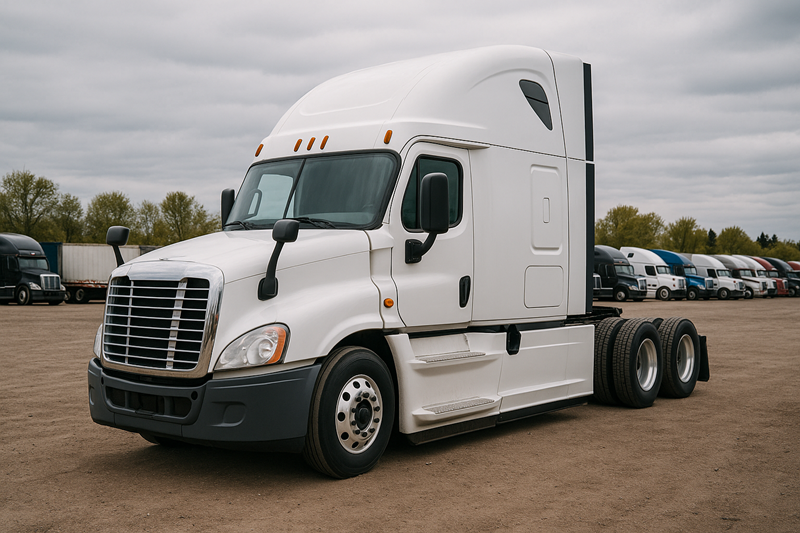
Class 8 trucks are the most powerful and heavily regulated category, with a GVWR exceeding 33,000 pounds. This class includes the big rigs—such as the Freightliner Cascadia, Peterbilt 379, Tesla Semi, and Mack Anthem—used in long-haul freight, industrial hauling, and specialized equipment transport. These trucks form the backbone of the national freight system, carrying goods across states and even international borders. Operators of Class 8 trucks must have a Class-A CDL for combination vehicles like tractor-trailers or a Class-B CDL for heavy-duty straight trucks. The federal Bridge Gross Weight Formula often governs their legal weight limits, with the maximum typically capped at 80,000 pounds unless special permits for oversized loads are granted.
The Class 8 category includes vehicles with a GVWR of Over 33,000 pounds (14,969+ kg). Typical models in this class include Freightliner Cascadia, Peterbilt 379, Tesla Semi, Volvo VNL, Mack Anthem. Designed for long-haul freight, construction materials, and oversized equipment transport across the country. Requires a Class-A CDL for tractor-trailers or Class-B for straight trucks. Heavily regulated for emissions, weight, and safety.
Operational Impacts of Truck Classification
For fleet operators, understanding truck classification is not just academic—it directly impacts how a business is run. Regulatory compliance is one major area, as each class comes with specific licensing requirements, emissions rules, and operational limits. Failure to comply can result in fines, delays, or legal liability, making classification knowledge a non-negotiable asset in the transport industry.
Classification also plays a key role in fleet optimization. Choosing the right vehicle for the job—whether it's for urban deliveries or long-haul freight—prevents issues such as underutilization or mechanical strain. Insurance premiums are heavily influenced by vehicle class, with heavier trucks posing greater risks and therefore commanding higher rates. Maintenance planning is similarly affected; heavier trucks require more frequent, specialized servicing, and understanding the class helps schedule upkeep efficiently and affordably.
Final Thoughts: Why This System Matters
The U.S. commercial truck classification system is far more than a bureaucratic formality. It’s a structured approach to keeping America’s roads safe and its industries running efficiently. Whether you're a fleet manager optimizing your asset portfolio, a driver navigating CDL requirements, or a policymaker drafting transportation legislation, knowing the distinctions between truck classes is essential.
By organizing trucks by GVWR, this system ensures that vehicles are matched appropriately to their tasks, that drivers are properly licensed, and that regulatory compliance can be systematically enforced. In a transportation environment that is constantly evolving—with new technologies like electric semis entering the scene—understanding this classification system remains as critical as ever.
Related equipment for sale on AGGZ
| Machine | Year | Location | Price | |
|---|---|---|---|---|
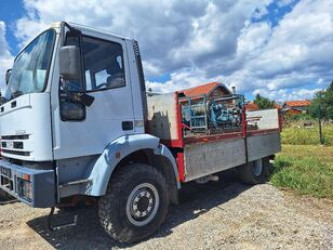 1997 IVECO 95E21 WINCH flatbed truck - 625 HP - Croatia
|
1997 | Croatia | $15,500.00 | View |
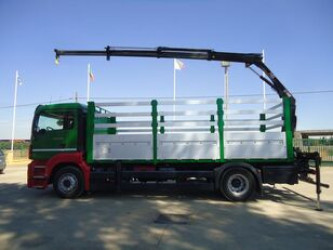 2010 MAN TGM 18 290 Flatbed Truck with Hiab 066 Crane - 331 HP - Spain
|
2010 | Spain | — | View |
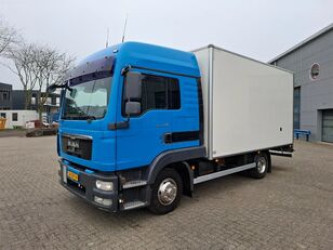 2009 MAN TGL8.220 / NL TRUCK / TUV:20-10-2026 / ONLY:474226 KM / CLEAN TR box truck - 220 HP - Netherlands
|
2009 | Netherlands | $11,500.00 | View |
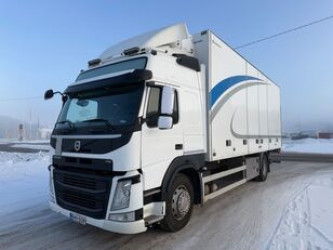 2014 Volvo FM330 4x2 E6 Carrier-cooler 7.7m box refrigerated truck - 330 HP - Finland
|
2014 | Finland | $18,900.00 | View |
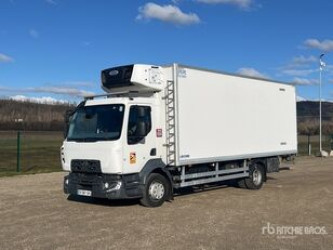 2018 Renault D12 refrigerated truck - France
|
2018 | France | — | View |
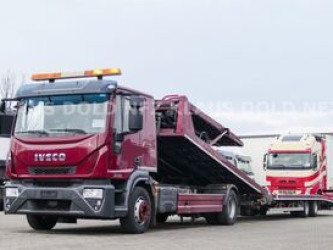 2019 IVECO ZAT 100 tow truck - 320 HP - Germany
|
2019 | Germany | $39,900.00 | View |
Frequently asked questions
How much does used Trucks cost on AGGZ?
Prices depend on the year, operating hours and condition of each machine. Compare the current listings above to see real prices from sellers, then contact the seller directly.
What should I check when buying used Trucks?
Check the year of manufacture, operating hours or mileage, service and maintenance history, and overall condition. Arrange an inspection or request detailed photos before any payment.
Can I buy and export used Trucks from Turkey and abroad?
Yes. Many sellers on AGGZ ship internationally. Confirm shipping options, export documentation and payment terms directly with the seller before you buy.
Selling similar equipment?
List your machinery on AGGZ and reach buyers searching for Trucks, trucks, spare parts and industrial equipment.
Posted in:
Buyer & Seller Guides
Related posts
-
Used Road Rollers & Compactors in Poland: 2026 Prices & Buyer's Guide
A buyer's guide to used road rollers and compactors listed in Poland: what is available, current prices, what to...Read more
-
How to Import Used Construction Machinery from Abroad: 2026 Buyer's Guide
A practical guide to importing used heavy equipment from abroad — sources, shipping options, customs, inspection, and...Read more
-
Caterpillar for Sale: Prices, Specs & Used Market Guide 2026
A buyer's guide to used Caterpillar machines — the CAT 320-series excavators and road equipment, current price...Read more
-
Used Construction Machinery in the USA: 2026 Prices & Buyer's Guide
A buyer's guide to used road construction and paving machinery from the USA — current price ranges, an inspection...Read more
-
Used Road Rollers & Compactors from China: 2026 Prices & Buyer's Guide
A buyer's guide to recent, low-hour used road rollers and compactors sourced from China — what is available, current...Read more
Leave a comment