
A buyer's guide to used road rollers and compactors listed in Poland: what is available, current prices, what to...
Latest posts
-
 Used Road Rollers & Compactors in Poland: 2026 Prices & Buyer's GuideRead more
 -
 How to Import Used Construction Machinery from Abroad: 2026 Buyer's GuideRead more
A practical guide to importing used heavy equipment from abroad — sources, shipping options, customs, inspection, and...
-
 Caterpillar for Sale: Prices, Specs & Used Market Guide 2026Read more
A buyer's guide to used Caterpillar machines — the CAT 320-series excavators and road equipment, current price...
-
 Used Construction Machinery in the USA: 2026 Prices & Buyer's GuideRead more
A buyer's guide to used road construction and paving machinery from the USA — current price ranges, an inspection...
-
 Used Road Rollers & Compactors from China: 2026 Prices & Buyer's GuideRead more
A buyer's guide to recent, low-hour used road rollers and compactors sourced from China — what is available, current...
-
 Used Asphalt & Paving Equipment in the USA: 2026 Prices & Buyer's GuideRead more
A practical buyer's guide to used asphalt and paving equipment sourced from the USA — what is available, current...
-
 Manitou MT 1840 Telehandler 2026: Current Prices, Specs, and Buyer’s GuideRead more
The Manitou MT 1840 has established itself as one of the most versatile and trusted telehandlers in the global...
-
 The Complete Guide to Massey Ferguson 240: Price, Specifications, and Global LegacyRead more
Massey Ferguson 240 sits in that sweet spot between light chores and real farm work. It’s part of the MF 200 series,...
-
 Ford Transit Box Truck for Sale: 2026 Buyer’s Guide for Small Business FleetsRead more
The Ford Transit box truck has long been a cornerstone of small business logistics, and in 2026 its position remains...
-
 The Ultimate Guide to Buying Trucks & Excavators: Prices, Deals, and Insights for Contractors in the USA, UK, Canada, and AustraliaRead more
For contractors, fleet managers, farmers, and construction companies, investing in the right trucks and excavators...
Blog categories
- Automotive Parts (21) click
- Heavy Machinery & Equipment Parts (6)
- OEM vs. Aftermarket Parts (1)
- Maintenance & Repair Tips (0)
- Parts Compatibility & Cross-Referencing (0)
- Sustainability & Recycling (1)
- Industry News & Trends (2)
- Buyer & Seller Guides (60)
- Performance Upgrades & Modifications (0)
- Product Reviews & Comparisons (1)
Search in blog
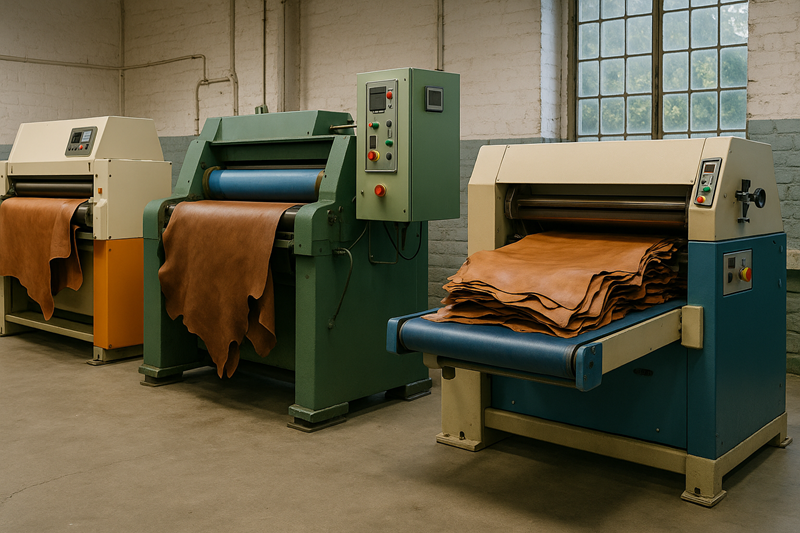
The Leather Processing Workflow and the Machines Behind It
Curing and Preservation
Once hides are removed from animals, preservation begins immediately to prevent bacterial decay. While not strictly a machine-intensive stage, some large tanneries use mechanical salting conveyors and curing tunnels to streamline the process. These systems automatically coat hides with salt while moving them along a conveyor, ensuring uniform preservation and reducing manual labor. Automation here enhances throughput, particularly in facilities processing hundreds of hides per day.
Soaking and Liming
Upon arrival at the tannery, hides undergo soaking in large paddle vats or drums to rehydrate and clean them. The most common machines used are soaking drums, large rotating barrels made from wood or stainless steel. These machines agitate the hides gently in water with surfactants and biocides. After soaking, the hides move to the liming stage, also conducted in rotating drums, where chemicals like lime and sodium sulfide help remove hair and swell the hides for splitting.
These soaking and liming drums are central to the initial transformation of raw hide into workable material. Modern iterations come with programmable logic controllers (PLCs), which allow for precise control of temperature, drum speed, and chemical dosing—factors critical to ensuring consistency. The use of closed-system drums also aids in reducing wastewater discharge, aligning with environmental regulations.
Fleshing
Next comes the fleshing machine, a robust piece of equipment essential in both chrome and vegetable tanning operations. This machine removes residual flesh, fat, and connective tissue from the inner side of the hide. It consists of a rotating cylinder fitted with sharp spiral blades that scrape the flesh side as the hide passes through. Pressure and blade depth are adjustable to avoid cutting into the dermal layer of the hide.
Fleshing machines are typically positioned immediately after liming. By ensuring that the hide is clean and uniform in thickness, the fleshing machine directly affects the efficiency of tanning chemicals in later stages. Popular industrial models include the Mosconi MV 300 and Rizzi RF series, both known for durability and safety features such as automatic blade reversal during blockages. Fleshing machines significantly reduce the manual labor involved in hide cleaning and contribute to higher leather yield by minimizing waste.
Splitting and Shaving
After fleshing, the hide is often too thick for many final applications. The splitting machine divides the hide into grain and flesh layers, typically used for full-grain and split leather respectively. Splitting machines use a band-knife system that cuts the hide horizontally, and settings can be adjusted to obtain specific thicknesses depending on the product goal.
Further down the line, the shaving machine fine-tunes the hide thickness with rotary blades. This step is especially critical in chrome tanning workflows, where uniform thickness directly impacts penetration and fixation of tanning agents. The shaving machine looks similar to a fleshing machine but is more precise and uses finer blades. Brands like Poletto and Mercier Frères manufacture some of the most widely adopted models in modern tanneries. The importance of shaving cannot be overstated—it ensures dimensional stability and allows for consistent performance in the final product, whether it’s a car seat or a dress shoe.
Tanning Drums
Tanning is the chemical heart of the leather-making process, and it is carried out in tanning drums, which can be either wooden or stainless steel. These large rotating barrels infuse hides with tanning agents—vegetable tannins from bark extracts or chromium salts, depending on the leather type.
The control systems on modern tanning drums allow for batch monitoring of temperature, pH, drum speed, and chemical concentration. Chrome tanning drums usually run at higher speeds and for shorter durations, while vegetable tanning takes longer and demands more delicate agitation. Brands like Olcina and Erretre offer advanced tanning drums equipped with sensors and automated dosing systems, helping factories maintain high environmental standards and efficient water recycling.
Sammying and Setting Out
Post-tanning, the hides are heavy with water and chemicals. They need mechanical pressing to reduce moisture content. This is where sammying machines or setting-out machines come into play. A sammying machine consists of two rollers—one hard and one soft—that squeeze water out of the hide as it passes through. In addition to removing water, the machine smooths out wrinkles and aligns the hide for uniform drying.
The setting-out function also stretches the hide slightly, increasing surface area—a key economic consideration. Machines such as those by Bauce or Feltre are popular, and some offer combined sammying-setting-out functions. These machines are crucial for setting the foundation for consistent drying and finishing.
Drying: Vacuum, Toggle, or Pastel
The next stage involves drying the leather, which varies depending on the leather type and end-use. Vacuum dryers are used for chrome-tanned leathers and work by placing hides on heated plates and removing air via vacuum pumps. This flattens the hide and rapidly removes moisture. For more delicate or vegetable-tanned leathers, toggle dryers are preferred. These machines stretch the leather across a heated frame using metal toggles, preserving its shape and preventing shrinkage.
Toggle dryers, like those from Cartigliano, are especially prevalent in garment and upholstery leather production. More traditional but still used in some parts of the world are pastel drying lines, where hides are hung on poles in climate-controlled rooms. Toggle drying has the advantage of better shape retention and surface smoothness, critical for visual and tactile quality.
Staking and Softening
Dried leather tends to be stiff and needs to be mechanically softened. This is where staking machines are used. A staking machine has blunt, vibrating blades that work the leather, mimicking manual pulling and softening. The vibration frequency and pressure can be adjusted based on leather thickness and softness goals.
Staking is vital for garment leather and any application where pliability and drape matter. Machines like the Flamar RS series offer programmable staking routines for different leather types, allowing high-volume facilities to produce a wide variety of finishes.
Buffing and Polishing
For corrected grain or suede leathers, buffing machines remove the topmost layer of the grain using abrasive rollers. These machines function much like industrial sanders, and settings control the depth and pattern of abrasion. Buffing not only corrects imperfections but also allows for uniform dye penetration.
After buffing, some leathers go through polishing or brushing machines to enhance shine or texture. Machines from Mercier or Fratelli Carlessi often come with integrated dust collection systems to manage the fine particles generated during the process. Precision in buffing and polishing translates to a more attractive and consistent final product.
Finishing and Coating
The final stage in leather production is finishing, where color, texture, and surface protection are added. The finishing spray booth is central to this process. These are enclosed chambers equipped with automatic spray arms that apply pigments, binders, and topcoats. Spray booths ensure even coating and minimal overspray.
For high-precision finishing, roller coating machines apply finish layers using direct or reverse rollers. In some facilities, robotic arms and CNC-guided systems have been integrated for pattern-specific finishes. These technologies are especially useful in premium automotive and fashion leathers, where repeatability and aesthetic control are paramount.
Some finishers also use embossing machines that press grain patterns into the surface, often used for exotic leather imitations or to standardize appearance across batches. The application of these final touches significantly boosts leather’s market value and usability.
CNC Cutting and Automation in Modern Leather Production
In the final product manufacturing stage—whether making wallets, car seats, or boots—CNC cutting machines and laser cutters are employed for precise shape cutting. These machines can scan defect areas and optimize cutting layouts to reduce waste. Automation here improves yield and ensures that high-cost hides are used as efficiently as possible.
Fully automated production lines, equipped with robotics and integrated ERP systems, are becoming more common in modern tanneries, especially in Europe and East Asia. Eco-friendly systems that recycle water, minimize chemical runoff, and use biodegradable tanning agents are also gaining traction, reshaping how the industry approaches sustainability.
Conclusion
A deep understanding of the machinery used in leather processing is indispensable for anyone involved in the leather value chain. From factory owners managing output and operational efficiency to quality controllers ensuring consistency, and from leather technologists optimizing material properties to buyers seeking reliable sourcing—machine knowledge is a keystone of industry expertise.
Each machine is not only a mechanical unit but a node in the web of quality, cost, and sustainability. Choosing the right equipment, maintaining it meticulously, and training operators adequately can elevate a tannery’s product from acceptable to exceptional. As leather continues to evolve in both market demand and environmental scrutiny, those who understand the tools of the trade will lead the way in shaping its future.
Related equipment for sale on AGGZ
| Machine | Year | Price | |
|---|---|---|---|
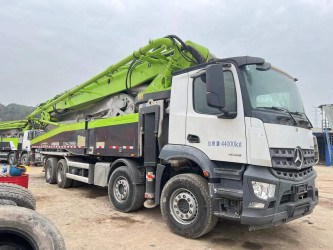 56 metre Zoomlion brand produced in 2021
|
— | $91,400.00 | View |
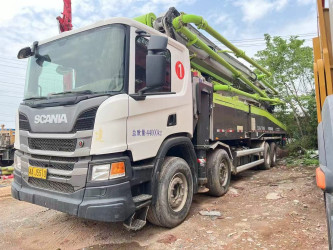 2020 ZOOMLION 56m SCANIA Pump Truck - Turkish Construction Game-Changer!
|
— | $77,600.00 | View |
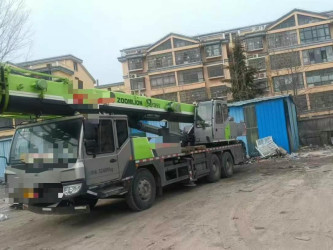 2018 ZOOMLION 25-Ton Crane - Your Next Smart Investment!
|
— | $35,900.00 | View |
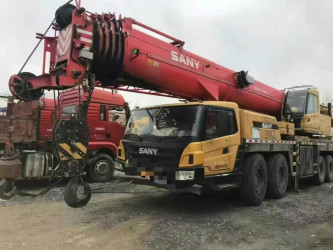 2019 SANY 80-Ton Crane - Heavy-Duty Powerhouse for Turkish Projects
|
— | $92,600.00 | View |
Frequently asked questions
How much does used Concrete Machinery cost on AGGZ?
Prices depend on the year, operating hours and condition of each machine. Compare the current listings above to see real prices from sellers, then contact the seller directly.
What should I check when buying used Concrete Machinery?
Check the year of manufacture, operating hours or mileage, service and maintenance history, and overall condition. Arrange an inspection or request detailed photos before any payment.
Can I buy and export used Concrete Machinery from Turkey and abroad?
Yes. Many sellers on AGGZ ship internationally. Confirm shipping options, export documentation and payment terms directly with the seller before you buy.
Selling similar equipment?
List your machinery on AGGZ and reach buyers searching for Concrete Machinery, trucks, spare parts and industrial equipment.
Related posts
-
 Dictionary of Terms for Heavy Machinery & Equipment Parts
This comprehensive list comprises 100 terms used in the Heavy Machinery and Equipment Parts industry. It is...Read more
Dictionary of Terms for Heavy Machinery & Equipment Parts
This comprehensive list comprises 100 terms used in the Heavy Machinery and Equipment Parts industry. It is...Read more -
 Comprehensive Guide to Commercial Vehicles and Related Systems
This guide provides an in-depth overview of commercial vehicles and associated concepts. It covers various vehicle...Read more
Comprehensive Guide to Commercial Vehicles and Related Systems
This guide provides an in-depth overview of commercial vehicles and associated concepts. It covers various vehicle...Read more -
 Comprehensive Glossary of Commercial Vehicle and Logistics Terms
This glossary provides concise explanations of key terms related to commercial vehicles, logistics, fleet management,...Read more
Comprehensive Glossary of Commercial Vehicle and Logistics Terms
This glossary provides concise explanations of key terms related to commercial vehicles, logistics, fleet management,...Read more -
 Comprehensive Glossary of Commercial Vehicles and Equipment Terms
Explore a detailed glossary covering 200 terms related to commercial vehicles, specialized equipment, and logistics....Read more
Comprehensive Glossary of Commercial Vehicles and Equipment Terms
Explore a detailed glossary covering 200 terms related to commercial vehicles, specialized equipment, and logistics....Read more -
 Comprehensive Glossary of Commercial Vehicles and Equipment Terms
Explore a detailed glossary covering 200 terms related to commercial vehicles, specialized equipment, and logistics....Read more
Comprehensive Glossary of Commercial Vehicles and Equipment Terms
Explore a detailed glossary covering 200 terms related to commercial vehicles, specialized equipment, and logistics....Read more
Leave a comment