
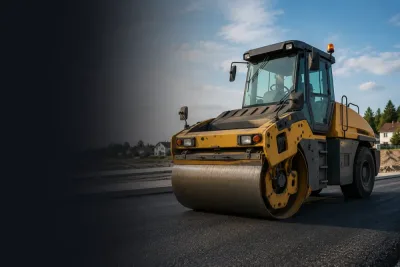
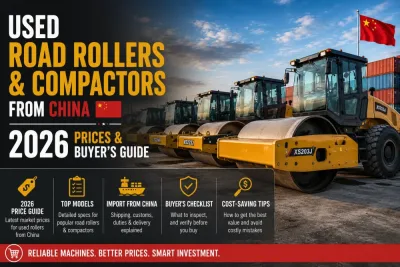
A buyer's guide to used road rollers and compactors listed in Poland: what is available, current prices, what to...

Excavators
- Hydraulic Excavator: A machine equipped with a hydraulic arm, boom, and bucket, designed for digging, lifting, and material handling.
- Crawler Excavator: An excavator mounted on tracks for enhanced stability and mobility on uneven terrain.
- Wheeled Excavator: A mobile excavator mounted on rubber tires, ideal for urban and road projects.
- High-Reach Excavator: Specialized for demolition, with an extended boom capable of reaching tall structures.
- Amphibious Excavator: A floating excavator designed for working in wetland or underwater environments.
Hydraulic System Components
- Hydraulic Pump: A device that converts mechanical energy into hydraulic energy to power machinery.
- Hydraulic Cylinder: A component that uses hydraulic pressure to produce linear motion.
- Hydraulic Valve: Controls the flow and direction of hydraulic fluid within the system.
- Hydraulic Hose: A flexible, high-pressure tube that transports hydraulic fluid.
- Hydraulic Accumulator: A device that stores pressurized hydraulic fluid for energy management and shock absorption.
Buckets and Attachments
- General Purpose Bucket: Standard bucket designed for digging and material transport.
- Skeleton Bucket: A bucket with spaced bars for sifting out finer materials while retaining larger debris.
- Ripper: A tooth-like attachment for breaking up compacted ground or rock.
- Hydraulic Thumb: A claw-like attachment paired with a bucket to grab and hold objects.
- Screening Bucket: Used to separate materials of different sizes, commonly in recycling or soil preparation.
Wear Parts
- Cutting Edge: The reinforced edge of a bucket or blade, designed to withstand wear during digging or grading.
- Teeth: Replaceable points on buckets for improved penetration into tough materials.
- Side Cutters: Attachments on the sides of buckets to improve cutting performance and reduce wear.
- Heel Shrouds: Protective wear plates installed at the rear of buckets to prevent wear.
- Lip Shrouds: Reinforced parts that protect the leading edge of buckets.
Drivetrain Components
- Torque Converter: Transfers engine power to the transmission using hydraulic fluid for smooth acceleration.
- Final Drive: The mechanism that transmits power from the drivetrain to the tracks or wheels.
- Differential Gear: Allows wheels or tracks to rotate at different speeds during turns.
- Power Take-Off (PTO) Shaft: Transfers power from an engine to attached equipment like mowers or augers.
- Planetary Gearbox: A compact and high-torque gearbox system used in heavy machinery.
Crushing & Screening Equipment
- Jaw Crusher: A machine that crushes materials using a fixed plate and a moving plate.
- Cone Crusher: A crushing machine that reduces material by squeezing it between a rotating cone and a fixed outer shell.
- Vibrating Screen: Separates materials based on size using vibrating motion.
- Trommel Screen: A rotating cylindrical screen that separates materials by size.
- Impact Crusher: Uses impact force to crush materials, suitable for softer rock types.
Safety Systems
- Roll-Over Protection System (ROPS): A reinforced cab or frame designed to protect operators during rollovers.
- Backup Alarm: A loud, audible signal emitted when machinery is reversing.
- Proximity Warning System: Alerts operators to nearby obstacles or workers using sensors or cameras.
- Emergency Stop Switch: A highly visible switch to immediately halt machinery operations in emergencies.
- Operator Presence Sensor: A safety feature that ensures equipment only operates when an operator is present.
Paving and Roadwork Equipment
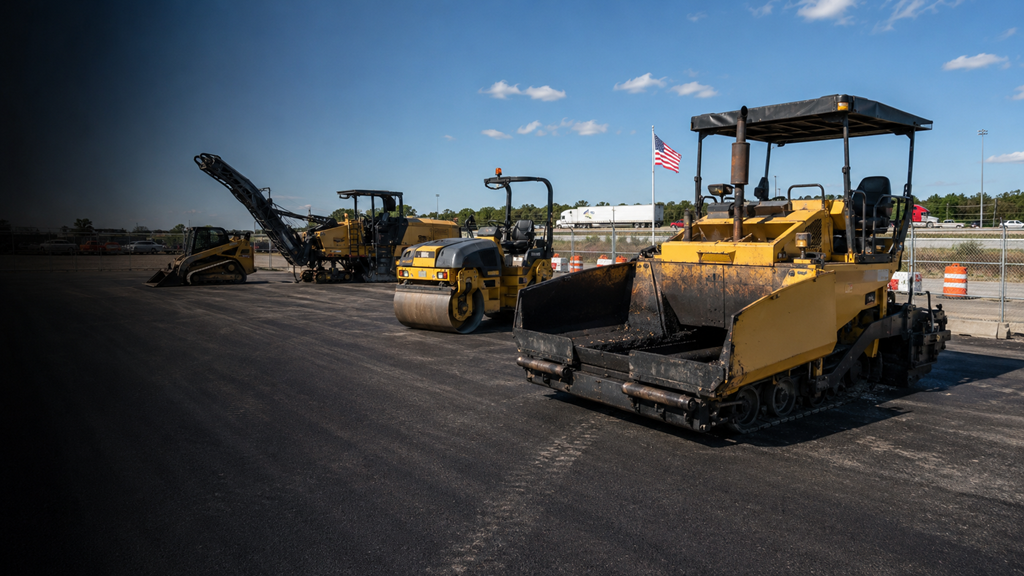
- Cold Planer: A machine used to remove the top layer of asphalt or concrete to prepare for resurfacing.
- Asphalt Paver: A vehicle that evenly spreads and compacts asphalt on road surfaces.
- Tandem Roller: A compactor with two drums, used for achieving a smooth finish in paving.
- Chip Spreader: Distributes aggregate chips over asphalt to improve traction and durability.
- Concrete Finishing Trowel: A powered or manual tool for smoothing and leveling concrete surfaces.
Advanced Control Systems
- GPS Control System: Provides precise machine guidance for grading, excavation, and leveling.
- Machine-to-Machine Communication (M2M): Enables direct communication between equipment for coordinated operations.
- Autonomous Operation System: Uses sensors and software to allow machinery to function without direct human control.
- Load Sensing Technology: Adjusts hydraulic flow and pressure based on machine load.
- Grade Control System: Assists operators in achieving accurate slope and elevation during grading.
Environmental Equipment
- Dust Suppression System: Sprays water or mist to reduce airborne dust during operations.
- Biodegradable Hydraulic Fluid: Environmentally friendly hydraulic fluid that degrades naturally over time.
- Electric Excavator: Powered by electricity rather than diesel, reducing emissions.
- Low-Emission Engine: Designed to meet stringent environmental standards for reduced pollutants.
- Noise Reduction Kit: Components or materials added to equipment to minimize operational noise.
Hydraulic System Components
- Hydraulic Manifold: A block that connects hydraulic valves and controls the distribution of fluid.
- Hydraulic Cooling System: A radiator-like system that cools hydraulic fluid to prevent overheating.
- Directional Control Valve: Regulates the direction of hydraulic fluid flow in a circuit.
- Proportional Valve: Provides variable flow rates depending on the input signal.
- Hydraulic Swivel: Allows a component to rotate without twisting the hydraulic hoses.
Engine Components
- Exhaust Gas Recirculation (EGR): A system that recirculates a portion of the exhaust gases back into the engine to reduce emissions.
- Turbocharger: A device that forces more air into the engine for increased power.
- Diesel Particulate Filter (DPF): Captures and removes soot particles from the exhaust stream.
- Glow Plug: Heats the air in diesel engines to assist with starting in cold conditions.
- Variable Valve Timing (VVT): Adjusts the timing of engine valves for improved performance and efficiency.
Electrical Components
- Control Relay: An electrically operated switch used to control high-power circuits.
- Circuit Breaker: A safety device that interrupts electrical flow during an overload or short circuit.
- Voltage Regulator: Maintains consistent voltage levels within the electrical system.
- Wiring Harness: A bundled arrangement of wires and connectors that powers the machinery.
- Battery Isolator: A switch that disconnects the battery from the system to prevent electrical discharge.
Undercarriage Components
- Track Chain: A series of interlinked metal plates forming the track system.
- Track Roller: Supports and guides the track as it moves.
- Sprocket: Transfers power from the drive motor to the tracks.
- Idler: Maintains tension in the track system and supports its alignment.
- Track Pads: Rubber or steel pads attached to tracks to enhance grip and reduce wear.

Leave a comment