
A practical guide to importing used heavy equipment from abroad — sources, shipping options, customs, inspection, and...
Latest posts
-
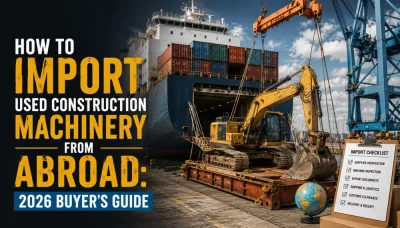 How to Import Used Construction Machinery from Abroad: 2026 Buyer's GuideRead more
 -
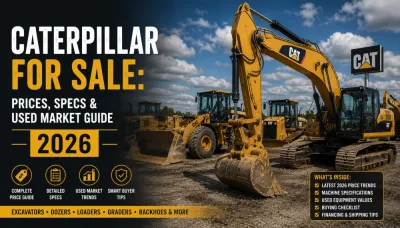 Caterpillar for Sale: Prices, Specs & Used Market Guide 2026Read more
A buyer's guide to used Caterpillar machines — the CAT 320-series excavators and road equipment, current price...
-
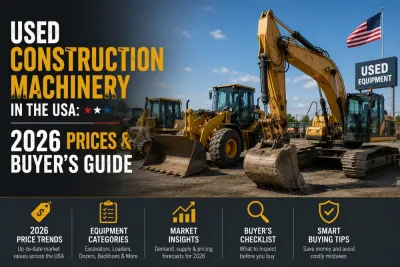 Used Construction Machinery in the USA: 2026 Prices & Buyer's GuideRead more
A buyer's guide to used road construction and paving machinery from the USA — current price ranges, an inspection...
-
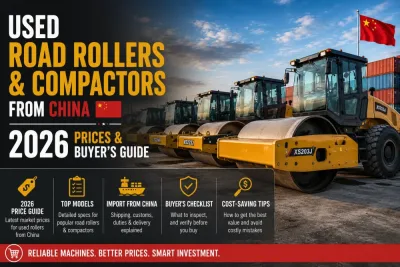 Used Road Rollers & Compactors from China: 2026 Prices & Buyer's GuideRead more
A buyer's guide to recent, low-hour used road rollers and compactors sourced from China — what is available, current...
-
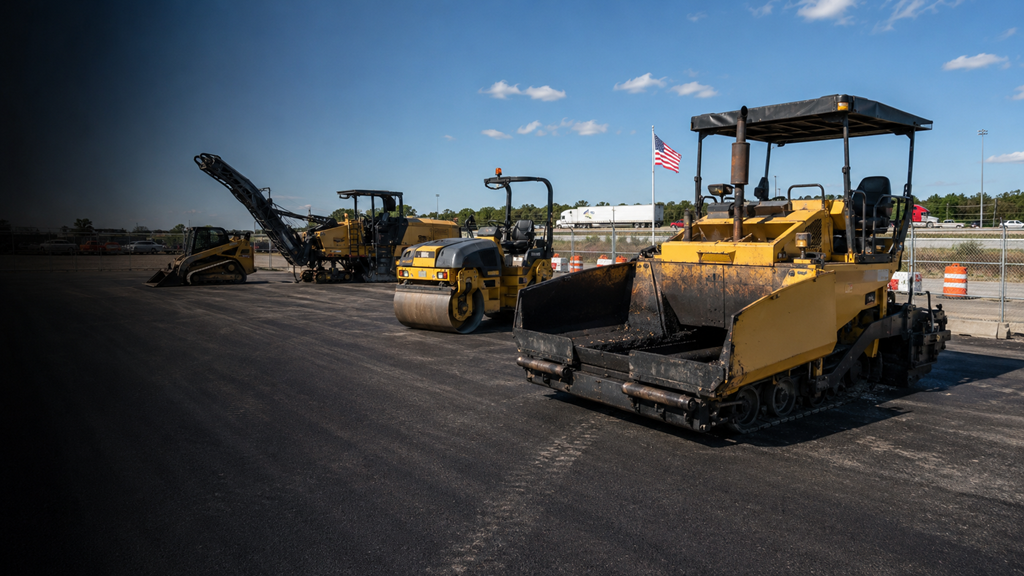 Used Asphalt & Paving Equipment in the USA: 2026 Prices & Buyer's GuideRead more
A practical buyer's guide to used asphalt and paving equipment sourced from the USA — what is available, current...
-
 Manitou MT 1840 Telehandler 2026: Current Prices, Specs, and Buyer’s GuideRead more
The Manitou MT 1840 has established itself as one of the most versatile and trusted telehandlers in the global...
-
 The Complete Guide to Massey Ferguson 240: Price, Specifications, and Global LegacyRead more
Massey Ferguson 240 sits in that sweet spot between light chores and real farm work. It’s part of the MF 200 series,...
-
 Ford Transit Box Truck for Sale: 2026 Buyer’s Guide for Small Business FleetsRead more
The Ford Transit box truck has long been a cornerstone of small business logistics, and in 2026 its position remains...
-
 The Ultimate Guide to Buying Trucks & Excavators: Prices, Deals, and Insights for Contractors in the USA, UK, Canada, and AustraliaRead more
For contractors, fleet managers, farmers, and construction companies, investing in the right trucks and excavators...
-
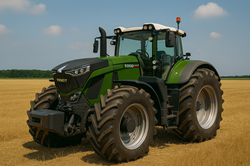 Fendt 1050 Vario Price 2026 & Full Specs: The Ultimate Buyer’s GuideRead more
In the world of high-horsepower agricultural machinery, few names carry as much weight as the Fendt 1050 Vario. Known...
Blog categories
- Automotive Parts (21) click
- Heavy Machinery & Equipment Parts (6)
- OEM vs. Aftermarket Parts (1)
- Maintenance & Repair Tips (0)
- Parts Compatibility & Cross-Referencing (0)
- Sustainability & Recycling (1)
- Industry News & Trends (2)
- Buyer & Seller Guides (59)
- Performance Upgrades & Modifications (0)
- Product Reviews & Comparisons (1)
Search in blog
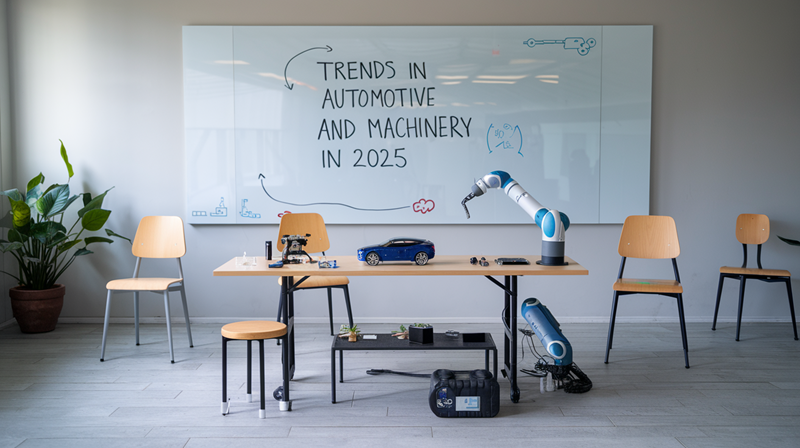
Recent Trends in Automotive and Machinery Sectors
Acceleration of Electrification
The shift towards electric vehicles (EVs) has gained significant momentum in recent years, fundamentally transforming the automotive industry. Major manufacturers are not only expanding their EV portfolios but are also investing heavily in research and development to enhance battery technology and establish comprehensive charging infrastructure. This commitment is evident in the introduction of new EV models across various segments, from compact cars to luxury SUVs and commercial vehicles.
Several factors fuel this trend. Consumer demand for environmentally friendly transportation options has surged, driven by increased awareness of climate change and the desire for sustainable living. Supportive government policies, including tax incentives, subsidies, and stricter emissions regulations, have further accelerated EV adoption. Advancements in battery efficiency, energy density, and range have addressed previous limitations, making EVs a more practical and appealing choice for a broader audience.
Advancements in Autonomous and Connected Technologies
Significant progress in autonomous driving and vehicle connectivity is reshaping the future of transportation. The integration of artificial intelligence (AI), machine learning, and Internet of Things (IoT) technologies has led to the development of advanced driver-assistance systems (ADAS) and partially autonomous vehicles. These technologies enhance safety through features like collision avoidance, lane-keeping assistance, and adaptive cruise control, improving the overall driving experience.
In the machinery sector, automation and smart technologies have revolutionized operational efficiency. Equipment is increasingly equipped with sensors and connected devices that enable real-time monitoring and data collection. Predictive maintenance becomes possible as AI algorithms analyze this data to foresee equipment failures before they occur, reducing downtime and maintenance costs. These advancements not only boost productivity but also open new avenues for innovation in industrial processes.
Emphasis on Sustainability and Green Manufacturing
Environmental concerns have prompted a stronger focus on sustainability and green manufacturing practices within the automotive and machinery industries. Companies are adopting eco-friendly materials, such as recycled plastics and bio-based composites, to reduce their environmental impact. Energy-efficient production processes, including the use of renewable energy sources like solar and wind power, are becoming more commonplace in manufacturing facilities.
This shift is a response to stricter environmental regulations aimed at reducing carbon emissions and waste. Additionally, there is a growing consumer preference for sustainable products, with buyers increasingly considering a company's environmental footprint when making purchasing decisions. By embracing sustainability, companies not only comply with regulations but also enhance their brand image and meet the evolving expectations of their customers.
Supply Chain Resilience and Localization
Recent global events have exposed vulnerabilities in supply chains, leading to significant disruptions in the automotive and machinery industries. Factors such as natural disasters, geopolitical tensions, and pandemics have highlighted the risks of over-reliance on single sources or regions for critical components. In response, businesses are prioritizing supply chain resilience by diversifying their supplier base and increasing inventory levels of essential parts.
Localization has emerged as a key strategy to mitigate supply chain risks. By bringing production and sourcing closer to end markets, companies can reduce lead times, lower transportation costs, and enhance their ability to respond to local market needs. This approach also involves investing in regional manufacturing facilities and building stronger relationships with local suppliers, thereby reducing dependency on distant sources and improving overall supply chain agility.
Digital Transformation and Industry 4.0
The acceleration of digital transformation marks a new era in manufacturing, often referred to as Industry 4.0. Companies are increasingly implementing automation and robotics to streamline production processes, enhance precision, and reduce human error. Advanced robotics can perform complex tasks around the clock, significantly boosting productivity and efficiency.
Data analytics and AI play a pivotal role in optimizing operations. By analyzing vast amounts of data collected from various stages of production, businesses can identify inefficiencies, predict maintenance needs, and make informed decisions. IoT devices enable real-time monitoring of equipment and inventory, facilitating better supply chain management. This digital shift allows companies to be more agile, respond quickly to market changes, and customize products to meet specific customer demands, ultimately leading to a competitive advantage in the marketplace.
Continued Growth of Electric Mobility
The electric vehicle (EV) market is poised for significant expansion in the coming year. Environmental concerns and the push towards reducing carbon emissions have prompted both established automotive giants and new entrants to invest heavily in electric mobility. Major manufacturers are not only increasing their EV offerings but are also committing to long-term strategies that prioritize electric over traditional internal combustion engines. This surge is further amplified by startups and tech companies entering the market with innovative models and technologies, intensifying competition and accelerating industry growth.
Advancements in battery technology are central to this expansion. Researchers are making strides in increasing energy density, reducing costs, and enhancing charging speeds. Solid-state batteries, for example, promise longer ranges and quicker charging times while improving safety. These technological improvements address common consumer concerns such as range anxiety and charging infrastructure availability. As batteries become more efficient and affordable, EVs will become accessible to a broader audience, driving mass adoption and potentially reaching price parity with conventional vehicles.
Expansion of Autonomous Features
Autonomous driving capabilities are expected to advance notably, with vehicles increasingly equipped with sophisticated advanced driver-assistance systems (ADAS). Features like adaptive cruise control, lane-keeping assist, and automated parking are becoming standard, enhancing safety and convenience. The integration of artificial intelligence and machine learning enables vehicles to process vast amounts of data from sensors and cameras, allowing for more accurate environment perception and decision-making processes.
Regulatory frameworks are evolving to keep pace with these technological advancements. Governments and international bodies are working on policies to ensure the safe testing and deployment of autonomous vehicles. This includes establishing safety standards, liability laws, and data privacy regulations. As legislation becomes more accommodating, manufacturers will be encouraged to innovate further, potentially accelerating the path toward higher levels of vehicle autonomy, including fully self-driving cars in controlled environments.
Increased Investment in Sustainable Practices
Sustainability remains a critical priority for companies in the automotive and machinery sectors. Businesses are expected to increase investments in renewable energy sources, such as solar and wind power, to run their operations. This shift towards green energy not only reduces carbon footprints but also can lead to long-term cost savings. Additionally, there is a growing emphasis on carbon-neutral manufacturing processes, with companies adopting technologies that minimize emissions and waste.
The circular economy concept is gaining traction, encouraging practices like recycling, remanufacturing, and designing products for longevity. By implementing circular economy initiatives, companies can reduce resource consumption and waste, creating a more sustainable production cycle. These efforts align with consumer values, as today's buyers are more environmentally conscious and prefer products from companies that demonstrate a commitment to sustainability. Meeting these expectations can enhance brand reputation and customer loyalty.
Strengthening of Supply Chains
Building more robust and flexible supply chains will continue to be a focal point for businesses. The disruptions caused by global events have underscored the vulnerabilities in relying heavily on single-source suppliers or distant manufacturing hubs. To mitigate these risks, companies are diversifying their supplier base, exploring multiple sources for critical components, and increasing safety stock levels where feasible.
Adoption of technologies like blockchain is anticipated to enhance transparency and traceability within supply chains. Blockchain can provide secure, real-time tracking of products from origin to destination, helping companies quickly identify and address bottlenecks or quality issues. Additionally, there is a trend toward localization, with businesses investing in local or regional production facilities. This strategy reduces dependency on global logistics networks, shortens lead times, and can improve responsiveness to local market demands.
Advancements in Industry 4.0
The deepening integration of artificial intelligence (AI), the Internet of Things (IoT), and machine learning is set to revolutionize manufacturing processes further. Factories are becoming smarter, utilizing connected devices and sensors to collect real-time data across all stages of production. This data enables predictive maintenance, where machinery issues can be anticipated and addressed before causing downtime, thus improving efficiency and reducing costs.
Human-machine collaboration is also expected to advance. Collaborative robots, or cobots, are designed to work alongside humans, enhancing productivity while ensuring safety. AI and machine learning algorithms can optimize production schedules, improve quality control, and enable customization at scale. Real-time analytics provide insights that help businesses make informed decisions quickly, adapt to market changes, and stay competitive in a rapidly evolving industry landscape.
Challenges with Raw Material Availability
Potential shortages and price volatility of critical raw materials pose significant challenges for the automotive and machinery sectors. The high demand for semiconductors, lithium, cobalt, and rare earth metals—essential for EV batteries, electronics, and other components—can outpace supply, leading to bottlenecks in production. Geopolitical tensions and trade restrictions may further complicate access to these materials.
Companies will need to develop strategic responses to these challenges. Investing in recycling initiatives can help recover valuable materials from end-of-life products, reducing reliance on raw material extraction. Research into alternative materials or technologies that require fewer scarce resources is also crucial. Additionally, forming long-term partnerships or investing directly in mining and material processing can secure supply chains. Effective strategies will involve a combination of diversification, innovation, and collaboration to ensure stability and sustainability in material sourcing.
The automotive and machinery sectors are at the forefront of technological innovation and sustainability efforts. Businesses operating in these industries should stay proactive, embracing new technologies, and adapting to changing market conditions. The coming year promises to be dynamic, with opportunities for growth and advancement for those who are prepared to navigate the evolving landscape.
Selling equipment like this?
List it on AGGZ and reach buyers reading guides like this and searching for used machinery.
Posted in:
Industry News & Trends
Related posts
-
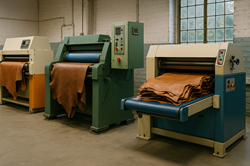 The Leather Processing Workflow and the Machines Behind It
A comprehensive expert-level guide explaining the essential machines used in leather processing and production,...Read more
The Leather Processing Workflow and the Machines Behind It
A comprehensive expert-level guide explaining the essential machines used in leather processing and production,...Read more
Leave a comment