Latest posts

2025 AgTech Trends: Smart Agricultural Machinery Transforming U.S. Farming

The American agricultural sector is entering a new era of transformation in 2025, as smart machinery reshapes how food is grown, harvested, and managed. What was once seen as futuristic is now standard for many farms across the Midwest, the South, and the Great Plains. From autonomous tractors working vast acreages without a driver to drones mapping plant health and spraying targeted sections of crops, U.S. agri-business is becoming more connected, efficient, and data-driven than ever before. The evolution of agtech is no longer confined to Silicon Valley startups or research institutions — it's happening in the fields of Iowa, Nebraska, and California every day.

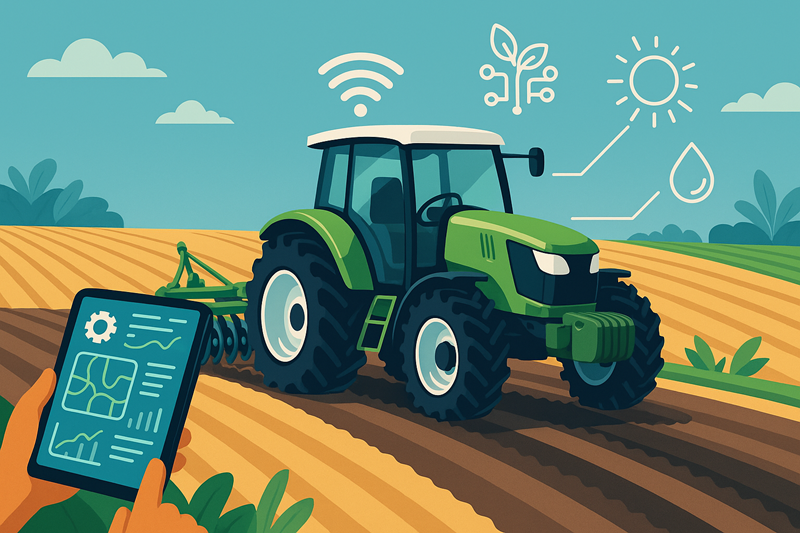
A defining theme in 2025 is the mainstreaming of autonomous equipment. Major U.S. manufacturers like John Deere, Case IH, and AGCO have accelerated their push into self-driving tractors and combines, investing heavily in LiDAR, GPS, and machine learning systems that allow machinery to navigate, operate, and make agronomic decisions with minimal human input. These aren't prototypes anymore — full fleets of autonomous tractors are working real farmland, often in conjunction with remote management apps and AI-powered monitoring platforms. Farmers now control complex machinery operations from a mobile device or a central dashboard, with real-time updates on speed, fuel efficiency, soil pressure, and route optimization.

Drone integration has also advanced significantly, offering more than just overhead imaging. In 2025, drones equipped with multispectral and hyperspectral cameras are identifying crop stress at the leaf level, helping predict yields, and detecting disease before it becomes visible to the naked eye. Beyond surveillance, drones are now active participants in spraying, seeding, and pollination, especially for specialty crops. Coupled with artificial intelligence, these flying tools ensure that every drop of water, nutrient, or pesticide is delivered exactly where it’s needed — no more, no less.

Precision planting and AI-based spraying systems are becoming essential tools rather than optional upgrades. Planters now feature intelligent downforce control and variable rate seeding to optimize yield potential across different soil types. Meanwhile, sprayers are using computer vision to distinguish between crops and weeds in real time, ensuring that herbicides are only applied to problem areas, reducing chemical use, and protecting surrounding ecosystems. This precision doesn't just benefit the environment — it also significantly lowers operational costs and improves ROI, particularly on large-scale row crop farms.

As the labor shortage in agriculture persists, especially among younger workers, automation has become a necessity rather than a convenience. The cost of training, hiring, and retaining skilled machine operators has soared, pushing many producers to adopt machinery that can do more with fewer people. At the same time, sustainability mandates and climate resilience are shaping equipment design and field operations. From electric drivetrains in smaller tractors to carbon footprint tracking built into harvesting equipment, machinery manufacturers are aligning with ESG targets and green farm certifications, offering farmers new ways to remain competitive and compliant.

When it comes to farm size segmentation, the trends in 2025 vary greatly. Large commercial farms are typically early adopters of cutting-edge technologies, integrating connected fleets, satellite-based mapping, and full-season analytics. These operations benefit from the economies of scale necessary to justify capital-intensive investments in AI-enabled machinery. In contrast, small and family-owned farms are selectively adopting technologies that deliver tangible, short-term results — such as compact autonomous tractors, mobile soil sensors, or app-integrated irrigation controllers. Affordability, modularity, and ease of use are key factors in the adoption curve for this segment.

Integration with U.S. agtech platforms is now central to machinery procurement and field planning. Most top-tier machines come preconfigured to sync with platforms like Climate FieldView, John Deere Operations Center, and AgLeader. These integrations allow seamless data exchange, helping farmers make smarter planting decisions, track harvest progress, and benchmark inputs versus yields. Furthermore, federal and state incentive programs are helping offset the upfront costs of smart machinery. Through USDA conservation grants, EQIP (Environmental Quality Incentives Program), and local ag innovation funds, producers can access cost-share programs that reward adoption of precision agriculture tools and low-emission equipment.

Frequently Asked Questions: Smart Agricultural Machinery in the U.S. (2025)

What are the most promising smart machines for U.S. row crop farmers in 2025?
Row crop producers are seeing major gains from autonomous planters, AI-guided sprayers, and self-monitoring combines. Machines like the John Deere See & Spray Ultimate and Case IH AFS Connect Magnum are setting the benchmark for integrated, precision-first farming equipment that maximizes yield while minimizing input waste.

Are autonomous tractors legal and insurable across all U.S. states?
Most states have no explicit bans on autonomous farming equipment, but regulatory clarity varies. In agricultural zones, autonomous tractors operating on private land are generally permitted. Insurance companies now offer specialized coverage policies for autonomous machinery, especially when equipped with remote shutdown and geofencing technologies.

How do I evaluate ROI on precision spraying tech?
ROI for precision sprayers often becomes visible within one or two growing seasons. By reducing chemical waste, targeting only the necessary areas, and improving plant health outcomes, many farmers report savings of 20–40% in herbicide use alone. Added benefits include environmental compliance and fewer crop losses from blanket applications.

Which brands offer the most robust support for connected machinery?
John Deere remains the market leader in connectivity and after-sales support, with its Operations Center platform offering extensive cloud-based control. AGCO’s FUSE platform and Case IH’s AFS Connect are also robust, especially when integrated with third-party farm management software. Support quality often depends on dealer proximity and training availability.

Is there federal funding for smart farm equipment upgrades?
Yes. Programs like USDA’s EQIP and Conservation Stewardship Program (CSP) offer partial reimbursements for adopting technologies that promote sustainability, such as variable-rate seeding or low-emission engines. Additional support may be available through local extension offices and state-level clean ag initiatives.

Are electric tractors a viable option for U.S. farms in 2025?
Electric tractors have gained traction among small to mid-sized farms, especially those with access to renewable energy. Brands like Solectrac and Monarch are pioneering electric models that work well for orchards, vineyards, and mixed-use farming. However, for high horsepower needs, diesel-electric hybrids remain more common.

How do drones enhance farming operations beyond imaging?
Modern drones now participate directly in operations — such as targeted spraying, biological pest control, and even automated field scouting. With advanced AI onboard, drones can detect issues early, improving field-level decisions and reducing manual labor.

Can smart machinery reduce the number of workers needed?
Absolutely. Many farms have shifted from multi-operator crews to a single technician managing several autonomous or semi-autonomous machines. This has helped mitigate the growing challenge of labor shortages while improving overall efficiency and reducing human error.

What are the maintenance implications of smart equipment?
Connected machinery often includes predictive maintenance systems that notify operators before breakdowns occur. This reduces downtime and long-term repair costs, though it also means farms must invest in digital diagnostic tools and technician training.

Are there risks of data misuse when using connected ag equipment?
Data privacy is a growing concern. Most manufacturers now include clauses for data protection and usage in their contracts. Farmers should review data-sharing agreements carefully, ensuring they retain ownership and control over sensitive field data.

Which U.S. regions are leading adoption of smart ag machinery?
The Midwest continues to lead in large-scale automation for corn and soybean production. California and the Pacific Northwest are strong in specialty crop tech, while the South has seen growth in autonomous spraying and irrigation solutions tailored for cotton and rice.

What’s the expected lifespan of precision ag machinery?
Hardware lifespans remain similar to traditional machinery — around 8 to 12 years with proper maintenance. However, software updates and sensor replacements may be needed every 3–5 years to stay compatible with new ag platforms and data protocols.

How do I train staff to operate connected machinery?
Most manufacturers now offer digital learning platforms and in-field training through local dealerships. Many community colleges and land-grant universities have also added agtech certification programs, preparing the next generation of precision farm operators.

Can I retrofit older machines with smart tech?
Yes, retrofitting kits are available for tractors, planters, and harvesters. These typically include GPS modules, telematics systems, and remote sensors. Retrofitting is a cost-effective way to access smart capabilities without replacing entire fleets.

Is smart machinery suitable for organic or regenerative farms?
Definitely. In fact, many regenerative farms rely on AI-driven equipment to minimize soil disturbance, optimize compost use, and manage biodiversity with surgical precision. Smart tools enable higher yields with lower chemical inputs, aligning with organic standards.

Conclusion

In 2025, U.S. farming is more data-driven, autonomous, and sustainable than at any time in history. Smart agricultural machinery has moved from experimental to essential, offering real economic and environmental value to farms of all sizes. Whether you're operating 5,000 acres in Iowa or managing a 20-acre organic orchard in Oregon, the right mix of intelligent equipment can transform your productivity, compliance, and long-term profitability. The future of farming isn’t just smart  it’s already here.

Selling equipment like this?

List it on AGGZ and reach buyers reading guides like this and searching for used machinery.

Leave a comment