
A buyer's guide to used road rollers and compactors listed in Poland: what is available, current prices, what to...
Latest posts
-
 Used Road Rollers & Compactors in Poland: 2026 Prices & Buyer's GuideRead more
 -
 How to Import Used Construction Machinery from Abroad: 2026 Buyer's GuideRead more
A practical guide to importing used heavy equipment from abroad — sources, shipping options, customs, inspection, and...
-
 Caterpillar for Sale: Prices, Specs & Used Market Guide 2026Read more
A buyer's guide to used Caterpillar machines — the CAT 320-series excavators and road equipment, current price...
-
 Used Construction Machinery in the USA: 2026 Prices & Buyer's GuideRead more
A buyer's guide to used road construction and paving machinery from the USA — current price ranges, an inspection...
-
 Used Road Rollers & Compactors from China: 2026 Prices & Buyer's GuideRead more
A buyer's guide to recent, low-hour used road rollers and compactors sourced from China — what is available, current...
-
 Used Asphalt & Paving Equipment in the USA: 2026 Prices & Buyer's GuideRead more
A practical buyer's guide to used asphalt and paving equipment sourced from the USA — what is available, current...
-
 Manitou MT 1840 Telehandler 2026: Current Prices, Specs, and Buyer’s GuideRead more
The Manitou MT 1840 has established itself as one of the most versatile and trusted telehandlers in the global...
-
 The Complete Guide to Massey Ferguson 240: Price, Specifications, and Global LegacyRead more
Massey Ferguson 240 sits in that sweet spot between light chores and real farm work. It’s part of the MF 200 series,...
-
 Ford Transit Box Truck for Sale: 2026 Buyer’s Guide for Small Business FleetsRead more
The Ford Transit box truck has long been a cornerstone of small business logistics, and in 2026 its position remains...
-
 The Ultimate Guide to Buying Trucks & Excavators: Prices, Deals, and Insights for Contractors in the USA, UK, Canada, and AustraliaRead more
For contractors, fleet managers, farmers, and construction companies, investing in the right trucks and excavators...
Blog categories
- Automotive Parts (21) click
- Heavy Machinery & Equipment Parts (6)
- OEM vs. Aftermarket Parts (1)
- Maintenance & Repair Tips (0)
- Parts Compatibility & Cross-Referencing (0)
- Sustainability & Recycling (1)
- Industry News & Trends (2)
- Buyer & Seller Guides (60)
- Performance Upgrades & Modifications (0)
- Product Reviews & Comparisons (1)
Search in blog

JCB 4CX Backhoe Loader Review 2026: Performance, Cost, and Real-World Usage
Few machines in the global construction landscape have achieved the same recognition as the JCB 4CX backhoe loader. First introduced as an evolution of JCB's early 3CX platform, the 4CX series has established itself over decades as a high-capacity, dual-purpose workhorse designed for contractors who demand more digging power and loader performance in a single unit. In 2026, the 4CX remains a top contender in the heavy-duty backhoe market, particularly in North America and the UK, where fleet owners prioritize uptime, adaptability, and long-term value over flash. This review dives into how the latest 2024–2026 editions of the 4CX perform on the ground, how they compare to competitors, and what buyers need to know before investing.
The JCB 4CX is often considered the most powerful backhoe loader in the manufacturer’s lineup. Built with a focus on higher output and stability, the current-generation model features a maximum digging depth of up to 6.14 meters and a loader capacity exceeding 3,000 kg. Its powertrain, typically anchored by a JCB EcoMAX Tier 4 Final/Stage V compliant engine, delivers up to 109 hp while maintaining fuel economy under demanding job site conditions. What differentiates the 4CX is its equal-sized wheels, 4-wheel steer system, and heavy-duty axles, which collectively give it more lift, traction, and load capacity compared to mid-range competitors. This setup makes it especially useful on uneven ground or when working on multi-functional tasks like trenching and loading during a single deployment.
JCB’s 2024–2026 improvements bring the 4CX in line with the needs of today’s job site realities. Fuel efficiency enhancements, driven by the latest EcoMAX recalibration and auto-idle systems, translate to measurable cost savings for operators running multiple shifts per day. The cab redesign improves visibility and ergonomics, featuring climate-controlled comfort, Bluetooth connectivity, a wider touchscreen display, and intuitive multi-function joysticks. The upgraded LiveLink telematics platform allows fleet managers to remotely monitor fuel use, location, and service alerts—vital for companies managing decentralized projects. Most importantly for U.S. and Canadian buyers, the new model is fully compliant with EPA Tier 4 Final and Canada’s current emissions standards, ensuring a smoother registration process and long-term regulatory viability.
On U.S. and UK job sites, the 4CX continues to shine in mixed-use scenarios. Its dual-function nature remains a core advantage, allowing a single operator to move quickly from trenching to loading without equipment swaps. Contractors operating in urban renewal zones and utility trenching projects have noted its maneuverability, especially thanks to its tight turning radius and side-shift capability. However, for smaller residential sites or extremely tight work zones, some users find the 4CX slightly overpowered compared to more compact units. Transport can also be a logistical consideration, as the 4CX’s size and weight may require a higher-capacity trailer or special permits depending on local regulations.
Compared to its competitors, the 4CX holds its own against heavyweights like the Caterpillar 420XE, CASE 580N, and Komatsu WB97S. While CAT machines are known for slightly smoother hydraulics and CASE offers a more familiar control layout for North American operators, JCB wins in terms of raw loader capacity and 4-wheel steer versatility. Komatsu's WB97 offers comparable specs and often comes with more standard attachments, but JCB’s worldwide dealer support and parts infrastructure give it an edge for long-term operations. Buyers choosing between these brands often find that job site needs—particularly terrain type and lifting requirements—determine which machine offers better ROI.
Pricing in 2026 for a new JCB 4CX in the U.S. ranges from approximately $130,000 to $155,000 depending on specifications, attachments, and dealership options. In Canada, pricing may be slightly higher due to import and delivery costs, with figures ranging from CAD 180,000 to CAD 200,000. Used models vary widely: a well-maintained 2018–2020 unit with moderate hours might command $70,000 to $95,000 USD, while older high-hour machines can be found in the $45,000 range if not requiring major service. The key with used 4CXs is documentation—models with full service histories and JCB-certified inspections retain resale value far better than auction finds with unknown maintenance backgrounds.
From a maintenance standpoint, the JCB 4CX remains operator-friendly. Daily checks are accessible from ground level, and the updated LiveLink diagnostics reduce unexpected downtime by flagging issues before they escalate. Most dealers offer service contracts or extended warranties, which are strongly recommended for high-utilization fleets. Spare parts availability in North America and Europe is excellent, with same-week delivery common for standard items. As with any mixed-duty machine, preventive maintenance is key. The average annual maintenance cost for a fleet-owned 4CX used 1,000 hours per year is estimated at $3,500 to $5,000, including filters, fluids, minor repairs, and diagnostics.
Frequently Asked Questions About the JCB 4CX in 2026
Is the JCB 4CX suitable for both digging and loading on tight construction sites?
Yes, the 4CX is designed specifically for dual-purpose use, making it ideal for projects where space and crew size are limited. However, its size means that in extremely confined areas, more compact models like the JCB 3CX or CAT 415 may be more practical.
How does the JCB 4CX compare to Caterpillar backhoes in fuel economy?
While Caterpillar’s 420XE is slightly ahead in idle fuel savings under light-duty use, the JCB 4CX performs very competitively in moderate to heavy-duty tasks, especially when using the EcoMAX and auto-stop features. Fuel efficiency is on par when measured over full-day cycles.
What is the average service interval and maintenance cost?
Service intervals are every 500 hours for most components, with major servicing at 1,000-hour marks. Annual maintenance costs average between $3,500 and $5,000 USD, depending on usage and part availability in your region.
Can a single operator switch easily between loader and backhoe functions?
Absolutely. The 4CX is engineered for seamless transition between functions with dual-joystick control and return-to-dig automation, reducing the need for manual adjustments between digging and loading.
Is the 4CX compatible with various attachments?
Yes, the 4CX supports a wide range of JCB and aftermarket attachments including hydraulic breakers, augers, sweepers, forks, and even snow plows in colder regions. The quick-hitch system allows for fast swaps, increasing daily productivity.
How well does the 4CX handle cold weather or extreme heat?
The 4CX is equipped with a climate-controlled cab and heavy-duty cooling system, making it suitable for both Canadian winters and hot southern U.S. job sites. The battery and fuel lines are protected to prevent start-up delays in sub-zero temperatures.
How does JCB’s warranty compare to other brands?
JCB offers a standard 2-year or 2,000-hour warranty, which is competitive in the industry. Extended warranties up to 5 years or 5,000 hours are available at additional cost, and many dealers include telematics packages within the coverage period.
What is the resale value of the JCB 4CX after five years?
Due to its global reputation and parts availability, the 4CX holds value well. A properly maintained five-year-old 4CX with moderate hours can still fetch 55–65% of its original purchase price, especially when sold through authorized dealerships or export channels.
Are electric or hybrid models available for the 4CX?
As of mid-2026, JCB is actively developing hybrid systems for lighter models, but the 4CX remains diesel-powered due to power demands. However, its current engine platform is compliant with the most recent emissions standards, including Stage V in Europe and Tier 4 Final in North America.
Can the 4CX be financed through JCB dealerships?
Yes, JCB Finance offers flexible options including low-interest financing for up to 60 months, deferred payments for government projects, and leasing structures for fleet buyers. Terms may vary based on region and machine configuration.
Is the 4CX suitable for agricultural work?
Though designed primarily for construction, the 4CX’s loader and backhoe versatility, along with attachment compatibility, make it a strong choice for large-scale agricultural operations, especially where infrastructure work or trenching is involved.
What training or licensing is needed to operate the 4CX in the U.S. or UK?
Operators typically require heavy equipment certification. In the U.S., OSHA recommends operator training but does not mandate a license for private sector work. In the UK, a CPCS or NPORS card may be required, depending on job site and contractor requirements.
Related equipment for sale on AGGZ
| Machine | Year | Location | Price | |
|---|---|---|---|---|
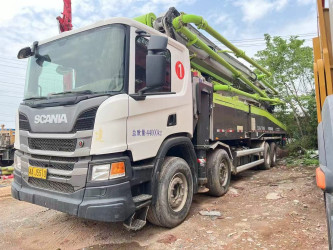 2020 ZOOMLION 56m SCANIA Pump Truck - Turkish Construction Game-Changer!
|
— | — | $77,600.00 | View |
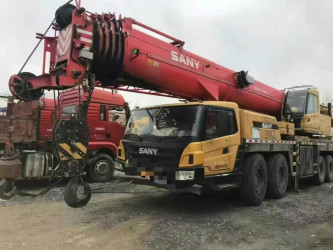 2019 SANY 80-Ton Crane - Heavy-Duty Powerhouse for Turkish Projects
|
— | — | $92,600.00 | View |
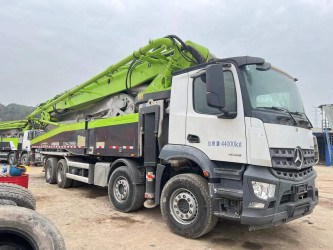 56 metre Zoomlion brand produced in 2021
|
— | — | $91,400.00 | View |
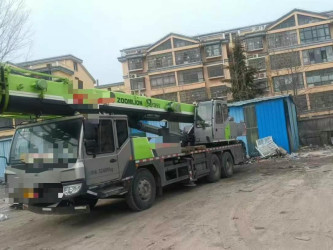 2018 ZOOMLION 25-Ton Crane - Your Next Smart Investment!
|
— | — | $35,900.00 | View |
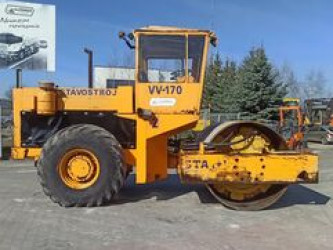 Stavostroj VV-170 Single Drum Compactor 1985
|
1985 | Poland | $13,700.00 | View |
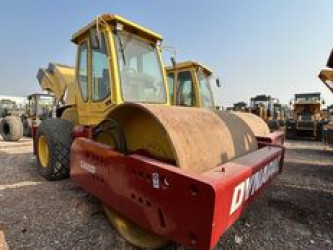 Dynapac CA-602-D Single Drum Compactor 2021
|
2021 | China | $19,500.00 | View |
Frequently asked questions
How much does used Concrete Machinery cost on AGGZ?
Prices depend on the year, operating hours and condition of each machine. Compare the current listings above to see real prices from sellers, then contact the seller directly.
What should I check when buying used Concrete Machinery?
Check the year of manufacture, operating hours or mileage, service and maintenance history, and overall condition. Arrange an inspection or request detailed photos before any payment.
Can I buy and export used Concrete Machinery from Turkey and abroad?
Yes. Many sellers on AGGZ ship internationally. Confirm shipping options, export documentation and payment terms directly with the seller before you buy.
Selling similar equipment?
List your machinery on AGGZ and reach buyers searching for Concrete Machinery, trucks, spare parts and industrial equipment.
Posted in:
Buyer & Seller Guides
Related posts
-
Used Road Rollers & Compactors in Poland: 2026 Prices & Buyer's Guide
A buyer's guide to used road rollers and compactors listed in Poland: what is available, current prices, what to...Read more
-
How to Import Used Construction Machinery from Abroad: 2026 Buyer's Guide
A practical guide to importing used heavy equipment from abroad — sources, shipping options, customs, inspection, and...Read more
-
Caterpillar for Sale: Prices, Specs & Used Market Guide 2026
A buyer's guide to used Caterpillar machines — the CAT 320-series excavators and road equipment, current price...Read more
-
Used Construction Machinery in the USA: 2026 Prices & Buyer's Guide
A buyer's guide to used road construction and paving machinery from the USA — current price ranges, an inspection...Read more
-
Used Road Rollers & Compactors from China: 2026 Prices & Buyer's Guide
A buyer's guide to recent, low-hour used road rollers and compactors sourced from China — what is available, current...Read more
Leave a comment