
A buyer's guide to used road rollers and compactors listed in Poland: what is available, current prices, what to...
Latest posts
-
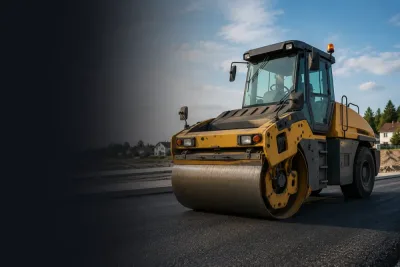 Used Road Rollers & Compactors in Poland: 2026 Prices & Buyer's GuideRead more
 -
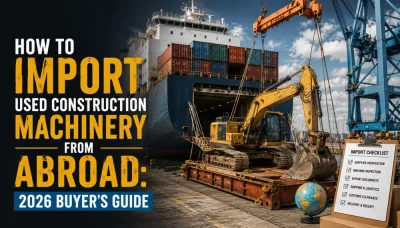 How to Import Used Construction Machinery from Abroad: 2026 Buyer's GuideRead more
A practical guide to importing used heavy equipment from abroad — sources, shipping options, customs, inspection, and...
-
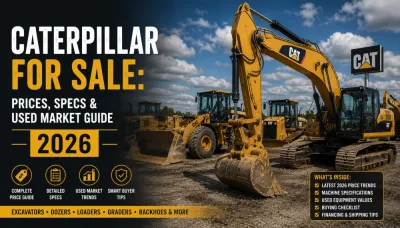 Caterpillar for Sale: Prices, Specs & Used Market Guide 2026Read more
A buyer's guide to used Caterpillar machines — the CAT 320-series excavators and road equipment, current price...
-
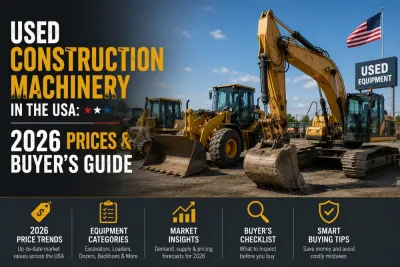 Used Construction Machinery in the USA: 2026 Prices & Buyer's GuideRead more
A buyer's guide to used road construction and paving machinery from the USA — current price ranges, an inspection...
-
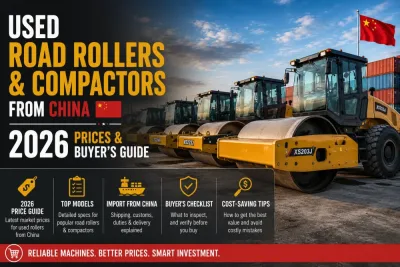 Used Road Rollers & Compactors from China: 2026 Prices & Buyer's GuideRead more
A buyer's guide to recent, low-hour used road rollers and compactors sourced from China — what is available, current...
-
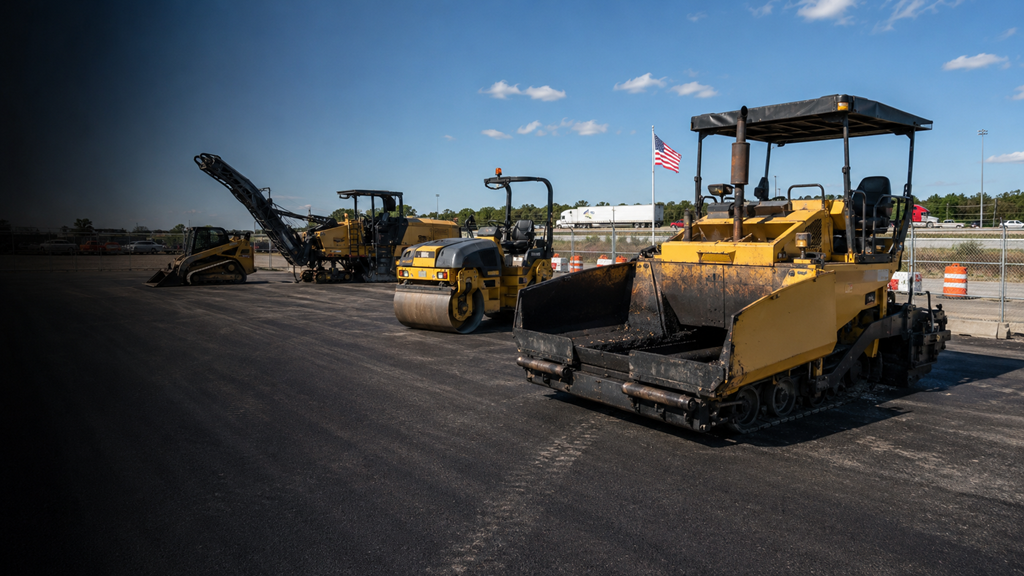 Used Asphalt & Paving Equipment in the USA: 2026 Prices & Buyer's GuideRead more
A practical buyer's guide to used asphalt and paving equipment sourced from the USA — what is available, current...
-
 Manitou MT 1840 Telehandler 2026: Current Prices, Specs, and Buyer’s GuideRead more
The Manitou MT 1840 has established itself as one of the most versatile and trusted telehandlers in the global...
-
 The Complete Guide to Massey Ferguson 240: Price, Specifications, and Global LegacyRead more
Massey Ferguson 240 sits in that sweet spot between light chores and real farm work. It’s part of the MF 200 series,...
-
 Ford Transit Box Truck for Sale: 2026 Buyer’s Guide for Small Business FleetsRead more
The Ford Transit box truck has long been a cornerstone of small business logistics, and in 2026 its position remains...
-
 The Ultimate Guide to Buying Trucks & Excavators: Prices, Deals, and Insights for Contractors in the USA, UK, Canada, and AustraliaRead more
For contractors, fleet managers, farmers, and construction companies, investing in the right trucks and excavators...
Blog categories
- Automotive Parts (21) click
- Heavy Machinery & Equipment Parts (6)
- OEM vs. Aftermarket Parts (1)
- Maintenance & Repair Tips (0)
- Parts Compatibility & Cross-Referencing (0)
- Sustainability & Recycling (1)
- Industry News & Trends (2)
- Buyer & Seller Guides (60)
- Performance Upgrades & Modifications (0)
- Product Reviews & Comparisons (1)
Search in blog
Best Construction Machinery for 2026: A Buying Guide
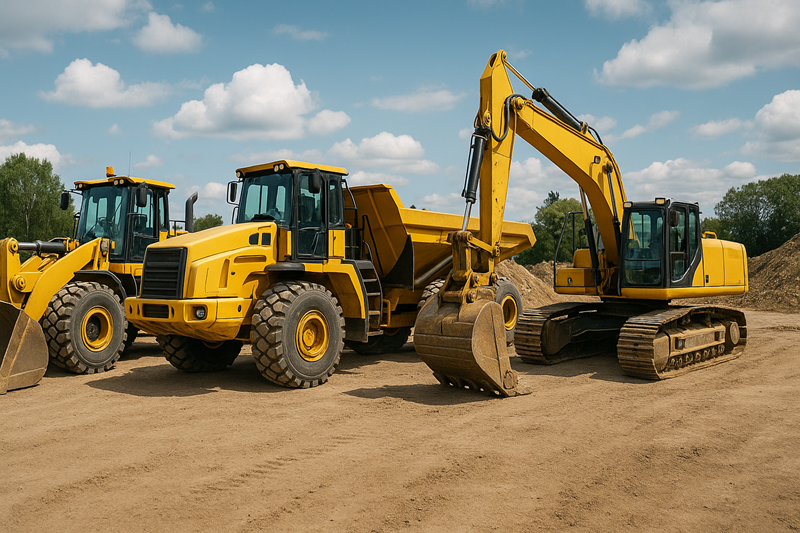
The Construction Machinery Landscape in 2026
As the construction industry moves into 2026, equipment selection is no longer a matter of horsepower and capacity alone. New emission regulations, automation, skilled labor shortages, and rising fuel costs are fundamentally reshaping how contractors choose their machinery. Equipment manufacturers are rapidly integrating digital technologies, offering electric and hybrid options, and optimizing machines for greater efficiency and lower environmental impact. Buyers now need to consider not only performance and reliability, but also connectivity, support ecosystems, and long-term value. In this guide, we examine the most critical construction machines for 2026 and provide grounded, expert-level insight into how to make the best investment for your fleet.
Excavators: The Backbone of Earthmoving
Excavators remain a core asset on virtually every construction site, from road building to utility trenching and commercial site prep. In 2026, they are being redefined by advances in hydraulics, machine learning, and fuel system innovation. New-generation excavators from brands like Caterpillar, Komatsu, and Volvo are equipped with intelligent hydraulic systems that adjust power based on workload, reducing unnecessary fuel burn. Many models now feature integrated grade control and semi-autonomous digging assistance, significantly reducing operator fatigue and increasing precision. As labor remains tight, these smart-assist systems allow less experienced operators to achieve near-expert performance. Electric compact excavators are also gaining traction in urban projects where noise and emissions are restricted. These machines are not only reducing operational costs but are helping companies meet stricter carbon targets without sacrificing power or productivity.
Skid Steers: Compact Powerhouses for Versatility
Skid steer loaders are prized for their compact size, maneuverability, and ability to handle dozens of attachments, making them indispensable for smaller job sites and indoor demolition work. In 2026, leading manufacturers like Bobcat and CASE are rolling out skid steers with refined joystick controls, improved operator visibility, and telematics that allow remote diagnostics and performance tracking. The latest electric models are quickly becoming favored in tight, emission-regulated spaces, offering lower noise and zero exhaust without compromising torque. Fleet managers appreciate their low ownership costs, especially when units are rotated across landscaping, paving, and residential sectors. As automation slowly makes its way into this class, buyers can expect semi-autonomous features like return-to-dig and obstacle detection in mid-tier and premium models.
Backhoe Loaders: Multipurpose Workhorses in Transition
The backhoe loader continues to offer unmatched versatility by combining digging and material handling in a single machine. Though less common on massive sites, backhoes remain essential for municipalities, utility contractors, and rural jobs where transporting multiple machines isn’t practical. For 2026, manufacturers such as JCB and New Holland are improving fuel economy and introducing hybrid powertrains to reduce idle time consumption. GPS-enabled dig depth control and automatic transmission modes are becoming standard in mid-range models, enabling faster cycle times and reducing user error. In regions where skilled labor is scarce, the simplified interface of newer models is making it easier for general laborers to operate safely and efficiently. Buyers looking for one machine to handle trenching, lifting, and light loading will find the 2026 backhoe more capable, comfortable, and efficient than ever before.
Bulldozers: Efficiency and Traction in a Digital Era
Bulldozers have long been essential for grading, pushing, and clearing large volumes of material, especially on infrastructure and mining projects. The 2026 bulldozer market is emphasizing operator assistance systems, terrain-aware blade control, and emissions compliance through Tier 4 Final or EU Stage V engines. Top manufacturers such as Komatsu and Liebherr are investing heavily in smart machine platforms that allow precise blade positioning with minimal input, reducing rework and improving fuel use. Compact models are increasingly used in urban projects where full-sized units are impractical. While dozers are traditionally labor- and fuel-intensive, newer models use data from telematics to optimize performance and enable predictive maintenance. For buyers in regions with extreme terrain or regulatory hurdles, bulldozers with built-in fleet integration tools offer measurable ROI through reduced downtime and increased job site coordination.
Wheel Loaders: Material Movement Gets Smarter
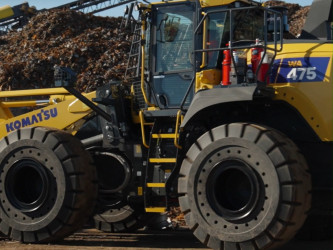
Wheel loaders remain a cornerstone for material handling, especially in aggregate yards, road building, and general construction. The current generation of loaders from brands like Volvo and Doosan is engineered for fuel efficiency, with automatic engine shutoffs, regenerative braking, and load-sensing hydraulics that scale performance based on demand. In 2026, telematics is standard on nearly all mid-sized and large wheel loaders, giving fleet managers full visibility into cycle times, fuel burn, and idle ratios. Load assist systems and onboard payload scales are enabling real-time monitoring, allowing operators to avoid under- or over-loading trucks. For operations where productivity and speed are essential, loaders with hybrid drivetrains are becoming viable, especially where electric recharging infrastructure exists. These features are not just luxuries—they are necessities for job sites that demand output accountability and budget control.
Cranes: Precision Meets Mobility
Whether on high-rise developments or infrastructure projects, cranes are indispensable for vertical lifting and heavy placement. The crane market in 2026 is dominated by compact and modular designs that improve mobility and reduce setup time. Brands like Liebherr, Manitowoc, and Terex are pioneering telematics-enabled cranes that offer real-time load tracking, boom angle feedback, and geofencing for safety compliance. For buyers dealing with space constraints in urban builds, self-erecting tower cranes with remote operation capabilities are streamlining logistics and reducing labor demands. Fuel economy and emissions remain front and center, with hybrid drive systems beginning to enter the market. Cranes are also benefiting from improved fleet scheduling software, helping project managers coordinate deliveries and lifts more efficiently.
Compact Equipment: The Unsung Heroes of Specialized Projects
Compact construction equipment, such as mini excavators, compact track loaders, and micro dozers, continues to grow in importance, especially in urban construction, indoor renovation, and landscape projects. In 2026, these machines are not just smaller—they're smarter. Battery-powered units are gaining popularity for their quiet operation and environmental compliance, especially in noise-sensitive zones like schools or hospitals. Brands like Kubota and Takeuchi are emphasizing comfort and control by offering adjustable operator stations, refined hydraulic controls, and simplified maintenance access. For contractors looking to scale their fleets cost-effectively, compact machines offer a low barrier to entry with flexible financing and quick ROI. They are also a strategic hedge against labor shortages, as their user-friendly controls enable faster onboarding of new operators.
Smart Features Reshaping Equipment Choices in 2026
The integration of intelligent features is no longer optional—it’s expected. In 2026, most new construction machines come equipped with GPS tracking, telematics systems, and connectivity modules that sync with fleet management platforms. These tools provide real-time insights into fuel usage, idle times, machine health, and location, allowing contractors to fine-tune operations and respond proactively to mechanical issues. Semi-autonomous functions, such as auto-grade, return-to-dig, and path guidance, are enabling a single operator to do more with less, especially when paired with remote support and diagnostics. Electric and hybrid engines are also becoming central to fleet planning, particularly for firms operating in regions with strict carbon caps or incentive programs. These technologies are not gimmicks—they offer measurable reductions in cost, downtime, and risk.
Buying Considerations: What to Look for in 2026
When selecting construction machinery in 2026, contractors should look beyond spec sheets. Availability is a critical factor, as global supply chains are still recovering, making lead times and dealership support a serious differentiator. Financing packages, warranty options, and lease flexibility can significantly affect your cash flow and equipment turnover strategy. Total cost of ownership—including fuel, maintenance, parts access, and resale value—should guide purchasing decisions more than upfront price alone. Buyers should also evaluate a brand's support network, access to training, and remote service capabilities. Machines that integrate easily into digital fleet management systems offer long-term strategic advantages, especially for companies scaling operations or managing multiple job sites simultaneously.
Regional Needs and Environmental Considerations
Geography continues to play a major role in equipment selection. Urban contractors need compact, low-emission machines that can maneuver through confined spaces and comply with local noise ordinances. In contrast, rural or remote sites require durable machines with high fuel capacity, longer service intervals, and terrain-specific modifications such as all-weather tires or heavy-duty undercarriages. Cold climates demand heated cabs and fluid systems; tropical environments may require dust and moisture protection. Understanding these regional nuances ensures machines perform reliably and minimize operational friction.
Future-Proofing Your Fleet
In 2026, purchasing construction machinery is as much about vision as it is about specs. Contractors and equipment managers must align their choices with long-term goals in productivity, compliance, and cost control. The best machines on the market today go beyond brute force—they’re intelligent, adaptable, and backed by strong service ecosystems. As the industry leans further into automation, sustainability, and digital integration, buyers who invest in versatile, connected, and efficient machines will gain a competitive edge. A smart buying strategy today is an investment in tomorrow’s profitability.
Related equipment for sale on AGGZ
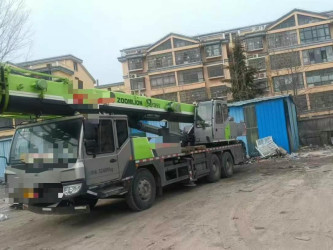
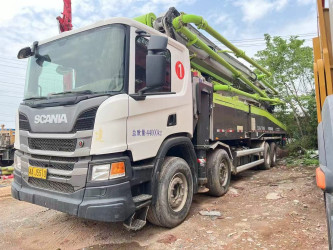
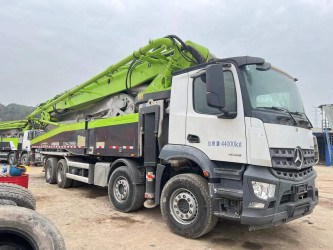
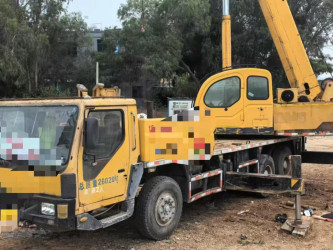
Frequently asked questions
How much does used Cranes cost on AGGZ?
Prices depend on the year, operating hours and condition of each machine. Compare the current listings above to see real prices from sellers, then contact the seller directly.
What should I check when buying used Cranes?
Check the year of manufacture, operating hours or mileage, service and maintenance history, and overall condition. Arrange an inspection or request detailed photos before any payment.
Can I buy and export used Cranes from Turkey and abroad?
Yes. Many sellers on AGGZ ship internationally. Confirm shipping options, export documentation and payment terms directly with the seller before you buy.
Selling similar equipment?
List your machinery on AGGZ and reach buyers searching for Cranes, trucks, spare parts and industrial equipment.
Posted in:
Buyer & Seller Guides
Related posts
-
Used Road Rollers & Compactors in Poland: 2026 Prices & Buyer's Guide
A buyer's guide to used road rollers and compactors listed in Poland: what is available, current prices, what to...Read more
-
How to Import Used Construction Machinery from Abroad: 2026 Buyer's Guide
A practical guide to importing used heavy equipment from abroad — sources, shipping options, customs, inspection, and...Read more
-
Caterpillar for Sale: Prices, Specs & Used Market Guide 2026
A buyer's guide to used Caterpillar machines — the CAT 320-series excavators and road equipment, current price...Read more
-
Used Construction Machinery in the USA: 2026 Prices & Buyer's Guide
A buyer's guide to used road construction and paving machinery from the USA — current price ranges, an inspection...Read more
-
Used Road Rollers & Compactors from China: 2026 Prices & Buyer's Guide
A buyer's guide to recent, low-hour used road rollers and compactors sourced from China — what is available, current...Read more
Leave a comment