
A buyer's guide to used road rollers and compactors listed in Poland: what is available, current prices, what to...
Latest posts
-
 Used Road Rollers & Compactors in Poland: 2026 Prices & Buyer's GuideRead more
 -
 How to Import Used Construction Machinery from Abroad: 2026 Buyer's GuideRead more
A practical guide to importing used heavy equipment from abroad — sources, shipping options, customs, inspection, and...
-
 Caterpillar for Sale: Prices, Specs & Used Market Guide 2026Read more
A buyer's guide to used Caterpillar machines — the CAT 320-series excavators and road equipment, current price...
-
 Used Construction Machinery in the USA: 2026 Prices & Buyer's GuideRead more
A buyer's guide to used road construction and paving machinery from the USA — current price ranges, an inspection...
-
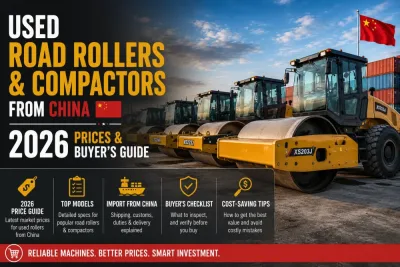 Used Road Rollers & Compactors from China: 2026 Prices & Buyer's GuideRead more
A buyer's guide to recent, low-hour used road rollers and compactors sourced from China — what is available, current...
-
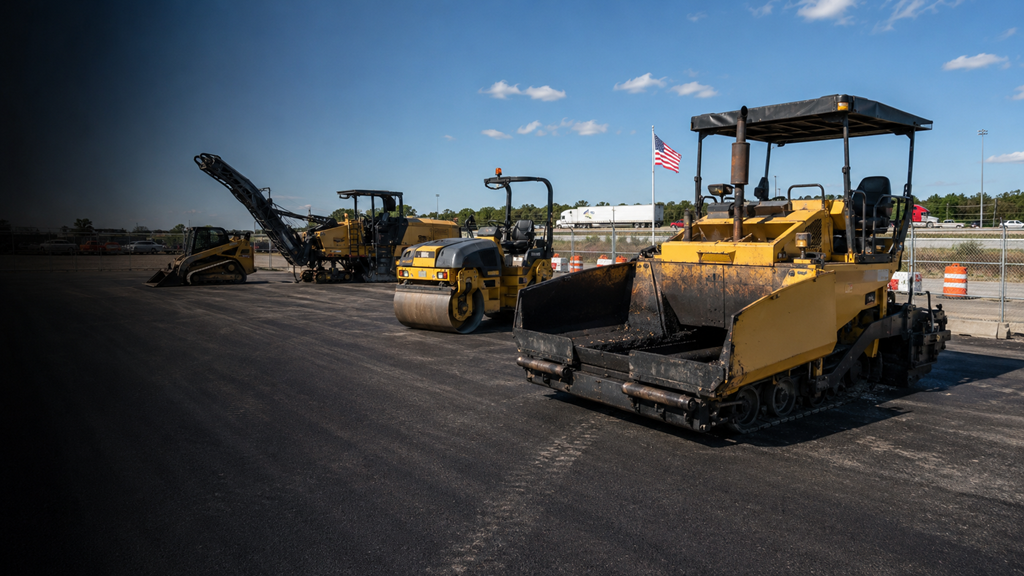 Used Asphalt & Paving Equipment in the USA: 2026 Prices & Buyer's GuideRead more
A practical buyer's guide to used asphalt and paving equipment sourced from the USA — what is available, current...
-
 Manitou MT 1840 Telehandler 2026: Current Prices, Specs, and Buyer’s GuideRead more
The Manitou MT 1840 has established itself as one of the most versatile and trusted telehandlers in the global...
-
 The Complete Guide to Massey Ferguson 240: Price, Specifications, and Global LegacyRead more
Massey Ferguson 240 sits in that sweet spot between light chores and real farm work. It’s part of the MF 200 series,...
-
 Ford Transit Box Truck for Sale: 2026 Buyer’s Guide for Small Business FleetsRead more
The Ford Transit box truck has long been a cornerstone of small business logistics, and in 2026 its position remains...
-
 The Ultimate Guide to Buying Trucks & Excavators: Prices, Deals, and Insights for Contractors in the USA, UK, Canada, and AustraliaRead more
For contractors, fleet managers, farmers, and construction companies, investing in the right trucks and excavators...
Blog categories
- Automotive Parts (21) click
- Heavy Machinery & Equipment Parts (6)
- OEM vs. Aftermarket Parts (1)
- Maintenance & Repair Tips (0)
- Parts Compatibility & Cross-Referencing (0)
- Sustainability & Recycling (1)
- Industry News & Trends (2)
- Buyer & Seller Guides (60)
- Performance Upgrades & Modifications (0)
- Product Reviews & Comparisons (1)
Search in blog
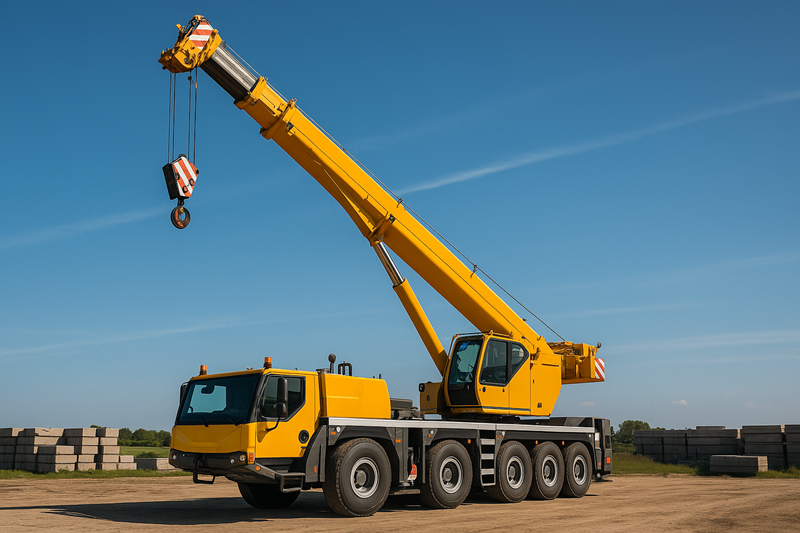
Mobile Crane Prices in 2026: Real Listings from $10,000 to $1.9M
The construction and heavy lifting sector in 2026 is under intense pressure and opportunity. With billions flowing into infrastructure upgrades across the United States, United Kingdom, and other major economies, the demand for mobile cranes is hitting record levels. Contractors are scaling up operations to meet timelines for bridge reconstructions, renewable energy installations, urban high-rises, and industrial logistics projects. Mobile cranes are no longer optional assets; they’ve become essential contributors to site productivity and competitive bidding. From general contractors expanding their fleet to equipment rental companies chasing higher utilization rates, the decision to invest in a mobile crane today has deeper strategic implications than ever before.
What Determines Mobile Crane Prices in 2026
The price of a mobile crane in 2026 is shaped by several key specifications that directly impact performance and suitability for your project type. Boom length is one of the primary factors — a 90-foot hydraulic boom on a mid-size rough terrain crane costs significantly less than a 197-foot telescopic boom on a heavy all-terrain model. Lifting capacity is equally critical. Cranes rated for 30 tons might serve warehouse and prefab applications, but anything above 80 tons is usually expected on bridgework and modular steel projects. Brand reputation plays a subtle but powerful role in pricing. Liebherr cranes, for instance, often command a premium due to their engineering pedigree and long-term reliability, whereas regional manufacturers might offer competitive specs at a lower entry price. Other pricing variables include the hydraulic control system, number of axles, counterweight configuration, remote control capability, and whether the unit is designed for all-terrain navigation or rough-terrain work in unpaved zones.
Real Mobile Crane Prices on AGGZ Right Now
Published price guides usually quote ranges without showing the machines behind them. The table below is different: every row is a crane currently listed on AGGZ, with the price the seller is actually asking. It spans the full market, from a 20-tonne XCMG at $10,000 to a 500-tonne class Terex AC 500-2 at $1,950,000.
| Crane | Year | Type / capacity | Listed price |
|---|---|---|---|
| Terex AC 500-2 | 2014 | All-terrain, 500 t class | $1,950,000 |
| Liebherr LG 1550 | 2002 | Lattice-boom all-terrain | $1,595,000 |
| Grove TMS800-2 | 2024 | Truck-mounted telescopic | $1,045,000 |
| Grove TMS800-E | 2023 | Truck-mounted telescopic | $950,000 |
| Link-Belt RTC-8040-2 | 2000 | Rough-terrain, 40 t | $130,000 |
| SANY 80-Ton Crane | 2019 | Mobile, 80 t | $92,600 |
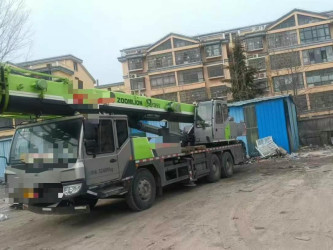
| ZOOMLION 25-Ton Crane | 2018 | Mobile, 25 t | $35,900 |
| XCMG 20-Ton Crane | 2011 | Mobile, 20 t | $10,000 |
Two things stand out. First, age matters far less than capacity: the 2002 Liebherr LG 1550 is listed above the 2024 Grove TMS800-2, because lattice-boom lifting capacity is worth more than model year. Second, the gap between the 40-tonne rough-terrain class (around $130,000) and the truck-mounted telescopic class (approaching $1,000,000) is the single biggest step in the market. If your lifts top out near 40 tonnes, that step is the one worth avoiding.
Which Crane Brands Dominate the 2026 Market
Across the U.S. and global market, several brands dominate the crane landscape due to their specialization and service footprint. Grove continues to be a top choice for American contractors, especially in the mid-to-heavy capacity range, thanks to its widespread parts network and support teams. Tadano, with its Japanese-German fusion of precision and durability, has gained massive popularity in both all-terrain and rough-terrain classes. Liebherr remains the gold standard for large-scale lifting, particularly in Europe and global energy sectors. Terex and Demag still command loyalty among buyers who prioritize legacy performance and availability of refurbished inventory. New entrants from South Korea and China have begun penetrating the U.S. market with Tier 4-compliant models and lower price points, but they often require longer adaptation periods due to parts compatibility and technician training gaps.
Buy New, Buy Used, or Lease?
One of the biggest decisions in 2026 is whether to buy new, purchase used, or lease a mobile crane. Buying new comes with the benefit of full manufacturer warranties, latest emissions-compliant engines (especially important under U.S. EPA and CARB regulations), and telematics for remote diagnostics and performance tracking. However, lead times can stretch from three months to a year due to global demand and manufacturing backlogs. Used cranes, on the other hand, are available immediately and may offer a better price-performance ratio if they come with documented service history, low operational hours, and passed third-party inspection. Leasing, both short-term and long-term, has become increasingly popular among regional contractors who don’t want to tie up capital or commit to a single crane type for varied project demands. Leasing also offers flexibility during seasonal workload spikes or when bidding on multiple projects with unknown timelines.
Financing and Emissions Compliance
Financing options in the U.S. and UK construction equipment market have also matured significantly. Many crane dealers now partner with equipment finance companies that understand the depreciation curve, job site risks, and utilization models. Depending on creditworthiness and down payment, buyers can structure payments over three to seven years with balloon options or maintenance-included bundles. Emissions compliance is also a growing concern — especially for cranes working in California, New York, or European cities with low-emission zones. Machines without Tier 4 Final engines or Euro 6 equivalents may be denied permits or taxed at higher operational rates. This adds another layer of complexity to used crane purchases from overseas, making it crucial to verify regulatory status before shipping.
Warranty Packages and Resale Value
Warranty packages are more modular now than ever. Base warranties often cover drivetrain and hydraulics for 12 months or 2,000 hours, while extended protection for electronics, booms, and remote controls can be purchased separately. Some manufacturers also offer maintenance plans bundled into the sale, which can be appealing for smaller companies without in-house mechanics. Resale value is always a factor, especially with name-brand cranes. Well-maintained units from Grove, Tadano, and Liebherr tend to hold their value across multiple ownership cycles and fetch better returns on auction platforms or trade-ins than lesser-known or obsolete models.
Frequently Asked Questions: Mobile Cranes in 2026
How much does a 100-ton mobile crane cost in the U.S.?
As of early 2026, the average cost of a new 100-ton capacity all-terrain mobile crane falls between $850,000 and $1.2 million, depending on brand, boom length, control systems, and added features like remote diagnostics. Used units with under 5,000 hours can be found for $500,000 to $750,000, especially if sourced from retiring fleets or post-lease sales. However, buyers should budget for transportation, inspection, and potential refurbishment costs if importing or buying from a secondary market.
Are rough-terrain cranes more cost-effective for regional contractors?
Yes, for many regional and mid-sized contractors working in confined or unpaved job sites, rough-terrain cranes offer excellent maneuverability and lower ownership costs. They're less expensive upfront, often easier to maintain, and don't require the same road permits as heavier all-terrain cranes. However, they lack long-distance mobility and often need to be trailered between sites. Their usage is ideal for petrochemical plants, steel yards, and urban infill projects where tight turning radii and quick setup times matter more than long travel.
Where can I find reliable used cranes with certified inspection reports?
Trusted sources include authorized dealer networks that offer manufacturer-certified pre-owned programs. Additionally, global resale platforms specializing in heavy machinery often list inspected units with full documentation, including oil analysis, structural assessments, and boom weld checks. It's strongly recommended to request an up-to-date third-party inspection and cross-verify the hours and service history before making any down payment. Auctions can be tempting price-wise, but the lack of due diligence support can pose risks if not handled professionally.
How do I import a mobile crane from Europe or Asia into the U.S.?
Importing a crane involves several compliance steps, starting with EPA and DOT documentation. The crane must meet U.S. emissions standards (Tier 4 Final) and pass safety checks under OSHA guidelines. Depending on its size and transport mode, you may need disassembly for shipping, port clearance, and reassembly upon arrival. It's best to work with a freight forwarder or logistics partner experienced in heavy machinery imports. Customs duties and potential retrofitting costs should be calculated in advance to avoid project delays or cost overruns.
Should I invest in an electric or hybrid mobile crane in 2026?
Electric and hybrid cranes are gaining attention, especially in markets with strict environmental regulations. Some European manufacturers are already offering battery-assisted hybrid systems for urban lifting, reducing noise and emissions. While these models are still premium-priced and limited in lifting capacity, they offer strong long-term value in areas with carbon restrictions or sound ordinances. In the U.S., adoption is slow but growing — particularly in public sector or LEED-certified projects where sustainability metrics are part of the bid.
What’s the difference in operational cost between diesel and electric cranes?
Diesel cranes still dominate the U.S. fleet due to their range and torque. However, electric cranes offer significantly lower operating costs over time, including energy savings, reduced maintenance, and lower emissions-related fees. Charging infrastructure and battery life limitations remain concerns, especially for high-tonnage operations, but urban contractors are beginning to offset these challenges by scheduling charge windows and using cranes for shorter shifts in noise-sensitive areas.
How important is resale value when choosing a crane brand?
Extremely important. Brands like Liebherr, Tadano, and Grove have built long-term trust in the resale market. Buyers often look at historical depreciation curves and parts availability when purchasing used cranes. A well-maintained unit from a trusted brand can retain up to 65% of its value after five years, whereas lesser-known or discontinued models may lose over half their worth in the same period. This affects trade-in equity and borrowing power if you're financing future equipment.
Do mobile cranes come with onboard diagnostics and telematics in 2026?
Yes. Most 2026 models include advanced telematics that monitor engine health, hydraulic pressure, fuel efficiency, boom angle, and load cycles. This data can be accessed remotely via mobile apps or fleet dashboards, allowing equipment managers to schedule maintenance, track usage, and ensure safety compliance. Telematics are now essential for maximizing uptime and negotiating insurance premiums based on real-time performance analytics.
Is leasing a good idea for mobile cranes?
For many companies, leasing offers flexibility, predictable costs, and access to newer technology without large capital outlays. Short-term leases work well for seasonal surges or specialized projects, while long-term leases may include service contracts and upgrade paths. Some leasing firms even offer “rent-to-own” models, allowing ownership transfer after a certain number of payments. However, terms vary widely, so it's critical to read the fine print on usage limits, damage clauses, and early termination fees.
Are there regional price differences in mobile crane costs across the U.S.?
Absolutely. Cranes in coastal and high-density urban markets like New York, California, and Texas often cost more due to transport, emissions compliance, and demand. In contrast, Midwestern or Southern states may offer better deals, especially on used equipment. Regional dealer support, permit requirements, and state-level emissions rules all play into the final delivered price, so procurement planning must consider not just the equipment but where and how it’ll be operated.
Related equipment for sale on AGGZ
| Machine | Year | Price | |
|---|---|---|---|
 2018 ZOOMLION 25-Ton Crane - Your Next Smart Investment!
|
— | $35,900.00 | View |
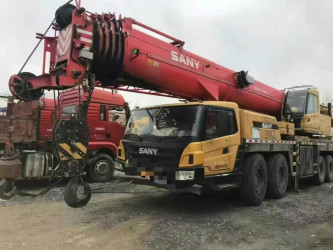 2019 SANY 80-Ton Crane - Heavy-Duty Powerhouse for Turkish Projects
|
— | $92,600.00 | View |
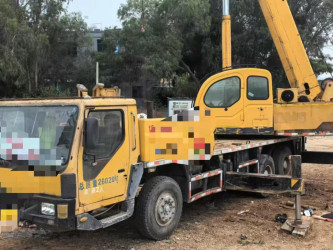 2011 XCMG 20-Ton Crane - Budget Warrior for Smart Turkish Buyers!
|
— | $10,000.00 | View |
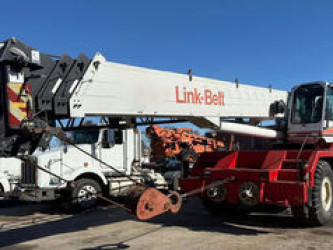 Link-Belt RTC-8040 all-terrain crane 1999
|
1999 | — | View |
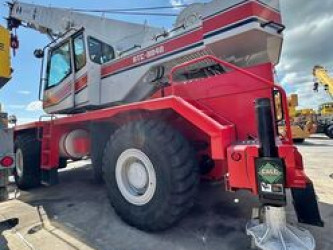 Link-Belt RTC-8040-2 all-terrain crane 2000
|
2000 | $130,000.00 | View |
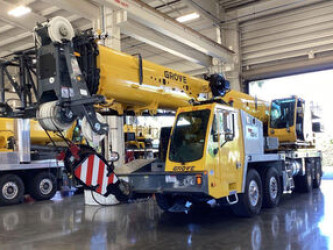 Grove TMS800-2 all-terrain 2024
|
2024 | $1,045,000.00 | View |
Frequently asked questions
How much does used Cranes cost on AGGZ?
Prices depend on the year, operating hours and condition of each machine. Compare the current listings above to see real prices from sellers, then contact the seller directly.
What should I check when buying used Cranes?
Check the year of manufacture, operating hours or mileage, service and maintenance history, and overall condition. Arrange an inspection or request detailed photos before any payment.
Can I buy and export used Cranes from Turkey and abroad?
Yes. Many sellers on AGGZ ship internationally. Confirm shipping options, export documentation and payment terms directly with the seller before you buy.
Selling similar equipment?
List your machinery on AGGZ and reach buyers searching for Cranes, trucks, spare parts and industrial equipment.
Posted in:
Buyer & Seller Guides
Related posts
-
Used Road Rollers & Compactors in Poland: 2026 Prices & Buyer's Guide
A buyer's guide to used road rollers and compactors listed in Poland: what is available, current prices, what to...Read more
-
How to Import Used Construction Machinery from Abroad: 2026 Buyer's Guide
A practical guide to importing used heavy equipment from abroad — sources, shipping options, customs, inspection, and...Read more
-
Caterpillar for Sale: Prices, Specs & Used Market Guide 2026
A buyer's guide to used Caterpillar machines — the CAT 320-series excavators and road equipment, current price...Read more
-
Used Construction Machinery in the USA: 2026 Prices & Buyer's Guide
A buyer's guide to used road construction and paving machinery from the USA — current price ranges, an inspection...Read more
-
Used Road Rollers & Compactors from China: 2026 Prices & Buyer's Guide
A buyer's guide to recent, low-hour used road rollers and compactors sourced from China — what is available, current...Read more
Leave a comment