
A buyer's guide to used road rollers and compactors listed in Poland: what is available, current prices, what to...
Latest posts
-
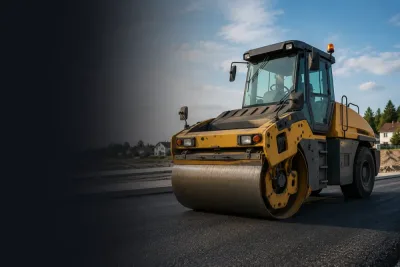 Used Road Rollers & Compactors in Poland: 2026 Prices & Buyer's GuideRead more
 -
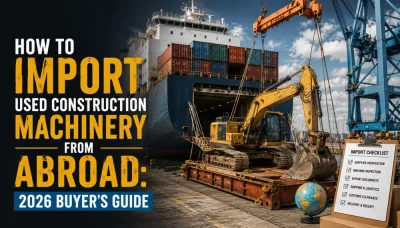 How to Import Used Construction Machinery from Abroad: 2026 Buyer's GuideRead more
A practical guide to importing used heavy equipment from abroad — sources, shipping options, customs, inspection, and...
-
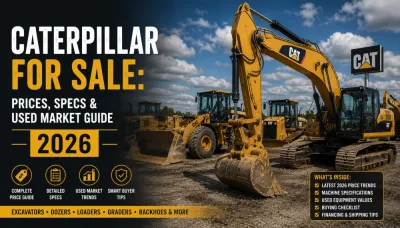 Caterpillar for Sale: Prices, Specs & Used Market Guide 2026Read more
A buyer's guide to used Caterpillar machines — the CAT 320-series excavators and road equipment, current price...
-
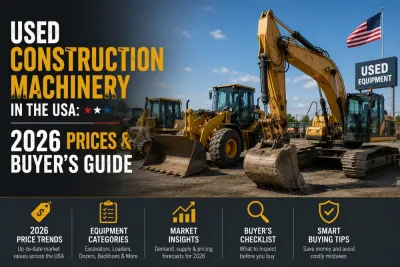 Used Construction Machinery in the USA: 2026 Prices & Buyer's GuideRead more
A buyer's guide to used road construction and paving machinery from the USA — current price ranges, an inspection...
-
 Used Road Rollers & Compactors from China: 2026 Prices & Buyer's GuideRead more
A buyer's guide to recent, low-hour used road rollers and compactors sourced from China — what is available, current...
-
 Used Asphalt & Paving Equipment in the USA: 2026 Prices & Buyer's GuideRead more
A practical buyer's guide to used asphalt and paving equipment sourced from the USA — what is available, current...
-
 Manitou MT 1840 Telehandler 2026: Current Prices, Specs, and Buyer’s GuideRead more
The Manitou MT 1840 has established itself as one of the most versatile and trusted telehandlers in the global...
-
 The Complete Guide to Massey Ferguson 240: Price, Specifications, and Global LegacyRead more
Massey Ferguson 240 sits in that sweet spot between light chores and real farm work. It’s part of the MF 200 series,...
-
 Ford Transit Box Truck for Sale: 2026 Buyer’s Guide for Small Business FleetsRead more
The Ford Transit box truck has long been a cornerstone of small business logistics, and in 2026 its position remains...
-
 The Ultimate Guide to Buying Trucks & Excavators: Prices, Deals, and Insights for Contractors in the USA, UK, Canada, and AustraliaRead more
For contractors, fleet managers, farmers, and construction companies, investing in the right trucks and excavators...
Blog categories
- Automotive Parts (21) click
- Heavy Machinery & Equipment Parts (6)
- OEM vs. Aftermarket Parts (1)
- Maintenance & Repair Tips (0)
- Parts Compatibility & Cross-Referencing (0)
- Sustainability & Recycling (1)
- Industry News & Trends (2)
- Buyer & Seller Guides (60)
- Performance Upgrades & Modifications (0)
- Product Reviews & Comparisons (1)
Search in blog
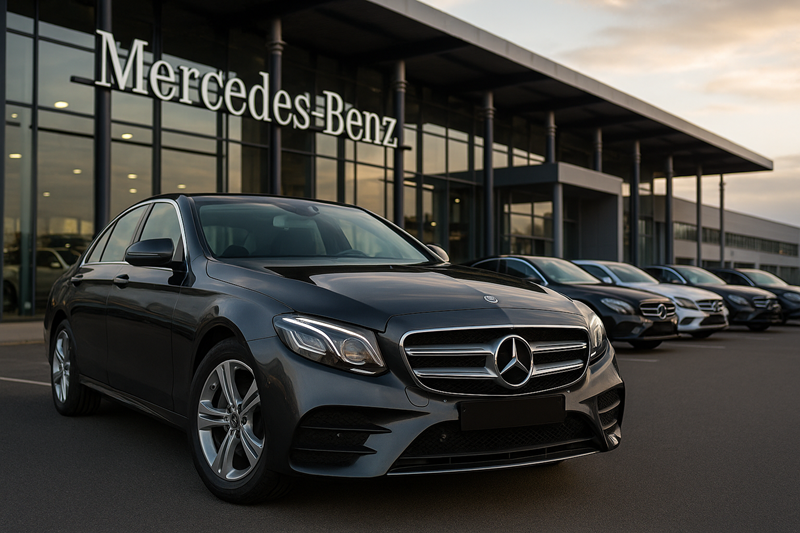
Mercedes-Benz Car Prices in Germany (2026): Best Deals, Export Tips & Buyer’s Guide
Mercedes-Benz Cars
Mercedes-Benz Cars is the luxury automobile division of Mercedes-Benz AG, which operates under the wider Mercedes-Benz Group (formerly Daimler AG). The brand is synonymous with luxury, safety, and engineering excellence, consistently positioned as a global leader in the premium automotive segment. With a presence in over 150 markets worldwide, Mercedes-Benz offers a full range of sedans, SUVs, electric vehicles, performance cars, and ultra-luxury models.
The brand’s reputation rests not only on its cutting-edge technology and distinctive design but also on its long-standing tradition of innovation. Mercedes-Benz pioneered numerous safety and performance features that are now standard across the industry, reinforcing its identity as a benchmark for luxury mobility.
History and Brand Meaning
Mercedes-Benz traces its roots back to 1886, when Karl Benz introduced the Patent Motorwagen, widely regarded as the world’s first automobile. Around the same time, Gottlieb Daimler and Wilhelm Maybach were working on motorized carriages, developments that would later converge into the formation of Daimler-Benz.
The name “Mercedes” was inspired by Mercedes Jellinek, the daughter of Emil Jellinek, a businessman and dealer who was instrumental in promoting Daimler vehicles in the early 1900s. By 1926, the merger of Benz & Cie. and Daimler-Motoren-Gesellschaft officially established Mercedes-Benz as a unified brand.
The three-pointed star emblem was adopted to symbolize mobility on land, water, and air. Over the decades, Mercedes-Benz became a global icon, representing not only German engineering but also prestige and aspirational luxury.
Brand Identity and Philosophy
Mercedes-Benz’s brand philosophy is best captured in its motto: “The Best or Nothing.” This reflects the company’s commitment to uncompromising quality, craftsmanship, and innovation.
The brand is known for its pioneering role in safety, having introduced innovations such as crumple zones, ABS (Anti-lock Braking System), ESP (Electronic Stability Program), and airbags. Today, the company leads in driver assistance technologies and autonomous driving research.
In recent years, Mercedes-Benz has expanded its identity to emphasize sustainability and electrification. With its EQ sub-brand, the company is actively transitioning from traditional combustion powertrains to electric mobility, positioning itself as both a luxury and sustainability leader.
Product Range Overview
Sedans & Coupes
-
C-Class, E-Class, S-Class: Core lineup of premium sedans, with the S-Class serving as the flagship luxury model.
-
CLA, CLS: Stylish coupes blending sportiness with elegance.
SUVs & Crossovers
-
GLA, GLB, GLC, GLE, GLS: SUVs catering to family and lifestyle needs, from compact luxury to full-size.
-
G-Class: The iconic luxury off-road vehicle, blending ruggedness with prestige.
Electric Vehicles (EQ Brand)
-
EQS: Full-size luxury electric sedan with cutting-edge technology.
-
EQE: Mid-size luxury electric sedan.
-
EQB, EQC: Electric SUVs designed for family and urban use.
AMG Performance Models
-
AMG GT: High-performance sports car.
-
AMG-enhanced sedans and SUVs: AMG versions of the C-Class, E-Class, S-Class, and SUVs provide sportier dynamics and performance engineering.
Maybach Ultra-Luxury
-
Mercedes-Maybach S-Class and GLS: Positioned at the pinnacle of global automotive luxury, competing directly with Rolls-Royce and Bentley.
Product Families and Key Specifications
-
S-Class: The technological flagship, offering semi-autonomous driving, advanced infotainment systems, and unmatched passenger comfort.
-
C-Class & E-Class: Balancing everyday practicality with premium design and performance.
-
G-Class: A cultural icon, combining heritage off-road capabilities with luxury refinement.
-
EQ Models: Featuring high-capacity batteries, advanced aerodynamics, and sustainable materials, setting benchmarks in electric luxury.
-
AMG GT Black Series: Mercedes’ most powerful performance car, showcasing the brand’s motorsport engineering.
Pricing Landscape
-
Entry-level A-Class: Around $35,000 USD / £32,000 UK / €34,000 EU.
-
Core models (E-Class, GLC): $55,000–$70,000 USD depending on configuration.
-
Flagship S-Class: Starting from $115,000 USD with higher trims and hybrid versions exceeding this substantially.
-
Maybach models: Typically $200,000–$300,000+ USD depending on customization.
-
EQ Models (e.g., EQS): Priced at $105,000+ USD, reflecting both luxury positioning and EV technology premium.
The residual value of Mercedes-Benz vehicles tends to be stronger for core models such as the C-Class, E-Class, and G-Class, with Maybachs and AMGs often commanding premiums in niche markets.
Usage and Applications
-
Executive Transport: The S-Class and E-Class remain staples of executive mobility worldwide, from chauffeured limousines in Europe to business sedans in North America.
-
Luxury Family SUVs: Models like the GLC, GLE, and GLS appeal to families seeking versatility with luxury refinement.
-
Performance Lifestyle: AMG models deliver motorsport-inspired driving for enthusiasts.
-
Sustainable Luxury: The EQS, EQE, and EQB represent the brand’s future in zero-emission mobility.
Buyer Personas
-
A corporate executive in New York selecting an S-Class for its prestige and technology.
-
A family in London choosing a GLE SUV for urban practicality and family comfort.
-
A German tech-savvy professional adopting the EQS for its sustainable luxury and innovation.
Current Market Position
Mercedes-Benz remains one of the “German Big Three” luxury automakers, alongside BMW and Audi. Globally, it continues to rank among the top luxury car brands by sales.
The brand has a dual strategic focus: preserving its leadership in luxury combustion-engine vehicles while accelerating its transformation through the EQ electric lineup and AMG hybrid powertrains. Its extensive dealer and service network, strong financing programs, and established reputation ensure that Mercedes-Benz is not only a market leader today but also a key shaper of the automotive industry’s sustainable future.
Competitive Landscape
Mercedes-Benz sits at the heart of the global luxury car market, locked in continuous rivalry with BMW, Audi, Porsche, Lexus, and Tesla. Each competitor defines a different edge: BMW emphasizes driving dynamics, Audi markets technology-driven interiors and Quattro performance, Porsche dominates sports luxury niches, Lexus appeals through reliability and lower TCO, while Tesla positions itself as the benchmark for electric innovation.
Mercedes-Benz’s strengths lie in its long-standing brand prestige, deep-rooted heritage, AMG performance division, and unmatched global reach with sales networks in over 150 countries. It also leverages Maybach as an ultra-luxury sub-brand, giving it direct competition with Bentley and Rolls-Royce. Its weaknesses are equally visible: higher maintenance costs compared to Lexus and BMW, and a slower initial EV adoption curve when compared to Tesla. However, the launch of the EQ brand has accelerated Mercedes-Benz’s electric portfolio, gradually shifting perception.
Regional Market Dynamics
Europe
Mercedes-Benz maintains a stronghold in premium sedans and SUVs, with the C-Class, E-Class, and S-Class being staples of both private ownership and corporate fleets. European buyers also lead in the adoption of Mercedes’ EQ electric vehicles, supported by government incentives.
United States
The U.S. market favors SUVs and AMG models, with the GLC, GLE, GLS, and G-Class ranking among top sellers. The AMG brand also resonates strongly with American performance enthusiasts. While Tesla has a firm EV lead in the U.S., the EQS and EQE are gradually gaining recognition among luxury EV buyers.
China
China is Mercedes-Benz’s largest single market, accounting for nearly 30% of its global sales. Demand is particularly strong for long-wheelbase sedans (E-Class L, S-Class L) and Mercedes-Maybach models, which are often seen as status symbols among high-net-worth individuals and executives.
Middle East
Mercedes-Benz enjoys a cult following in the Middle East, particularly for the G-Class and Maybach S-Class, often used as luxury status vehicles. SUVs dominate sales due to the region’s terrain and prestige-driven culture.
Pricing and Residual Value
Mercedes-Benz carries premium pricing across global markets.
-
Entry-level A-Class/CLA: $35,000–$45,000 USD (£32,000–£40,000 UK).
-
E-Class/GLC: $55,000–$70,000 USD.
-
S-Class: starting from $115,000 USD, with high trims reaching $150,000+.
-
G-Class: $140,000+ USD with significant waiting lists.
-
Maybach models: often $200,000–$300,000+.
-
EQ Flagships (EQS): starting at ~$105,000 USD.
Residual value is among the strongest in the luxury sector, particularly for the G-Class, E-Class, and AMG performance models, which often command high resale premiums. In contrast, entry-level models like the A-Class and CLA face steeper depreciation.
Financing and Incentives
Mercedes-Benz Financial Services offers leasing and financing packages globally, often bundled with service and insurance. Fleet leasing remains a major revenue driver, particularly for corporate executive fleets.
EV subsidies across the EU, U.S., and China significantly support EQ sales. For example, Germany’s government subsidies can lower EQB and EQE ownership costs, while U.S. federal tax credits apply depending on assembly origins.
Maintenance and Uptime
The global dealer and service network ensures that Mercedes-Benz offers support across nearly every market. However, the brand is associated with high maintenance costs, especially in AMG and Maybach models where parts and labor demand premium pricing. Subscription services like Mercedes me connect support predictive maintenance, over-the-air updates, and remote diagnostics.
Electrification and Future Tech
Mercedes-Benz’s EQ brand is its spearhead into electrification.
-
EQS sedan and SUV lead as luxury EV flagships.
-
EQE and EQB extend the EV lineup into mid-range luxury.
-
MBUX Hyperscreen redefines in-car infotainment with AI integration.
-
Level 3 autonomous driving approval in Germany for the S-Class and EQS signals leadership in semi-autonomous mobility.
-
Corporate goal: achieve carbon-neutral production by 2039.
Mercedes-AMG is also electrifying its portfolio, blending hybrid performance with EV technology, while Maybach is preparing to launch fully electric ultra-luxury models.
TCO and Strategic Models
The total cost of ownership (TCO) for Mercedes-Benz cars is typically higher than rivals like Lexus or Tesla due to maintenance and insurance costs. However, this is offset by:
-
Prestige and brand value.
-
Advanced safety and luxury features.
-
High residual values in core models.
Corporate buyers and governments often justify TCO with brand perception, reliability of service, and long-term fleet value.
Procurement and Fleet Strategies
Mercedes-Benz plays a significant role in corporate fleets (executive transport with E-Class and S-Class), chauffeur services, and luxury ride-hailing (Uber Black, private limo companies).
Government fleets in Europe, Asia, and Africa frequently use Mercedes-Benz vehicles as official transport for heads of state and diplomats. In China and the Middle East, Maybach models are particularly favored.
Case Studies
-
EQS rollout in Europe and China: Positioned as the flagship luxury EV, adopted by early tech adopters and sustainability-driven executives.
-
Mercedes-Maybach in the Middle East and China: Symbol of wealth and prestige, dominating the chauffeur-driven luxury segment.
-
G-Class worldwide: Despite its age, demand continues to outstrip supply, maintaining its role as a global cult luxury SUV.
Future Outlook
Mercedes-Benz has committed to becoming fully electric by 2030 in markets where conditions allow, signaling one of the boldest EV transitions among luxury brands. Heavy investments are being made in software-driven vehicles, AI integration, and autonomous driving.
Future growth will be driven by:
-
Expansion of the EQ lineup across all segments.
-
Electrification of AMG performance models.
-
Maybach’s repositioning as an ultra-luxury EV brand, competing with Rolls-Royce Spectre.
-
Strategic sustainability goals that align with global regulatory trends.
FAQs: Mercedes-Benz Cars – Advanced Insights
-
What is the price of a Mercedes-Benz S-Class?
The base 2026 S-Class starts at around $115,000 USD, with high-end trims and Maybach variants exceeding $200,000. -
Which is better: Mercedes or BMW?
Mercedes-Benz emphasizes comfort, luxury, and safety, while BMW leans on driving dynamics. Choice often depends on whether a buyer prioritizes comfort (Mercedes) or sportiness (BMW). -
Does Mercedes make fully electric cars?
Yes. The EQ lineup includes the EQS, EQE, EQB, and EQC, with more EV models under development. -
How reliable are Mercedes cars compared to Lexus?
Mercedes vehicles are advanced but typically cost more to maintain than Lexus, which is known for long-term reliability and lower total cost of ownership. -
What is the difference between Mercedes and Maybach?
Maybach is the ultra-luxury sub-brand of Mercedes-Benz, offering elevated craftsmanship, exclusivity, and personalization compared to standard Mercedes models. -
How much does an AMG GT cost?
The AMG GT lineup starts around $100,000 USD, with top trims like the AMG GT Black Series exceeding $200,000 USD. -
Which Mercedes is best for families?
The GLC and GLE SUVs are most popular for family use, offering safety, cargo space, and versatility. -
What is the resale value of a G-Class?
The G-Class holds exceptional resale value, often retaining 60–70% of original value after five years, sometimes appreciating in niche markets. -
Does Mercedes offer autonomous driving?
Yes. Mercedes is the first automaker to gain Level 3 autonomous driving approval in Germany, available in the S-Class and EQS. -
What is Mercedes’ electrification plan?
Mercedes plans to become fully electric by 2030 in key markets and aims for carbon-neutral production by 2039. -
Where are Mercedes cars manufactured?
Major facilities include Germany (Sindelfingen, Bremen, Rastatt), USA (Alabama), Hungary, South Africa, and China (through joint ventures). -
How much does a Mercedes EQS cost?
Prices for the EQS start around $105,000 USD, positioning it as a direct rival to Tesla Model S and Lucid Air. -
Is AMG going electric?
Yes. Mercedes-AMG is developing hybrid and fully electric performance vehicles, combining AMG dynamics with sustainable technology. -
Why do Mercedes cars depreciate faster at entry level?
Models like the A-Class and CLA face stronger competition and higher fleet usage, leading to faster depreciation than flagship models. -
What is the future of Maybach?
Maybach is being repositioned as Mercedes’ electric ultra-luxury brand, with upcoming EQ-based Maybach SUVs and sedans. -
Are German Mercedes-Benz cars cheaper than in the U.S.?
Yes, in many cases. Due to VAT refund eligibility and favorable pricing in the German domestic market, buyers from the U.S. can often save thousands even after shipping and import fees. -
Can I get VAT back when exporting a car?
Yes, non-EU buyers are eligible for a VAT refund on most car purchases, provided the vehicle is exported within a set time frame and proper customs paperwork is completed. The refund can range from 16% to 19%. -
What’s the process to export a used car from Germany?
The car must be deregistered, fitted with export plates, and issued a tax-free invoice. Export documents, including proof of shipping and customs clearance, must be filed before shipping. -
How do I verify mileage and service history in Germany?
Mileage verification is included in the TÜV inspection report and service booklet. Many dealerships also provide digital logs, especially for newer models. Buyers should cross-check service entries with VIN records. -
Are AMG and diesel models available for export?
Yes, both are widely available. Diesel engines are common in Germany (though restricted in some cities), and AMG models are highly sought after in export markets. -
Is it better to buy from a Mercedes dealer or private owner?
Buying from a certified Mercedes-Benz dealer offers more security (verified history, warranty, export support). Private sellers may offer lower prices but carry higher risk. -
How long does it take to process export paperwork?
Typically 1–3 business days once documents are in order. Larger dealers often assist with tax-free invoicing, export plates, and freight booking. -
Can I buy a Mercedes-Benz in Germany as a non-EU resident?
Yes, there are no restrictions. Export buyers only need export clearance and temporary plates; EU registration is not required. -
Are English-speaking services available in Germany?
Most major dealerships and export companies have English-speaking staff, especially in Berlin, Munich, and Frankfurt. Private transactions may require a translator. -
Can I test drive before purchase?
Yes, usually at dealerships with valid ID and driver’s license. Some sellers may request a deposit for high-value vehicles. -
What are the insurance options for export plates?
Short-term export insurance (15, 30, or 90 days) is included with Zoll plates, covering liability and sometimes limited theft/damage. -
Is it possible to buy multiple vehicles for export?
Yes, bulk purchases are common among dealers/traders, often with discounts and streamlined processing. -
How do I pay for the vehicle as a foreign buyer?
Wire transfer is most common; some dealers accept credit cards or escrow. Private sales may use cash (within legal limits). Proof of funds and identity are required due to EU anti-money laundering rules.
Selling equipment like this?
List it on AGGZ and reach buyers reading guides like this and searching for used machinery.
Posted in:
Buyer & Seller Guides
Related posts
-
Used Road Rollers & Compactors in Poland: 2026 Prices & Buyer's Guide
A buyer's guide to used road rollers and compactors listed in Poland: what is available, current prices, what to...Read more
-
How to Import Used Construction Machinery from Abroad: 2026 Buyer's Guide
A practical guide to importing used heavy equipment from abroad — sources, shipping options, customs, inspection, and...Read more
-
Caterpillar for Sale: Prices, Specs & Used Market Guide 2026
A buyer's guide to used Caterpillar machines — the CAT 320-series excavators and road equipment, current price...Read more
-
Used Construction Machinery in the USA: 2026 Prices & Buyer's Guide
A buyer's guide to used road construction and paving machinery from the USA — current price ranges, an inspection...Read more
-
Used Road Rollers & Compactors from China: 2026 Prices & Buyer's Guide
A buyer's guide to recent, low-hour used road rollers and compactors sourced from China — what is available, current...Read more
Leave a comment